
Design Reference
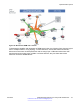




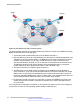
Table Of Contents
- Contents
- Chapter 1: Introduction
- Chapter 2: New in this release
- Chapter 3: Network design fundamentals
- Chapter 4: Hardware fundamentals and guidelines
- Chapter 5: Optical routing design
- Chapter 6: Platform redundancy
- Chapter 7: Link redundancy
- Chapter 8: Layer 2 loop prevention
- Chapter 9: Layer 2 switch clustering and SMLT
- Chapter 10: Layer 3 switch clustering and RSMLT
- Chapter 11: Layer 3 switch clustering and multicast SMLT
- Chapter 12: Spanning tree
- Chapter 13: Layer 3 network design
- Chapter 14: SPBM design guidelines
- Chapter 15: IP multicast network design
- Multicast and VRF-Lite
- Multicast and MultiLink Trunking considerations
- Multicast scalability design rules
- IP multicast address range restrictions
- Multicast MAC address mapping considerations
- Dynamic multicast configuration changes
- IGMPv3 backward compatibility
- IGMP Layer 2 Querier
- TTL in IP multicast packets
- Multicast MAC filtering
- Guidelines for multicast access policies
- Split-subnet and multicast
- Protocol Independent Multicast-Sparse Mode guidelines
- Protocol Independent Multicast-Source Specific Multicast guidelines
- Multicast for multimedia
- Chapter 16: System and network stability and security
- Chapter 17: QoS design guidelines
- Chapter 18: Layer 1, 2, and 3 design examples
- Glossary

Figure 48: SPBM basic architecture
Provisioning an SPBM core is as simple as enabling SPBM and IS-IS globally on all the nodes and
on the core facing links. To migrate an existing edge configuration into an SPBM network is just as
simple.
The boundary between the MAC-in-MAC SPBM domain and the 802.1Q domain is handled by the
BEBs. At the BEBs, VLANs or VRFs are mapped into I-SIDs based on the local service provisioning.
Services (whether Layer 2 or Layer 3 VSNs) only need to be configured at the edge of the SPBM
backbone (on the BEBs). There is no provisioning needed on the core SPBM nodes.
The following figure illustrates an existing edge that connects to an SPBM core.
Reference architectures
June 2015 Network Design Reference for Avaya VSP 4000 Series 103
Comments on this document? infodev@avaya.com