
Design Reference

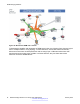


Table Of Contents
- Contents
- Chapter 1: Introduction
- Chapter 2: New in this release
- Chapter 3: Network design fundamentals
- Chapter 4: Hardware fundamentals and guidelines
- Chapter 5: Optical routing design
- Chapter 6: Platform redundancy
- Chapter 7: Link redundancy
- Chapter 8: Layer 2 loop prevention
- Chapter 9: Spanning tree
- Chapter 10: Layer 3 network design
- Chapter 11: SPBM design guidelines
- Chapter 12: IP multicast network design
- Multicast and VRF-Lite
- Multicast and MultiLink Trunking considerations
- Multicast scalability design rules
- IP multicast address range restrictions
- Multicast MAC address mapping considerations
- Dynamic multicast configuration changes
- IGMPv3 backward compatibility
- IGMP Layer 2 Querier
- TTL in IP multicast packets
- Multicast MAC filtering
- Guidelines for multicast access policies
- Multicast for multimedia
- Chapter 13: System and network stability and security
- Chapter 14: QoS design guidelines
- Chapter 15: Layer 1, 2, and 3 design examples
- Chapter 16: Software scaling capabilities
- Chapter 17: Supported standards, RFCs, and MIBs
- Glossary

Figure 39: SPBM campus without SMLT
After you migrate all services to SPBM, the customer VLANs (C-VLANs) will exist only on the BEB
SMLT clusters at the edge of the SPBM network. The C-VLANs will be assigned to an I-SID
instance and then associated with either a VLAN in an Layer 2 VSN or terminated into a VRF in an
Layer 3 VSN. You can also terminate the C-VLAN into the default router, which uses IP shortcuts to
IP route over the SPBM core.
In an SPBM network design, the only nodes where it makes sense to have an SMLT cluster
configuration is on the BEB nodes where VSN services terminate. These are the SPBM nodes
where C-VLANs exist and these C-VLANs need to be redundantly extended to non-SPBM devices
such as Layer 2 edge stackable switches. On the BCB core nodes where no VSNs are terminated
and no Layer 2 edge stackables are connected, there is no longer any use for the SMLT clustering
functionality. Therefore, in the depicted SPBM design, the SMLT/IST configuration can be removed
from the core nodes because they now act as pure BCBs that simply transport VSN traffic and the
only control plane protocol they need to run is IS-IS.
Because SMLT BEB nodes exist in this design (the edge BEBs) and it is desirable to use equal cost
paths to load balance VSN traffic across the SPBM core, all SPBM nodes in the network are
configured with the same two B-VIDs.
Where Figure 39: SPBM campus without SMLT on page 87 shows the physical topology, the
following two figures illustrate a logical rendition of the same topology. In both of the following
figures, you can see that the core is almost identical. Because the SPBM core just serves as a
transport mechanism that transmits traffic to the destination BEB, all the provisioning is performed at
the edge.
In the data center, VLANs are attached to Inter-VSNs that transmit the traffic across the SPBM core
between the data center on the left and the data center on the right. A common application of this
service is VMotion moving VMs from one data center to another.
Reference architectures
January 2015 Network Design Reference for Avaya VSP 4000 Series
87
Comments? infodev@avaya.com