
Design Reference
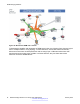


Table Of Contents
- Contents
- Chapter 1: Introduction
- Chapter 2: New in this release
- Chapter 3: Network design fundamentals
- Chapter 4: Hardware fundamentals and guidelines
- Chapter 5: Optical routing design
- Chapter 6: Platform redundancy
- Chapter 7: Link redundancy
- Chapter 8: Layer 2 loop prevention
- Chapter 9: Spanning tree
- Chapter 10: Layer 3 network design
- Chapter 11: SPBM design guidelines
- Chapter 12: IP multicast network design
- Multicast and VRF-Lite
- Multicast and MultiLink Trunking considerations
- Multicast scalability design rules
- IP multicast address range restrictions
- Multicast MAC address mapping considerations
- Dynamic multicast configuration changes
- IGMPv3 backward compatibility
- IGMP Layer 2 Querier
- TTL in IP multicast packets
- Multicast MAC filtering
- Guidelines for multicast access policies
- Multicast for multimedia
- Chapter 13: System and network stability and security
- Chapter 14: QoS design guidelines
- Chapter 15: Layer 1, 2, and 3 design examples
- Chapter 16: Software scaling capabilities
- Chapter 17: Supported standards, RFCs, and MIBs
- Glossary

Figure 38: Access to the SPBM Core
For Layer 2 virtualized bridging (Layer 2 VSN), identify all the VLANs that you want to migrate into
SPBM and assign them to an I-SID on the BEB.
For Layer 3 virtualized routing (Layer 3 VSN), map IPv4-enabled VLANs to VRFs, create an IP VPN
instance on the VRF, assign an I-SID to the VRF, and then configure the desired IP redistribution of
IP routes into IS-IS.
All BEBs that have the same I-SID configured can participate in the same VSN. That completes the
configuration part of the migration and all the traffic flows return to normal operation.
SPBM on VSP 4000 supports the following traffic:
• Layer 2 bridged traffic (Layer 2 VSN)
•
IPv4 unicast routed traffic on the Global Router (IP shortcuts)
• IPv4 unicast routed traffic using a VRF (Layer 3 VSN)
• IPv4 unicast routed traffic using different VSNs, which have different I-SIDs (Inter-VSN)
• Layer 2 IP multicast traffic in a bridged network (Layer 2 VSN with IP multicast over SPBM)
• IPv4 multicast routed traffic on the Global Router (IP shortcuts with IP multicast over SPBM)
• IPv4 multicast routed traffic using a VRF (Layer 3 VSN with IP multicast over SPBM)
SMLT
If your existing edge configuration uses SMLT, you can maintain that SMLT-based resiliency for
services configured on the IST peer switches. SPBM requires that you upgrade both IST peer to the
Reference architectures
January 2015 Network Design Reference for Avaya VSP 4000 Series 85
Comments? infodev@avaya.com