
Design Reference
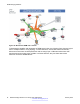


Table Of Contents
- Contents
- Chapter 1: Introduction
- Chapter 2: New in this release
- Chapter 3: Network design fundamentals
- Chapter 4: Hardware fundamentals and guidelines
- Chapter 5: Optical routing design
- Chapter 6: Platform redundancy
- Chapter 7: Link redundancy
- Chapter 8: Layer 2 loop prevention
- Chapter 9: Spanning tree
- Chapter 10: Layer 3 network design
- Chapter 11: SPBM design guidelines
- Chapter 12: IP multicast network design
- Multicast and VRF-Lite
- Multicast and MultiLink Trunking considerations
- Multicast scalability design rules
- IP multicast address range restrictions
- Multicast MAC address mapping considerations
- Dynamic multicast configuration changes
- IGMPv3 backward compatibility
- IGMP Layer 2 Querier
- TTL in IP multicast packets
- Multicast MAC filtering
- Guidelines for multicast access policies
- Multicast for multimedia
- Chapter 13: System and network stability and security
- Chapter 14: QoS design guidelines
- Chapter 15: Layer 1, 2, and 3 design examples
- Chapter 16: Software scaling capabilities
- Chapter 17: Supported standards, RFCs, and MIBs
- Glossary

Figure 36: SPBM ring topology with shared data centers
Related Links
SPBM design guidelines on page 73
Reference architectures
SPBM has a straightforward architecture that simply forwards encapsulated C-MACs across the
backbone. Because the B-MAC header stays the same across the network, there is no need to
swap a label or perform a route lookup at each node. This architecture allows the frame to follow the
most efficient forwarding path from end to end.
The following reference architectures illustrate SPBM with multiple VSP and ERS systems in a
network. For information about solution-specific architectures like Video Surveillance or Data Center
implementation using the VSP 4000, see Solution specific reference architectures on page 96.
The following figure shows the MAC-in-MAC SPBM domain with BEBs on the boundary and BCBs
in the core.
Reference architectures
January 2015 Network Design Reference for Avaya VSP 4000 Series 83
Comments? infodev@avaya.com