
Design Reference

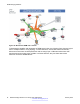


Table Of Contents
- Contents
- Chapter 1: Introduction
- Chapter 2: New in this release
- Chapter 3: Network design fundamentals
- Chapter 4: Hardware fundamentals and guidelines
- Chapter 5: Optical routing design
- Chapter 6: Platform redundancy
- Chapter 7: Link redundancy
- Chapter 8: Layer 2 loop prevention
- Chapter 9: Spanning tree
- Chapter 10: Layer 3 network design
- Chapter 11: SPBM design guidelines
- Chapter 12: IP multicast network design
- Multicast and VRF-Lite
- Multicast and MultiLink Trunking considerations
- Multicast scalability design rules
- IP multicast address range restrictions
- Multicast MAC address mapping considerations
- Dynamic multicast configuration changes
- IGMPv3 backward compatibility
- IGMP Layer 2 Querier
- TTL in IP multicast packets
- Multicast MAC filtering
- Guidelines for multicast access policies
- Multicast for multimedia
- Chapter 13: System and network stability and security
- Chapter 14: QoS design guidelines
- Chapter 15: Layer 1, 2, and 3 design examples
- Chapter 16: Software scaling capabilities
- Chapter 17: Supported standards, RFCs, and MIBs
- Glossary

advertising their reachable IP routes into IS-IS and installing IP routes learned from IS-IS. Suitable
IP redistribution policies need to be defined to determine what IP routes a BEB will advertise to IS-
IS.
As seen in Figure 34: SPBM implementation options on page 79, the green VRF on VSP-C is
configured to advertise its local or direct IP routes into IS-IS within I-SID 13990001. The VRF on
node VSP-D, which is also a member of the same I-SID, installs these IP routes in its VRF IP
routing table with a next-hop B-MAC address of VSP-C. Therefore, when the VRF on node VSP-D
needs to IP route traffic to the IP subnet off VSP-C, it performs a lookup in its IP routing table and
applies a MAC-in- MAC encapsulation with B-MAC DA of VSP-C. The SPBM core ensures delivery
to the egress BEB VSP-C where the encapsulation is removed and the packet is IP routed onward.
Note:
Like the IP shortcut service, there are only two IP routing hops (ingress BEB and egress BEB)
as the SPBM backbone acts as a virtualized switching backplane.
F—Layer 3 VSN
Figure 34: SPBM implementation options on page 79 shows two VRFs (green and red) to illustrate
that the BEBs can associate I-SIDs with multiple VRFs. The Layer 3 VSN option provides IP
connectivity over SPBM for all of your VRFs.
G—Layer 2 VSN and Layer 3 VSN
Figure 34: SPBM implementation options on page 79 shows both a Layer 2 VSN and a Layer 3 VSN
to show that you can configure both options on the same BEBs. This topology is simply made up of
a number of BEBs that terminate VSNs of both types. This example illustrates the flexibility to
extend one or more edge VLANs (using one or more Layer 2 VSNs) to use a default gateway that is
deeper in the SPBM core. From here, traffic can then be IP routed onward as either nonvirtualized
with IP shortcuts or, as shown in this example, with a virtualized Layer 3 VSN. Note that in this
example the central node VSP-G is now also acting as BEB for both service types as it now
maintains both a MAC table for the Layer 2 VSN it terminates, and an ARP cache and IP routing
table for the Layer 3 VSN it also terminates.
Multiple tenants using different SPBM services
The following figure shows multiple tenants using different services within an SPBM metro network.
In this network, you can use some or all of the SPBM implementation options to meet the needs of
the community while maintaining the security of information within VLAN members.
Implementation options
January 2015 Network Design Reference for Avaya VSP 4000 Series 81
Comments? infodev@avaya.com