
Design Reference


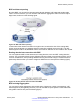


Table Of Contents
- Contents
- Chapter 1: Introduction
- Chapter 2: New in this release
- Chapter 3: Network design fundamentals
- Chapter 4: Hardware fundamentals and guidelines
- Chapter 5: Optical routing design
- Chapter 6: Platform redundancy
- Chapter 7: Link redundancy
- Chapter 8: Layer 2 loop prevention
- Chapter 9: Spanning tree
- Chapter 10: Layer 3 network design
- Chapter 11: SPBM design guidelines
- Chapter 12: IP multicast network design
- Multicast and VRF-Lite
- Multicast and MultiLink Trunking considerations
- Multicast scalability design rules
- IP multicast address range restrictions
- Multicast MAC address mapping considerations
- Dynamic multicast configuration changes
- IGMPv3 backward compatibility
- IGMP Layer 2 Querier
- TTL in IP multicast packets
- Multicast MAC filtering
- Guidelines for multicast access policies
- Multicast for multimedia
- Chapter 13: System and network stability and security
- Chapter 14: QoS design guidelines
- Chapter 15: Layer 1, 2, and 3 design examples
- Chapter 16: Software scaling capabilities
- Chapter 17: Supported standards, RFCs, and MIBs
- Glossary

BGP and Internet peering
By using BGP, you can perform Internet peering directly between VSP 4000 and another edge
router. In such a scenario, you can use each VSP 4000 for aggregation and link it with a Layer 3
edge router, as shown in the following figure.
Figure 25: BGP and Internet peering
In cases where the Internet connection is single-homed, to reduce the size of the routing table,
Avaya recommends that you advertise Internet routes as the default route to the IGP. The VSP
4000 supports a total of 16,000 EBGP routes. The maximum FIB size for IPv4 routes is also 16,000.
Routing domain interconnection with BGP
You can implement BGP so that autonomous routing domains, such as OSPF routing domains,
connect. This connection allows the two different networks to begin communicating quickly over a
common infrastructure, thus providing additional time to plan the IGP merger. Such a scenario is
particularly effective when you need to merge two OSPF area 0.0.0.0s (see the following figure).
Figure 26: Routing domain interconnection with BGP
BGP and edge aggregation
You can perform edge aggregation with multiple point of presence or edge concentrations. VSP
4000 supports 12 pairs (peering services). You can use BGP to inject dynamic routes rather than
using static routes or RIP (see the following figure).
Border Gateway Protocol
January 2015 Network Design Reference for Avaya VSP 4000 Series 67
Comments? infodev@avaya.com