
Design Reference


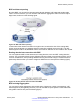


Table Of Contents
- Contents
- Chapter 1: Introduction
- Chapter 2: New in this release
- Chapter 3: Network design fundamentals
- Chapter 4: Hardware fundamentals and guidelines
- Chapter 5: Optical routing design
- Chapter 6: Platform redundancy
- Chapter 7: Link redundancy
- Chapter 8: Layer 2 loop prevention
- Chapter 9: Spanning tree
- Chapter 10: Layer 3 network design
- Chapter 11: SPBM design guidelines
- Chapter 12: IP multicast network design
- Multicast and VRF-Lite
- Multicast and MultiLink Trunking considerations
- Multicast scalability design rules
- IP multicast address range restrictions
- Multicast MAC address mapping considerations
- Dynamic multicast configuration changes
- IGMPv3 backward compatibility
- IGMP Layer 2 Querier
- TTL in IP multicast packets
- Multicast MAC filtering
- Guidelines for multicast access policies
- Multicast for multimedia
- Chapter 13: System and network stability and security
- Chapter 14: QoS design guidelines
- Chapter 15: Layer 1, 2, and 3 design examples
- Chapter 16: Software scaling capabilities
- Chapter 17: Supported standards, RFCs, and MIBs
- Glossary

Figure 22: Example 1: OSPF on one subnet in one area
The routers in the preceding figure use the following configuration:
• S1 has an OSPF router ID of 1.1.1.1, and the OSPF port uses an IP address of 192.168.10.1.
• S2 has an OSPF router ID of 1.1.1.2, and the OSPF port uses an IP address of 192.168.10.2.
The general method to configure OSPF on each routing switch is:
1. Enable OSPF globally.
2. Enable IP forwarding on the switch.
3. Configure the IP address, subnet mask, and VLAN ID for the port.
4. Disable RIP on the port, if you do not need it.
5. Enable OSPF for the port.
After you configure S2, the two switches elect a designated router and a backup designated router.
They exchange hello packets to synchronize their link state databases.
The following figure shows a configuration in which OSPF operates on three switches. OSPF
performs routing on two subnets in one OSPF area. In this example, S1 directly connects to S2, and
S3 directly connects to S2, but traffic between S1 and S3 is indirect, and passes through S2.
Figure 23: Example 2: OSPF on two subnets in one area
Open Shortest Path First
January 2015 Network Design Reference for Avaya VSP 4000 Series 63
Comments? infodev@avaya.com