
Design Reference


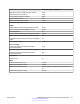

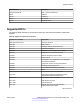


Table Of Contents
- Contents
- Chapter 1: Introduction
- Chapter 2: New in this release
- Chapter 3: Network design fundamentals
- Chapter 4: Hardware fundamentals and guidelines
- Chapter 5: Optical routing design
- Chapter 6: Platform redundancy
- Chapter 7: Link redundancy
- Chapter 8: Layer 2 loop prevention
- Chapter 9: Spanning tree
- Chapter 10: Layer 3 network design
- Chapter 11: SPBM design guidelines
- Chapter 12: IP multicast network design
- Multicast and VRF-Lite
- Multicast and MultiLink Trunking considerations
- Multicast scalability design rules
- IP multicast address range restrictions
- Multicast MAC address mapping considerations
- Dynamic multicast configuration changes
- IGMPv3 backward compatibility
- IGMP Layer 2 Querier
- TTL in IP multicast packets
- Multicast MAC filtering
- Guidelines for multicast access policies
- Multicast for multimedia
- Chapter 13: System and network stability and security
- Chapter 14: QoS design guidelines
- Chapter 15: Layer 1, 2, and 3 design examples
- Chapter 16: Software scaling capabilities
- Chapter 17: Supported standards, RFCs, and MIBs
- Glossary

Maximum number supported
Multicast receivers or IGMP joins (per system) 1000
Multicast senders (per system) 1000
Total multicast routes (per system) 4000
Static multicast routes 512
Multicast enabled Layer 2 VSNs 1,000
Multicast enabled Layer 3 VSNs 24
SPBM
SPBM enabled switches per region (BEB + BCB) 2,000
Service endpoint switches (BEBs) per I-SID 2,000
IS-IS adjacencies 50
Layer 2 VSNs per switch (VLANs mapped to I-SID) 1,000
Layer 3 VSNs per switch (VRF mapped to I-SID) 24
Transparent-UNI services per switch (Port mapped to
I-SID)
48
E-Tree private VLANs 1,000
Filters and QoS
Total IPv4 Ingress rules (Port/VLAN based,
Security/QoS filters)
1530
Total IPv4 Egress rules (Port based, Security filters) 254
Total IPv6 Ingress rules (Port/VLAN based,
Security/QoS filters)
256
Diagnostics
Mirrored ports 49
OAM
FTP sessions (IPv4 or IPv6) 4 each
Rlogin sessions (IPv4 or IPv6) 8 each
SSH sessions (IPv4 or IPv6) 8 shared (any combination of IPv4 and IPv6 up to
8)
Telnet sessions (IPv4 or IPv6) 8 each
January 2015 Network Design Reference for Avaya VSP 4000 Series 143
Comments? infodev@avaya.com