
Design Reference


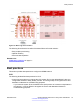

Table Of Contents
- Contents
- Chapter 1: Introduction
- Chapter 2: New in Release 4.0.50
- Chapter 3: New in Release 4.0.40
- Chapter 4: New in Release 4.0
- Chapter 5: Network design fundamentals
- Chapter 6: Hardware fundamentals and guidelines
- Chapter 7: Optical routing design
- Chapter 8: Platform redundancy
- Chapter 9: Link redundancy
- Chapter 10: Layer 2 loop prevention
- Chapter 11: Spanning tree
- Chapter 12: Layer 3 network design
- Chapter 13: SPBM design guidelines
- Chapter 14: IP multicast network design
- Multicast and VRF-Lite
- Multicast and MultiLink Trunking considerations
- Multicast scalability design rules
- IP multicast address range restrictions
- Multicast MAC address mapping considerations
- Dynamic multicast configuration changes
- IGMPv3 backward compatibility
- IGMP Layer 2 Querier
- TTL in IP multicast packets
- Multicast MAC filtering
- Guidelines for multicast access policies
- Multicast for multimedia
- Chapter 15: System and network stability and security
- Chapter 16: QoS design guidelines
- Chapter 17: Layer 1, 2, and 3 design examples
- Chapter 18: Software scaling capabilities
- Chapter 19: Supported standards, RFCs, and MIBs
- Glossary

Figure 45: Optimized routing before moving VMs
In the traditional data center, chaos resulted after many VMs were moved. In an optimized data
center as shown in the following figure, the incoming traffic enters the Layer 2 domain where an
edge switch uses Inter-VSN routing to attach an I-SID to a VLAN. The I-SID bridges traffic directly to
the destination. With VRRP BackupMaster, the traffic no longer goes through the default gateway; it
takes the most direct route in and out of the network.
Reference architectures
December 2014 Network Design Reference for Avaya VSP 4000 Series 93
Comments? infodev@avaya.com