
Design Reference
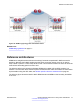


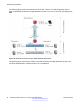
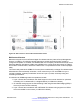


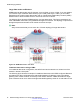
Table Of Contents
- Contents
- Chapter 1: Introduction
- Chapter 2: New in Release 4.0.50
- Chapter 3: New in Release 4.0.40
- Chapter 4: New in Release 4.0
- Chapter 5: Network design fundamentals
- Chapter 6: Hardware fundamentals and guidelines
- Chapter 7: Optical routing design
- Chapter 8: Platform redundancy
- Chapter 9: Link redundancy
- Chapter 10: Layer 2 loop prevention
- Chapter 11: Spanning tree
- Chapter 12: Layer 3 network design
- Chapter 13: SPBM design guidelines
- Chapter 14: IP multicast network design
- Multicast and VRF-Lite
- Multicast and MultiLink Trunking considerations
- Multicast scalability design rules
- IP multicast address range restrictions
- Multicast MAC address mapping considerations
- Dynamic multicast configuration changes
- IGMPv3 backward compatibility
- IGMP Layer 2 Querier
- TTL in IP multicast packets
- Multicast MAC filtering
- Guidelines for multicast access policies
- Multicast for multimedia
- Chapter 15: System and network stability and security
- Chapter 16: QoS design guidelines
- Chapter 17: Layer 1, 2, and 3 design examples
- Chapter 18: Software scaling capabilities
- Chapter 19: Supported standards, RFCs, and MIBs
- Glossary

Figure 40: VRF scenario to move traffic between data centers
Multicast architecture
Networks today either have inefficient bridged IP multicast networks (Internet Group Management
Protocol, or IGMP) or IP multicast networks that require multiple protocols that are complex to
configure and operate. IP multicast over SPBM builds on the simplicity introduced with Avaya Virtual
Enterprise Network Architecture (VENA) using SPBM for the control plane with support for bridged
and routed IP multicast traffic, without the inefficiencies or complexities that exist in other topologies
today.
This functionality extends the SPBM IS-IS control plane to additionally exchange IP multicast stream
advertisement and membership information, which means that you can use SPBM for Layer 2
(unicast, broadcast, multicast) virtualization as well as Layer 3 (unicast, multicast) routing and
forwarding virtualization.
IP multicast over SPBM supports three operational models:
1. Layer 2 Virtual Services Network with IGMP support on the access networks for optimized
forwarding of IP multicast traffic in a bridged network (L2 VSN with multicast)
2. IP multicast routing support for Global Routing Table using Shortest Path Bridging (SPB) in
the core (IP shortcuts with multicast)
3. Layer 3 Virtual Services Network with VRF based IP multicast routing support over SPB in
the core and IGMP on the access (L3 VSN with multicast)
Reference architectures
December 2014 Network Design Reference for Avaya VSP 4000 Series 87
Comments? infodev@avaya.com