
Design Reference


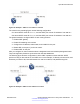


Table Of Contents
- Contents
- Chapter 1: Introduction
- Chapter 2: New in Release 4.0.50
- Chapter 3: New in Release 4.0.40
- Chapter 4: New in Release 4.0
- Chapter 5: Network design fundamentals
- Chapter 6: Hardware fundamentals and guidelines
- Chapter 7: Optical routing design
- Chapter 8: Platform redundancy
- Chapter 9: Link redundancy
- Chapter 10: Layer 2 loop prevention
- Chapter 11: Spanning tree
- Chapter 12: Layer 3 network design
- Chapter 13: SPBM design guidelines
- Chapter 14: IP multicast network design
- Multicast and VRF-Lite
- Multicast and MultiLink Trunking considerations
- Multicast scalability design rules
- IP multicast address range restrictions
- Multicast MAC address mapping considerations
- Dynamic multicast configuration changes
- IGMPv3 backward compatibility
- IGMP Layer 2 Querier
- TTL in IP multicast packets
- Multicast MAC filtering
- Guidelines for multicast access policies
- Multicast for multimedia
- Chapter 15: System and network stability and security
- Chapter 16: QoS design guidelines
- Chapter 17: Layer 1, 2, and 3 design examples
- Chapter 18: Software scaling capabilities
- Chapter 19: Supported standards, RFCs, and MIBs
- Glossary

Figure 21: Avoiding excessive ICMP redirect messages without SMLT
Open Shortest Path First
Use OSPF to ensure that the switch can communicate with other OSPF routers. This section
describes some general design considerations and presents a number of design scenarios for
OSPF.
For more information about OSPF concepts and configuration, see Avaya Virtual Services Platform
4000 Series Configuration — OSPF and RIP, NN46251-506.
OSPF LSA limits
To determine OSPF link-state advertisement (LSA) limits:
1. Use the command show ip ospf area to determine the LSA_CNT and to obtain the
number of LSAs for a given area.
2. Use the following formula to determine the number of areas. Ensure the total is less than
16,000 (16K):
N = 1 to the number of areas for each switch
Adj
N
= number of adjacencies for each Area N
LSA_CNT
N
= number of LSAs for each Area N
For example, assume that a switch has a configuration of three areas with a total of 18 adjacencies
and 1000 routes. This includes:
• 3 adjacencies with an LSA_CNT of 500 (Area 1)
• 10 adjacencies with an LSA_CNT of 1000 (Area 2)
Open Shortest Path First
December 2014 Network Design Reference for Avaya VSP 4000 Series 61
Comments? infodev@avaya.com