
Design Reference


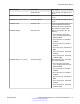
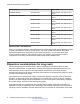
Table Of Contents
- Contents
- Chapter 1: Introduction
- Chapter 2: New in Release 4.0.50
- Chapter 3: New in Release 4.0.40
- Chapter 4: New in Release 4.0
- Chapter 5: Network design fundamentals
- Chapter 6: Hardware fundamentals and guidelines
- Chapter 7: Optical routing design
- Chapter 8: Platform redundancy
- Chapter 9: Link redundancy
- Chapter 10: Layer 2 loop prevention
- Chapter 11: Spanning tree
- Chapter 12: Layer 3 network design
- Chapter 13: SPBM design guidelines
- Chapter 14: IP multicast network design
- Multicast and VRF-Lite
- Multicast and MultiLink Trunking considerations
- Multicast scalability design rules
- IP multicast address range restrictions
- Multicast MAC address mapping considerations
- Dynamic multicast configuration changes
- IGMPv3 backward compatibility
- IGMP Layer 2 Querier
- TTL in IP multicast packets
- Multicast MAC filtering
- Guidelines for multicast access policies
- Multicast for multimedia
- Chapter 15: System and network stability and security
- Chapter 16: QoS design guidelines
- Chapter 17: Layer 1, 2, and 3 design examples
- Chapter 18: Software scaling capabilities
- Chapter 19: Supported standards, RFCs, and MIBs
- Glossary

Release VSP 4000 model Description Part number
• One (of two) field-replaceable 1000W
PSUs supplied with the chassis
• Same content as EC4400A05-E6
with a EU power cord.
EC4400B05-E6GS
• Same content as EC4400A05-E6
with a UK power cord.
EC4400C05-E6GS
• Same content as EC4400A05-E6
with a JP power cord.
EC4400D05-E6GS
• Same content as EC4400A05-E6
with a NA power cord.
EC4400E05-E6GS
• Same content a EC4400A05-E6 with
a AU power cord.
EC4400F05-E6GS
Supported optical devices
Use optical devices to achieve high-bit-rate communications and long transmission distances. The
following section describes the supported optical devices on the VSP 4000 system.
Important:
Avaya recommends that you use Avaya branded SFP and SFP+ transceivers as they undergo
extensive qualification and testing. Avaya is not responsible for any problems that arise from
using non-Avaya branded SFP and SFP+ transceivers.
Small form-factor pluggable (SFP) transceivers
SFPs are hot-swappable input and output enhancement components designed to allow gigabit
Ethernet ports to link with other gigabit Ethernet ports over various media types.
You can use various SFP (1 Gbps) and SFP+ (10 Gbps) to attain different line rates and reaches.
The following table describes the SFPs including the reach provided by various SFPs.
This table is informational only—not all Avaya Ethernet switching and routing products support all
the SFPs listed here.
For more information about SFP and SFP+ transceivers, including technical specifications and
installation instructions, see Installing Transceivers and Optical components on the Avaya Virtual
Services Platform 4000 Series, NN46251-301.
Important:
The attainable cable length can vary depending on the quality of the fiber-optic cable used.
Hardware fundamentals and guidelines
26 Network Design Reference for Avaya VSP 4000 Series December 2014
Comments? infodev@avaya.com