Dell Precision™ Workstations 450 and 650 Setup and Quick Reference Guide w w w. d e l l . c o m | s u p p o r t . d e l l .
Notes, Notices, and Cautions NOTE: A NOTE indicates important information that helps you make better use of your computer. NOTICE: A NOTICE indicates either potential damage to hardware or loss of data and tells you how to avoid the problem. CAUTION: A CAUTION indicates a potential for property damage, personal injury, or death. Abbreviations and Acronyms For a complete list of abbreviations and acronyms, see the “Glossary” in the User’s Guide.
Contents Finding Information and Assistance . . . . . . . . . . . . . . . . Connect the keyboard and the mouse . . . . . . . . . . . . . . . . . . . . . . . . . . . 10 11 Connect the speakers . . . . . . . . . . . . . . . . . . . . . . Connect the power cables and turn on the computer and monitor . . . . . . . . . . . . . . . . . . . . Connect the keyboard and mouse 15 . . . . . . . . . . . . . 16 . . . . . . . . . . . . . . . . 18 . . . . . . . . . . . . . 19 . . . . . . . . . . . . . . . .
Contents
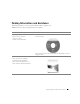
Finding Information and Assistance The following table lists the resources that Dell provides as support tools. Additional resources may be shipped with your computer. What Are You Looking For? Find it Here • • • • Drivers and Utilities CD (also known as the ResourceCD) A diagnostic program for my computer Drivers for my computer My User’s Guide My device documentation You can use this CD to access documentation, reinstall drivers, or run diagnostics tools.
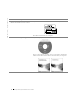
w w w. d e l l . c o m | s u p p o r t . d e l l . c o m What Are You Looking For? Find it Here • Express Service Code and Service Tag • Microsoft® Windows® License Label Express Service Code and Product Key The labels are located on your computer. • How to reinstall my operating system Operating System CD and Installation Guide After you reinstall your operating system, use the Drivers and Utilities CD to reinstall drivers for the devices that came with your computer.
What Are You Looking For? Find it Here • • • • User’s Guide Icon (Microsoft Windows 2000) How to remove and replace parts Technical specifications How to configure system settings How to troubleshoot and solve problems Double-click the User’s Guide icon on your desktop. Windows XP Help and Support Center 1 Click the Start button and click Help and Support. 2 Click User’s Guide.
w w w. d e l l . c o m | s u p p o r t . d e l l . c o m What Are You Looking For? Find it Here • • • • • • Dell Premier Support Website — premiersupport.dell.com Service call status and support history Top technical issues for my computer Frequently asked questions File downloads Details on my computer’s configuration Service contract for my computer The Dell Premier Support website is customized for corporate, government, and education customers. This website may not be available in all regions.
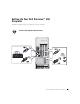
Setting Up Your Dell Precision™ 650 Computer You must complete all steps to properly set up your computer.
w w w. d e l l . c o m | s u p p o r t . d e l l . c o m Connect the modem or the network cable NOTICE: Do not connect a modem cable to the network adapter. Voltage from telephone communications can damage the network adapter. NOTE: If your computer has a network card installed, connect the network cable to the card.
Connect the monitor Depending on your graphics card, you can connect your monitor in various ways. A B C D NOTICE: Your computer may require the use of the provided adapter or cable to connect to your monitor.
w w w. d e l l . c o m | s u p p o r t . d e l l . c o m For single- and dual-monitor capable cards with a single connector VGA Adapter VGA • Use the VGA adapter when you have a single monitor graphics card and you want to connect to a VGA monitor. Dual VGA Y Cable Adapter Dual DVI Y Cable Adapter DVI VGA VGA DVI • Use the appropriate Y cable when your graphics card has a single connector and you want to connect to one or two VGA monitors.
For dual-monitor capable cards with 1 DVI and 1 VGA connector Single DVI/Single VGA Dual VGA With VGA Adapter DVI VGA VGA VGA • Use the appropriate connector when you connect to one or two monitors. • Use the VGA adapter when you want to connect to two VGA monitors. For dual-monitor capable cards with 2 DVI connectors Dual DVI Dual DVI With One VGA Adapter DVI Dual DVI With Two VGA Adapters DVI DVI VGA VGA • Use the DVI connectors to connect to one or two DVI monitors.
w w w. d e l l . c o m | s u p p o r t . d e l l . c o m Connect the speakers NOTE: If your computer has an audio card installed, connect the speakers to the card.
Connect the power cables and turn on the computer and monitor Setup and Quick Re ference Guide 15
w w w. d e l l . c o m | s u p p o r t . d e l l . c o m Install additional software or devices Before you install any devices or software that did not come with your computer, read the documentation that came with the software or device or contact the vendor to verify that the software or device is compatible with your computer and operating system. Congratulations! You have completed the setup for your computer.
To access the User’s Guide from your hard drive: If you have Windows 2000, double-click the User’s Guides icon. If you have Windows XP, click the Start button and click Help and Support. To access the User’s Guide from the CD: 1 Insert the Drivers and Utilities CD into the drive. If you are using the Drivers and Utilities CD for the first time, the ResourceCD Installation window opens to inform you that the CD is about to begin installation.
w w w. d e l l . c o m | s u p p o r t . d e l l . c o m Setting Up Your Dell Precision 450 Computer You must complete all steps to properly set up your computer.
Connect the modem or network cable NOTICE: Do not connect a modem cable to the network adapter. Voltage from telephone communications cause damage the network adapter. NOTE: If your computer has a network card installed, connect the network cable to the card.
w w w. d e l l . c o m | s u p p o r t . d e l l . c o m Connect the monitor Depending on your graphics card, you can connect your monitor in various ways. A B C D NOTICE: Your computer may require the use of the provided adapter or cable to connect to your monitor.
For single- and dual-monitor capable cards with a single connector VGA Adapter VGA • Use the VGA adapter when you have a single monitor graphics card and you want to connect to a VGA monitor. Dual VGA Y Cable Adapter Dual DVI Y Cable Adapter DVI VGA VGA • Use the appropriate Y cable when your graphics card has a single connector and you want to connect to one or two VGA monitors.
w w w. d e l l . c o m | s u p p o r t . d e l l . c o m For dual-monitor capable cards with 1 DVI and 1 VGA connector Single DVI/Single VGA Dual VGA With VGA Adapter DVI VGA VGA VGA • Use the appropriate connector when you connect to one or two monitors. • Use the VGA adapter when you want to connect to two VGA monitors.
Connect the speakers NOTE: If your computer has an audio card installed, connect the speakers to the card.
w w w. d e l l . c o m | s u p p o r t . d e l l .
Install Additional Software or Devices Before you install any devices or software that did not come with your computer, read the documentation that came with the software or device or contact the vendor to verify that the software or device is compatible with your computer and operating system. Congratulations! You have completed the setup for your computer.
w w w. d e l l . c o m | s u p p o r t . d e l l . c o m To access the User’s Guide from your hard drive: If you have Windows 2000, double-click the User’s Guides icon. If you have Windows XP, click the Start button and click Help and Support. To access the User’s Guide from the CD: 1 Insert the Drivers and Utilities CD into the drive. If you are using the Drivers and Utilities CD for the first time, the ResourceCD Installation window opens to inform you that the CD is about to begin installation.
Solving Problems Follow these tips when troubleshooting your computer: • If you added or removed a computer part before the problem started, review the installation procedures and ensure that the part is correctly installed. • If a peripheral device does not work, ensure that the device is properly connected. • If an error message appears on the screen, write down the exact message. This message may help technical support diagnose and fix the problem(s).
w w w. d e l l . c o m | s u p p o r t . d e l l . c o m Resolve conflicts by reconfiguring the devices or removing the devices from the Device Manager. To use the Windows XP Hardware Troubleshooter: 1 Click the Start button and click Help and Support. 2 Type hardware troubleshooter in the Search field, and click the arrow to start the search. 3 Click Hardware Troubleshooter in the Search Results list.
To use the Windows 2000 Hardware Troubleshooter: 1 Click the Start button and click Help. 2 Click Troubleshooting and Maintenance on the Contents tab, click Windows 2000 troubleshooters, and then click Hardware. 3 In the Hardware Troubleshooter list, click I need to resolve a hardware conflict on my computer, and then click Next.
w w w. d e l l . c o m | s u p p o r t . d e l l . c o m 4 Select a restore point and click Next. If a calendar date has only one restore point, then that restore point is automatically selected. If two or more restore points are available, click the restore point that you prefer. 5 Click Next. The Restoration Complete screen appears after System Restore finishes collecting data, and then the computer automatically restarts. 6 After the computer restarts, click OK.
The Dell Diagnostics allows you to: • Perform express, extended, or custom tests on one or all devices • Select tests based on a symptom of the problem you are having • Choose how many times a test is run • Display test results • Suspend testing if an error is detected • Access online help information that describes the tests and devices • Receive status messages that tell you whether tests completed successfully • Receive error messages if problems are detected Starting the Dell Diagnostics
w w w. d e l l . c o m | s u p p o r t . d e l l . c o m Starting the Dell Diagnostics From the Drivers and Utilities CD 1 Insert the Drivers and Utilities CD into the CD drive. 2 Shut down and restart the computer. When the DELL logo appears, press immediately. If you wait too long and the Windows logo appears, continue to wait until you see the Windows desktop. Then shut down your computer through the Start menu and try again. NOTE: This feature changes the boot sequence for one time only.
2 If a problem is encountered during a test, a message displaying the error code and a description of the problem appear. Write down the error code and problem description and follow the instructions on the screen. If you cannot resolve the error condition, contact Dell. 3 If you run a test from the Custom Test or Symptom Tree option, click the applicable tab described in the following table for more information.
w w w. d e l l . c o m | s u p p o r t . d e l l . c o m System Lights The lights on the front of the computer can indicate a computer problem. Power Light Hard-Drive Light Cause Corrective Action Solid green N/A Power is on, and the computer is operating normally. No corrective action is required. Blinking green Blank The computer is in the suspended state (Windows 2000 and Windows XP). Press the power button, move the mouse, or press a key on the keyboard to wake the computer.
Power Light Hard-Drive Light Cause Corrective Action Solid green power light and no beep code and no video during POST N/A The monitor or the graphics card may be faulty or incorrectly installed. Check the diagnostic lights to see if the specific problem is identified. Also, see "Video Problems" in the User’s Guide. Solid green power light and no beep code, but the computer locks up during POST N/A An integrated system board device may be faulty.
w w w. d e l l . c o m | s u p p o r t . d e l l . c o m Diagnostic Light Codes Before POST Light Pattern Problem Description Suggested Resolution No electrical power is supplied to the computer. Connect the computer to its electrical outlet. Ensure that the front-panel power light is on. If the power light is off, ensure that the computer is connected to a working electrical outlet, and then press the power button. A B C D If the problem is still not resolved, contact Dell for technical assistance.
Light Pattern Problem Description Suggested Resolution A possible system board failure has occurred. Contact Dell for technical assistance. A microprocessor and/or VRM mismatch exists. Perform the procedure in "Microprocessor Problems" in your User’s Guide. A B C D If the problem is still not resolved, contact Dell for technical assistance. A B C D A possible VRM 0 failure has occurred. Contact Dell for technical assistance. A possible VRM 1 failure has occurred.
w w w. d e l l . c o m | s u p p o r t . d e l l . c o m Light Pattern Problem Description Suggestion Resolution A possible microprocessor failure has occurred. Reinstall the microprocessor and restart the computer. A B C D A B C D Memory modules are detected, but a memory failure has occurred. = yellow = green = off 38 Setup and Quick Re ference Guide 1 Reset the memory modules to ensure that your computer is successfully communicating with the memory. 2 Restart the computer.
Light Pattern Problem Description A possible expansion card failure has occurred. A B C D A possible graphics card failure has occurred. A B C D Suggestion Resolution 1 Determine if a conflict exists by removing a card (not the graphics card) and then restarting the computer. 2 If the problem persists, reinstall the card that you removed, remove a different card, and then restart the computer. 3 Repeat this process for each card.
w w w. d e l l . c o m | s u p p o r t . d e l l . c o m Light Pattern Problem Description No memory modules are detected. A B C D System board failure has occurred. A B C D = yellow = green = off 40 Setup and Quick Re ference Guide Suggestion Resolution 1 Reset the memory modules to ensure that your computer is successfully communicating with the memory. 2 Restart the computer. 3 If the problem still exists, remove all the memory modules and install one memory module in memory module connector 4.
Light Pattern A B C D Problem Description Suggestion Resolution Memory modules are detected, but a memory configuration or compatibility error exists. Ensure that there are no special memory module/memory connector placement requirements (see "Memory" in your User’s Guide). Verify that the memory modules that you are installing are compatible with your computer (see "Memory" in your User’s Guide). Reinstall the memory modules and then restart the computer. If the problem persists, contact Dell.
w w w. d e l l . c o m | s u p p o r t . d e l l . c o m If a computer problem occurs that you are unable to resolve through the steps in this section or the procedures in "Finding Solutions" in your User’s Guide, complete the following steps before you contact Dell: 1 Write a detailed description of the error, beep code, or diagnostic light problem. 2 Record your Express Service Code and Service Tag. 3 Contact Dell from the same location as your computer. Frequently Asked Questions 42 How Do I...
How Do I... Solution Where to Find Additional Information Find the right connectors for my USB or IEEE 1394 devices? Your Dell Precision 650 computer has six USB connectors (two on the front and four on the back). It also has two IEEE 1394 connectors (one on the front and one on the back). See "Setting Up Your Dell Precision™ 650 Computer" on page 9. See the front and back view graphics of your computer in your User’s Guide.
w w w. d e l l . c o m | s u p p o r t . d e l l . c o m Opening the Computer Cover . CAUTION: Before you begin any of the procedures in this section, follow the safety instructions in the System Information Guide. 1 Shut down the computer through the Start menu. 2 Ensure that your computer and attached devices are turned off. If your computer and attached devices did not automatically turn off when you shut down your computer, turn them off now.
Dell Precision 650 Computer cover release latch security cable slot padlock ring Setup and Quick Re ference Guide 45
w w w. d e l l . c o m | s u p p o r t . d e l l .
Dell Precision 450 Computer cover release latch padlock ring Setup and Quick Re ference Guide 47
w w w. d e l l . c o m | s u p p o r t . d e l l .
Stations de travail Dell Precision™ 450 et 650 Guide de configuration et de référence rapide w w w. d e l l . c o m | s u p p o r t . e u r o . d e l l .
Remarques, avis et précautions REMARQUE : Une REMARQUE fournit des informations importantes qui vous aident à mieux utiliser votre ordinateur. AVIS : Un AVIS vous avertit d'un risque de dommage matériel ou de perte de données et vous indique comment éviter le problème. PRÉCAUTION : Une PRÉCAUTION indique un risque potentiel d'endommagement du matériel, de blessure corporelle ou de mort.
Sommaire Trouver des informations et de l'assistance Branchez le clavier et la souris . . . . . . . . . . . . 53 . . . . . . . . . . . . . . . . . 58 . . . . . . . . . . . . . 59 . . . . . . . . . . . . . . . . . . . . . . . 60 Branchez le modem ou le câble réseau Connectez l'écran Branchez les haut-parleurs . . . . . . . . . . . . . . . . . . . Branchez les câbles d'alimentation et allumez l'ordinateur et l'écran . . . . . . . . . . . . . . . . . . . . . . . . . . . 65 67 . . . . . . . . .
Questions fréquemment posées . . . . . . . . . . . . . . . . . . Ouverture du capot de l'ordinateur 52 Sommaire . . . . . . . . . . . . . . . .
Trouver des informations et de l'assistance Le tableau suivant recense les outils d'aide que vous propose Dell. À noter que d'autres informations ont pu vous être fournies avec votre ordinateur.
w w w. d e l l . c o m | s u p p o r t . e u r o . d e l l . c o m Que recherchez-vous ? Consultez les sections suivantes : • Code de service express et numéro Code de service express et clé de produit de service • Étiquette de licence Microsoft® Windows® Ces étiquettes sont situées sur votre ordinateur.
Que recherchez-vous ? Consultez les sections suivantes : • Comment retirer et remplacer des pièces • Caractéristiques techniques • Comment configurer les paramètres système • Comment dépanner et résoudre les problèmes Icône du Guide d'utilisation (Microsoft Windows 2000) Double-cliquez sur l'icône du Guide d'utilisation qui se trouve sur votre bureau. Centre d'aide et de support Windows XP 1 Cliquez sur le bouton Start (Démarrer), puis sur Help and Support (Aide et support).
w w w. d e l l . c o m | s u p p o r t . e u r o . d e l l . c o m Que recherchez-vous ? Consultez les sections suivantes : • Les pilotes les plus récents pour mon ordinateur • Réponses aux questions posées au service et support technique • Discussions en ligne avec le support technique et d'autres utilisateurs • Documentation pour mon ordinateur, y compris le Guide technique S i t e W e b d u s u p p o r t D e l l — support.dell.
Que recherchez-vous ? Consultez les sections suivantes : • Informations sur la garantie Guide d'informations du système • Comment utiliser Windows XP • Documentation pour mon ordinateur et ses périphériques Centre d'aide et de support Windows XP 1 Cliquez sur le bouton Start (Démarrer), puis sur Help and Support (Aide et support). 2 Tapez un mot ou une phrase pour décrire votre problème, puis cliquez sur l'icône représentant une flèche. 3 Cliquez sur la rubrique qui décrit votre problème.
w w w. d e l l . c o m | s u p p o r t . e u r o . d e l l . c o m Configuration de votre ordinateur Dell Precision™ 650 Votre ordinateur ne sera correctement configuré qu'une fois toutes ces étapes réalisées.
Branchez le modem ou le câble réseau AVIS : Ne branchez pas de câble modem sur la carte réseau. En effet, la tension des communications téléphoniques risquerait de l'endommager. REMARQUE : Si votre ordinateur est équipé d'une carte réseau, reliez le câble réseau à la carte.
w w w. d e l l . c o m | s u p p o r t . e u r o . d e l l . c o m Connectez l'écran En fonction de votre carte graphique, vous pouvez brancher votre écran de différentes façons. A B C D AVIS : Votre ordinateur peut requérir l'utilisation de l'adaptateur ou du câble fourni pour brancher votre écran.
Pour les cartes compatibles écran unique ou double-écran avec un seul connecteur Adaptateur VGA VGA • Utilisez l'adaptateur VGA lorsque vous disposez d'une carte graphique écran unique et que vous souhaitez brancher un écran VGA. Adaptateur de câble Y VGA double Adaptateur de câble Y DVI double DVI VGA VGA DVI • Utilisez le câble Y approprié lorsque votre carte graphique dispose d'un seul connecteur et que vous souhaitez brancher un ou deux écrans VGA.
w w w. d e l l . c o m | s u p p o r t . e u r o . d e l l . c o m Pour les cartes graphiques compatibles double-écran avec 1 connecteur DVI et 1 connecteur VGA DVI unique/VGA unique Double VGA avec adaptateur VGA DVI VGA VGA VGA • Utilisez le connecteur approprié lorsque vous branchez un ou deux écrans. • Utilisez l'adaptateur VGA lorsque vous branchez deux écrans VGA.
Branchez les haut-parleurs REMARQUE : Si votre ordinateur est équipé d'une carte audio, branchez les hautparleurs à la carte.
w w w. d e l l . c o m | s u p p o r t . e u r o . d e l l .
Installez les logiciels ou périphériques supplémentaires Avant d'installer tout périphérique ou logiciel qui n'a pas été livré avec votre ordinateur, lisez attentivement la documentation fournie avec le logiciel ou le périphérique ou contactez votre fournisseur, afin de vous assurer que le logiciel ou l'appareil est compatible avec votre ordinateur et votre système d'exploitation. Félicitations ! Vous avez maintenant terminé la configuration de votre ordinateur.
w w w. d e l l . c o m | s u p p o r t . e u r o . d e l l . c o m Vous pouvez accéder au Guide d'utilisation à partir de votre disque dur, du CD Drivers and Utilities (Pilotes et utilitaires) ou du site de support technique Dell. Pour accéder au Guide d'utilisation à partir de votre disque dur : Sous Windows 2000, double-cliquez sur l'icône User’s Guides (Guides d'utilisation). Sous Windows XP, cliquez sur le bouton Start (Démarrer), puis cliquez sur Help and Support (Aide et support technique).
Configuration de votre ordinateur Dell Precision 450 Votre ordinateur ne sera correctement configuré qu'une fois toutes ces étapes réalisées.
w w w. d e l l . c o m | s u p p o r t . e u r o . d e l l . c o m Branchez le modem ou le câble réseau REMARQUE : Si votre ordinateur est équipé d'une carte réseau, reliez le câble réseau à la carte. 68 AVIS : Ne branchez pas de câble modem sur la carte réseau. En effet, la tension des communications téléphoniques risquerait de l'endommager.
Connectez l'écran En fonction de votre carte graphique, vous pouvez brancher votre écran de différentes façons. A B C D AVIS : Votre ordinateur peut requérir l'utilisation de l'adaptateur ou du câble fourni pour brancher votre écran.
w w w. d e l l . c o m | s u p p o r t . e u r o . d e l l . c o m Pour les cartes compatibles écran unique ou double-écran avec un seul connecteur Adaptateur VGA VGA • Utilisez l'adaptateur VGA lorsque vous disposez d'une carte graphique écran unique et que vous souhaitez brancher un écran VGA.
Pour les cartes graphiques compatibles double-écran avec 1 connecteur DVI et 1 connecteur VGA DVI unique/VGA unique Double VGA avec adaptateur VGA DVI VGA VGA VGA • Utilisez le connecteur approprié lorsque vous branchez un ou deux écrans. • Utilisez l'adaptateur VGA lorsque vous branchez deux écrans VGA.
w w w. d e l l . c o m | s u p p o r t . e u r o . d e l l . c o m Branchez les haut-parleurs REMARQUE : Si votre ordinateur est équipé d'une carte audio, branchez les hautparleurs à la carte.
Branchez les câbles d'alimentation et allumez l'ordinateur et l'écran G u i d e d e c o n f i g u r a t i o n e t de r éf é r e nc e r apide 73
w w w. d e l l . c o m | s u p p o r t . e u r o . d e l l . c o m Installez les logiciels ou périphériques supplémentaires Avant d'installer tout périphérique ou logiciel qui n'a pas été livré avec votre ordinateur, lisez attentivement la documentation fournie avec le logiciel ou le périphérique ou contactez votre fournisseur, afin de vous assurer que le logiciel ou l'appareil est compatible avec votre ordinateur et votre système d'exploitation.
Vous pouvez accéder au Guide d'utilisation à partir de votre disque dur, du CD Drivers and Utilities (Pilotes et utilitaires) ou du site de support technique Dell. Pour accéder au Guide d'utilisation à partir de votre disque dur : Sous Windows 2000, double-cliquez sur l'icône User’s Guides (Guides d'utilisation). Sous Windows XP, cliquez sur le bouton Start (Démarrer), puis cliquez sur Help and Support (Aide et support technique).
w w w. d e l l . c o m | s u p p o r t . e u r o . d e l l . c o m Précautions à prendre avec votre ordinateur Pour la maintenance de votre ordinateur, suivez ces suggestions : • Pour éviter toute perte ou corruption des données, n'éteignez jamais votre ordinateur lorsque le voyant du disque dur est allumé. • Programmez des recherches régulières de virus à l'aide d'un logiciel anti-virus. • Gérez l'espace du disque dur en supprimant régulièrement les fichiers inutiles et en défragmentant le lecteur.
Résolution des problèmes d'incompatibilité logicielle ou matérielle Windows XP Des conflits d'interruption (IRQ) Windows XP se produisent lorsqu'un périphérique n'est pas détecté lors de l'installation du système d'exploitation ou lorsqu'il est détecté mais qu'il n'est pas correctement configuré. Pour rechercher des conflits sur un ordinateur exécutant Windows XP : 1 Cliquez sur le bouton Start (Démarrer) puis sur Control Panel (Panneau de configuration).
w w w. d e l l . c o m | s u p p o r t . e u r o . d e l l . c o m 3 Cliquez sur Hardware Troubleshooter (utilitaire de résolution de problèmes matériels) dans la liste Search Results (Résultats de la recherche). 4 Dans la liste Hardware Troubleshooter (utilitaire de résolution de problèmes matériels), cliquez sur I need to resolve a hardware conflict on my computer (je dois résoudre un problème matériel sur mon ordinateur), puis sur Next (Suivant).
Pour utiliser l'utilitaire de résolution de problèmes matériels de Windows 2000 : 1 Cliquez sur le bouton Start (Démarrer), puis sur Help (Aide). 2 Cliquez sur Troubleshooting and Maintenance (dépannage et maintenance) sous l'onglet Contents (Sommaire), cliquez sur Windows 2000 troubleshooters (utilitaires de résolution de problèmes de Windows 2000), puis sur Hardware (Matériel).
w w w. d e l l . c o m | s u p p o r t . e u r o . d e l l . c o m Restauration de l'ordinateur à un état antérieur AVIS : Avant de restaurer l'ordinateur à un état antérieur, enregistrez et fermez tous les fichiers et les programmes ouverts. Ne modifiez, ouvrez ou supprimez en aucun cas des fichiers ou des programmes tant que la restauration du système n'est pas terminée.
Utilisation de la dernière configuration adaptée 1 Redémarrez votre ordinateur et appuyez sur lorsque le message Please select the operating system to start (Sélectionnez le système d'exploitation pour commencer) apparaît. 2 Sélectionnez Last Known Good Setting (Dernière configuration adaptée), appuyez sur , appuyez sur la touche et sélectionnez votre système d'exploitation lorsque vous y êtes invité.
w w w. d e l l . c o m | s u p p o r t . e u r o . d e l l . c o m • suspendre le test si une erreur est détectée • accéder à des informations de l'aide en ligne décrivant les tests et périphériques • recevoir des messages d'état vous indiquant si les tests se sont déroulés sans problème • recevoir des messages d'erreur si des problèmes sont détectés Démarrage des diagnostics Dell Il est recommandé d'imprimer ces procédures avant de commencer.
Démarrage des Diagnostics Dell à partir du CD Drivers and Utilities (Pilotes et utilitaires) 1 Insérez le CD Drivers and Utilities (Pilotes et utilitaires) dans le lecteur de CD-ROM. 2 Arrêtez puis redémarrez l'ordinateur. Lorsque le logo Dell apparaît, appuyez immédiatement sur . Si vous attendez trop longtemps et que le logo Windows apparaît, attendez encore jusqu'à ce que le bureau Windows s'affiche.
w w w. d e l l . c o m | s u p p o r t . e u r o . d e l l . c o m Menu principal des Diagnostics Dell 1 REMARQUE : Le numéro de service de votre ordinateur est situé en haut de chaque écran de test 2 Une fois les diagnostics Dell chargés et lorsque l'écran Menu principal s'affiche, cliquez sur le bouton de l'option que vous souhaitez. Option Fonction Express Test (test rapide) Exécute un test rapide des périphériques.
3 Si vous exécutez un test à partir de l'option Custom Test (test personnalisé) ou Symptom Tree (arborescence des symptômes), cliquez sur l'onglet approprié décrit dans le tableau suivant pour obtenir plus d'informations. Onglet Fonction Résultats Affiche les résultats du test et les conditions d'erreur rencontrées. Erreurs Affiche les conditions d'erreur rencontrées, les codes d'erreur et la description du problème. Aide Décrit le test et peut indiquer les conditions requises pour exécuter le test.
w w w. d e l l . c o m | s u p p o r t . e u r o . d e l l . c o m Voyants du système Les voyants situés à l'avant de l'ordinateur peuvent indiquer un problème concernant votre ordinateur. Voyant d'alimentation Voyant d'unité de disque dur Cause Action corrective Vert fixe N/A L'ordinateur est sous tension et fonctionne normalement. Aucune action corrective n'est requise. Vert clignotant Blanc L'ordinateur est en mode suspension (Windows 2000 et Windows XP).
Voyant d'alimentation Voyant d'unité de disque dur Cause Action corrective Voyant jaune clignotant Vert fixe Une défaillance du VRM ou de la carte système s'est produite. Contrôlez les voyants de diagnostic pour savoir si le problème spécifique est identifié. Consultez également « Problèmes liés à la carte système » dans le Guide d'utilisation. Vert fixe et code sonore durant le POST N/A Un problème a été détecté lors de l'exécution de BIOS.
w w w. d e l l . c o m | s u p p o r t . e u r o . d e l l . c o m Messages d'erreur REMARQUE : Si le message n'est pas répertorié, consultez la documentation du système d'exploitation ou du programme en cours d'utilisation au moment où le message est apparu. Si une erreur survient lors du démarrage, un message identifiant le problème peut s'afficher à l'écran. Pour des suggestions de résolution d'un problème, consultez la section « Messages d'erreur » du Guide d'utilisation.
Comportement des voyants Description du problème Solution proposée L'ordinateur est en mode économie d'énergie ou en veille. Utilisez l'une des méthodes adéquates pour « réactiver » l'ordinateur. Consultez la section « Fonctionnalités avancées » de votre Guide d'utilisation.
w w w. d e l l . c o m | s u p p o r t . e u r o . d e l l . c o m Comportement des voyants Description du problème Solution proposée Une défaillance du VRM 1 semble s'être produite. Exécutez la procédure décrite dans la section « Problèmes de microprocesseur » du Guide d'utilisation. A B C D Si le problème n'est toujours pas résolu, contactez Dell pour obtenir une assistance technique. Une défaillance du VRM 0 et du VRM 1 semble s'être produite. Contactez Dell pour obtenir une assistance technique.
Comportement des voyants A B C D Description du problème Solution proposée Des modules de mémoire sont détectés mais une panne de mémoire s'est produite. 1 Réinstallez les modules de mémoire pour vous assurer que votre ordinateur communique correctement avec la mémoire. 2 Redémarrez l'ordinateur. 3 Si le problème persiste, retirez tous les modules de mémoire et installez un seul module dans le connecteur 4 du module de mémoire. 4 Redémarrez l'ordinateur.
w w w. d e l l . c o m | s u p p o r t . e u r o . d e l l . c o m Comportement des voyants A B C D A B C D Description du problème Une défaillance de la carte d'extension semble s'être produite. Une défaillance de la carte graphique semble s'être produite. Solution proposée 1 Déterminez s'il existe un conflit en retirant une carte (autre que la carte graphique) puis en redémarrant l'ordinateur.
Comportement des voyants Description du problème Solution proposée Aucun module de mémoire n'est détecté. A B C D 1 Réinstallez les modules de mémoire pour vous assurer que votre ordinateur communique correctement avec la mémoire. 2 Redémarrez l'ordinateur. 3 Si le problème persiste, retirez tous les modules de mémoire et installez un seul module dans le connecteur 4 du module de mémoire. 4 Redémarrez l'ordinateur. Le message suivant s'affiche : Alert! Operating in Debug Mode.
w w w. d e l l . c o m | s u p p o r t . e u r o . d e l l . c o m Comportement des voyants Description du problème Solution proposée Une défaillance de la carte système s'est produite. Exécutez la procédure décrite dans la section « Problèmes liés à la carte système » de votre Guide d'utilisation. A B C D A B C D Si le problème persiste, contactez Dell. Des modules de mémoire sont détectés mais il existe une erreur de compatibilité ou de configuration de mémoire.
Comportement des voyants Description du problème Solution proposée Une autre panne s'est produite. Vérifiez que les câbles sont correctement connectés entre le disque dur, le lecteur de CD-ROM, le lecteur de DVD-ROM et la carte mère. A B C D A B C D Si le problème persiste, contactez Dell. L'ordinateur fonctionne normalement après le POST.
w w w. d e l l . c o m | s u p p o r t . e u r o . d e l l . c o m Questions fréquemment posées 96 Comment faire pour... Solution Où trouver des informations supplémentaires ? Configurer mon ordinateur pour utiliser deux écrans ? Si votre ordinateur est équipé de la carte graphique nécessaire à la configuration de deux écrans, retrouvez un câble Y dans votre emballage.
Comment faire pour... Solution Où trouver des informations supplémentaires ? Trouver les bons connecteurs pour mes périphériques USB ou IEEE 1394 ? Votre ordinateur Dell Precision 650 possède six connecteurs USB (deux à l'avant et quatre à l'arrière). Il possède également deux connecteurs IEEE 1394 (un à l'avant et un à l'arrière). Reportez-vous à la section « Configuration de votre ordinateur Dell Precision™ 650 » page 58.
w w w. d e l l . c o m | s u p p o r t . e u r o . d e l l . c o m Ouverture du capot de l'ordinateur . PRÉCAUTION : Avant de lancer n'importe laquelle des procédures de cette section, suivez les instructions de sécurité fournies dans le Guide d’informations du système. 1 Éteignez l'ordinateur par le biais du menu Start (Démarrer). 2 Vérifiez que votre ordinateur et que les périphériques connectés sont bien éteints.
Pendant votre intervention dans l'ordinateur, touchez régulièrement une surface métallique non peinte de l'ordinateur afin de dissiper l'électricité statique qui pourrait endommager les composants internes.
w w w. d e l l . c o m | s u p p o r t . e u r o . d e l l .
Station de travail Dell Precision™ 450 loquet de verrouillage du capot anneau pour cadenas G u i d e d e c o n f i g u r a t i o n e t de r éf é r e nc e r apide 101
w w w. d e l l . c o m | s u p p o r t . e u r o . d e l l .
Dell Precision™ Workstations 450 und 650 Setup- und Schnellreferenzhandbuch w w w. d e l l . c o m | s u p p o r t . e u r o . d e l l .
Hinweise, Vorsichtshinweise und Warnungen HINWEIS: Ein HINWEIS macht auf wichtige Informationen aufmerksam, mit denen Sie das System besser einsetzen können. VORSICHT: VORSICHT warnt vor möglichen Beschädigungen der Hardware oder vor Datenverlust und zeigt, wie diese vermieden werden können. WARNUNG: Eine WARNUNG weist auf Gefahrenquellen hin, die materielle Schäden, Verletzungen oder sogar den Tod von Personen zur Folge haben können.
Inhalt Informationsquellen und Unterstützung . . . . . . . . . . . . . 107 Anschließen der Tastatur und der Maus . . . . . . . . . . . . . 111 . . . . . . . 112 . . . . . . . . . . . . . . . . . . . 113 Anschließen des Modems und des Netzwerkkabels Anschließen des Monitors Anschließen der Lautsprecher . . . . . . . . . . . . . . . . . Anschließen der Stromkabel sowie Einschalten des Computers nd des Monitors . . . . . . . . . . . . . . . . . . . . . . . . 117 . . . . . . . . . 118 . . . .
Inhalt
Informationsquellen und Unterstützung Die folgende Tabelle enthält Informationsquellen und Hilfsprogramme, die von Dell zu Ihrer Unterstützung bereitgestellt werden. Weiteres Informations- und Dokumentationsmaterial ist möglicherweise im Lieferumfang des Computers enthalten. Wonach suchen Sie? Hier finden Sie es. • Ein Diagnoseprogramm für den Computer.
w w w. d e l l . c o m | s u p p o r t . e u r o . d e l l . c o m Wonach suchen Sie? Hier finden Sie es. • Expressdienst-Codenummer und Service-Kennnummer • Microsoft® Windows®-Lizenzetikett Expressdienst-Codenummer und Produktschlüssel Die Aufkleber sind am Computer angebracht.
Wonach suchen Sie? Hier finden Sie es. • Informationen zum Entfernen und Austauschen von Teilen • Technische Daten • Informationen zum Konfigurieren von Systemeinstellungen • Informationen zur Fehlerbeseitigung und Problemlösung Symbol des Benutzerhandbuchs (Microsoft Windows 2000) Doppelklicken Sie auf dem Desktop auf das Symbol User's Guide (Benutzerhandbuch). Hilfe- und Supportcenter unter Windows XP 1 Auf die Schaltfläche Start und anschließend auf Help and Support (Hilfe und Support) klicken.
w w w. d e l l . c o m | s u p p o r t . e u r o . d e l l . c o m Wonach suchen Sie? Hier finden Sie es. • Aktuelle Treiber für den Computer • Informationen zum technischen Support und Kundendienst • Onlinediskussionen mit anderen Benutzern und dem technischen Support • Dokumentation für den Computer, einschließlich des Servicehandbuchs D e l l - S u p p o r t - W e b s i t e – support.euro.dell.com • • • • • • Dell Premier Support-Website – premiersupport.dell.
Einrichten des Dell Precision™ 650-Computers Sie müssen alle Schritte ausführen, um den Computer korrekt einzurichten.
w w w. d e l l . c o m | s u p p o r t . e u r o . d e l l . c o m Anschließen des Modems und des Netzwerkkabels VORSICHT: Schließen Sie kein Modemkabel an den Netzwerkadapter an. Die bei der Telefonkommunikation entstehende Spannung kann den Netzwerkadapter beschädigen. HINWEIS: Wenn auf Ihrem Computer eine Netzwerkkarte installiert ist, schließen Sie das Netzwerkkabel an die Netzwerkkarte an.
Anschließen des Monitors Je nach Grafikkarte, kann der Monitor auf verschiedene Weisen angeschlossen werden. A B C D VORSICHT: Möglicherweise muss der mitgelieferte Adapter oder das Kabel zum Anschließen des Monitors verwendet werden.
w w w. d e l l . c o m | s u p p o r t . e u r o . d e l l . c o m Für Einzel- und Dual-Monitor-fähige Karten mit einem einzelnen Anschluss VGA-Adapter VGA • Verwenden Sie den VGA-Adapter, wenn eine einzelne Grafikkarte verwendet wird und ein VGA-Monitor angeschlossen werden soll.
Für Dual-Monitor-fähige Karten mit einem DVI- und einem VGA-Anschluss Dual-VGA mit VGA-Adapter Einzel-DVI/Einzel-VGA DVI VGA VGA VGA • Verwenden Sie den entsprechenden Anschluss, um eine Verbindung zu einem oder zwei Monitoren herzustellen. • Verwenden Sie den VGA-Adapter, um zwei VGA-Monitore anzuschließen.
w w w. d e l l . c o m | s u p p o r t . e u r o . d e l l . c o m Anschließen der Lautsprecher HINWEIS: Wenn in Ihrem Computer eine Audiokarte installiert ist, schließen Sie die Lautsprecher an diese Karte an.
Anschließen der Stromkabel sowie Einschalten des Computers und des Monitors Setup- und Schnellr eferenzhandbuch 117
w w w. d e l l . c o m | s u p p o r t . e u r o . d e l l . c o m Installation zusätzlicher Software und Geräte Bevor Sie Geräte oder Software installieren, die nicht mit Ihrem Computer ausgeliefert wurden, sollten Sie die mit der Software oder dem Gerät gelieferte Dokumentation lesen oder sich an den Händler wenden, um sicherzustellen, dass die Software bzw. das Gerät mit Ihrem Computer und Betriebssystem kompatibel sind. Herzlichen Glückwunsch! Das Einrichten des Computers ist abgeschlossen.
So greifen Sie auf das Benutzerhandbuch auf der Festplatte zu: Wenn Sie mit Windows 2000 arbeiten, doppelklicken Sie auf das Symbol User's Guides (Benutzerhandbücher). Wenn Sie mit Windows XP arbeiten, klicken Sie auf die Schaltfläche Start und anschließend auf Help and Support (Hilfe und Support). So greifen Sie auf das Benutzerhandbuch auf der CD zu: 1 Die Drivers and Utilities-CD in das Laufwerk einlegen.
w w w. d e l l . c o m | s u p p o r t . e u r o . d e l l . c o m Einrichten des Dell Precision 450-Computers Sie müssen alle Schritte ausführen, um den Computer korrekt einzurichten.
Anschließen des Modems und des Netzwerkkabels VORSICHT: Schließen Sie kein Modemkabel an den Netzwerkadapter an. Die bei der Telefonkommunikation entstehende Spannung kann den Netzwerkadapter beschädigen. HINWEIS: Wenn auf Ihrem Computer eine Netzwerkkarte installiert ist, schließen Sie das Netzwerkkabel an die Netzwerkkarte an.
w w w. d e l l . c o m | s u p p o r t . e u r o . d e l l . c o m Anschließen des Monitors Je nach Grafikkarte, kann der Monitor auf verschiedene Weisen angeschlossen werden. A B C D VORSICHT: Möglicherweise muss der mitgelieferte Adapter oder das Kabel zum Anschließen des Monitors verwendet werden.
Für Einzel- und Dual-Monitor-fähige Karten mit einem einzelnen Anschluss VGA-Adapter VGA • Verwenden Sie den VGA-Adapter, wenn eine einzelne Grafikkarte verwendet wird und ein VGA-Monitor angeschlossen werden soll. Dual-VGA-Y-Kabeladapter Dual-DVI-Y-Kabeladapter DVI VGA VGA • Verwenden Sie das entsprechende Y-Kabel, wenn die Grafikkarte über einen einzelnen Anschluss verfügt und eine Verbindung zu einem oder zwei VGA-Monitoren hergestellt werden soll.
w w w. d e l l . c o m | s u p p o r t . e u r o . d e l l . c o m Für Dual-Monitor-fähige Karten mit einem DVI- und einem VGA-Anschluss Dual-VGA mit VGA-Adapter Einzel-DVI/Einzel-VGA DVI VGA VGA VGA • Verwenden Sie den entsprechenden Anschluss, um eine Verbindung zu einem oder zwei Monitoren herzustellen. • Verwenden Sie den VGA-Adapter, um zwei VGA-Monitore anzuschließen.
Anschließen der Lautsprecher HINWEIS: Wenn in Ihrem Computer eine Audiokarte installiert ist, schließen Sie die Lautsprecher an diese Karte an.
w w w. d e l l . c o m | s u p p o r t . e u r o . d e l l .
Installation zusätzlicher Software und Geräte Bevor Sie Geräte oder Software installieren, die nicht mit Ihrem Computer ausgeliefert wurden, sollten Sie die mit der Software oder dem Gerät gelieferte Dokumentation lesen oder sich an den Händler wenden, um sicherzustellen, dass die Software bzw. das Gerät mit Ihrem Computer und Betriebssystem kompatibel sind. Herzlichen Glückwunsch! Das Einrichten des Computers ist abgeschlossen.
w w w. d e l l . c o m | s u p p o r t . e u r o . d e l l . c o m So greifen Sie auf das Benutzerhandbuch auf der Festplatte zu: Wenn Sie mit Windows 2000 arbeiten, doppelklicken Sie auf das Symbol User's Guides (Benutzerhandbücher). Wenn Sie mit Windows XP arbeiten, klicken Sie auf die Schaltfläche Start und anschließend auf Help and Support (Hilfe und Support). So greifen Sie auf das Benutzerhandbuch auf der CD zu: 1 Die Drivers and Utilities-CD in das Laufwerk einlegen.
Pflege des Computers Befolgen Sie folgende Pflege- und Wartungsanweisungen: • Um den Verlust oder die Beschädigung von Daten zu vermeiden, schalten Sie den Computer nicht aus, wenn die Anzeige des Festplattenlaufwerks leuchtet. • Führen Sie regelmäßig Virenüberprüfungen durch. • Nutzen Sie die Festplattenkapazität effektiv, indem Sie in regelmäßigen Abständen nicht mehr benötigte Daten löschen und das Laufwerk defragmentieren. • Erstellen Sie regelmäßig Sicherheitskopien Ihrer Daten.
w w w. d e l l . c o m | s u p p o r t . e u r o . d e l l . c o m Beheben von Software- und Hardware-Inkompatibilitäten Windows XP IRQ-Konflikte bei Windows XP treten auf, wenn ein Gerät entweder während der Einrichtung des Betriebssystems nicht erkannt oder zwar erkannt, jedoch inkorrekt konfiguriert wird. So ermitteln Sie eventuell bestehende Konflikte unter Windows XP: 1 Auf die Schaltfläche Start und anschließend auf Control Panel (Systemsteuerung) klicken.
3 In der Liste Search Results (Suchergebnisse) auf Hardware Troubleshooter (Hardware-Ratgeber) klicken. 4 In der Liste Hardware Troubleshooter (Hardware-Ratgeber) auf I need to resolve a hardware conflict on my computer (Ein Hardwarekonflikt auf dem Computer muss gelöst werden) und anschließend auf Next (Weiter) klicken.
w w w. d e l l . c o m | s u p p o r t . e u r o . d e l l . c o m 3 In der Liste Hardware Troubleshooter (Hardware-Ratgeber) auf I need to resolve a hardware conflict on my computer (Ein Hardwarekonflikt auf dem Computer muss gelöst werden) und anschließend auf Next (Weiter) klicken.
3 Auf das Kalenderdatum klicken, für das der Computer wiederhergestellt werden soll. Im Bildschirm Select a Restore Point (Einen Wiederherstellungspunkt wählen) können Sie den Kalender verwenden, um Wiederherstellungspunkte anzuzeigen und auszuwählen. Alle Kalenderdaten, für die Wiederherstellungspunkte vorhanden sind, werden fett formatiert dargestellt. 4 Einen Wiederherstellungspunkt wählen und auf Next (Weiter) klicken.
w w w. d e l l . c o m | s u p p o r t . e u r o . d e l l . c o m Weitere Optionen, die bei der Lösung von Konflikten bei zusätzlichen Geräten oder Software helfen VORSICHT: Durch die folgenden Prozesse werden alle Informationen auf der Festplatte gelöscht. • Installieren Sie Ihr Betriebssystem unter Verwendung des Handbuchs und der Betriebssystem-CD erneut. Wenn das Betriebssystem neu installiert wird, können Sie die bestehenden Partitionen löschen und die Festplatte neu formatieren.
Starten des Dell-Diagnoseprogramms Es wird empfohlen, diese Anweisungen vor der Installation auszudrucken. VORSICHT: Verwenden Sie das Dell-Diagnoseprogramm nur zum Testen Ihres Dell™-Computers. Wenn Sie das Programm auf anderen Computern ausführen, erhalten Sie möglicherweise Fehlermeldungen. Rufen Sie das System-Setup-Programm auf, prüfen Sie die Konfiguration des Computers, und stellen Sie sicher, dass das zu prüfende Gerät im System-Setup aufgeführt wird und aktiviert ist.
w w w. d e l l . c o m | s u p p o r t . e u r o . d e l l . c o m HINWEIS: Durch diese Funktion wird die Startreihenfolge nur einmal geändert. Beim nächsten Start wird der Computer gemäß den im SystemSetup festgelegten Geräten gestartet. 3 Wenn die Liste der Startgeräte erscheint, die Option IDE CD-ROM Device (IDE CD-ROM-Gerät) markieren und drücken. 4 Die Option IDE CD-ROM Device (IDE CD-ROM-Gerät) im CD-Startmenü auswählen.
2 Tritt während eines Tests ein Problem auf, werden in einer Meldung der Fehlercode und eine Beschreibung des Problems angezeigt. Den Fehlercode und die Problembeschreibung notieren und den Anweisungen auf dem Bildschirm folgen. Kann das Problem nicht gelöst werden, an Dell wenden.
w w w. d e l l . c o m | s u p p o r t . e u r o . d e l l . c o m Systemanzeigen Die Anzeigen befinden sich an der Vorderseite des Computers und können auf Computerprobleme aufmerksam machen. Stromanzeige Festplattenlaufwerkanzeige Ursache Maßnahme Stetig grün leuchtend – Der Computer wird mit Strom versorgt und arbeitet ordnungsgemäß. Keine Maßnahme erforderlich Grün blinkend Keine Der Computer befindet sich im Energiesparmodus (unter Windows 2000 und Windows XP).
Stromanzeige Festplattenlaufwerkanzeige Ursache Maßnahme Gelb blinkend Stetig grün leuchtend Es ist ein Ausfall bei der Systemplatine oder dem VRM aufgetreten. Prüfen Sie die Diagnoseanzeigen, um das genaue Problem festzustellen. Weitere Informationen finden Sie unter „Probleme mit der Systemplatine“ im Benutzerhandbuch. Stetig grün leuchtend, Signaltoncode während des POST – Beim Ausführen des BIOS wurde ein Fehler erkannt.
w w w. d e l l . c o m | s u p p o r t . e u r o . d e l l . c o m Signaltoncodes Der Computer gibt möglicherweise eine Reihe von Signaltönen aus, anhand derer das Problem ausfindig gemacht werden kann. Eine mögliche Reihe (Code 1-3-1) besteht aus einem einzelnen Signalton, drei aufeinanderfolgenden Signaltönen und einem weiteren einzelnen Signalton. Anhand dieser Reihe von Signaltönen wird gemeldet, dass der Computer ein Problem mit dem Speicher erfasst hat.
Diagnoseanzeigencodes vor dem POST Anzeigemuster Problembeschreibung Lösungsvorschlag Der Computer wird nicht mit Strom versorgt. Schließen Sie den Computer an eine Steckdose an. Vergewissern Sie sich, dass die Stromanzeige an der Vorderseite leuchtet. Leuchtet die Stromanzeige nicht, stellen Sie sicher, dass der Computer mit einer funktionierenden Steckdose verbunden ist, und drücken Sie dann den Netzschalter.
w w w. d e l l . c o m | s u p p o r t . e u r o . d e l l . c o m Anzeigemuster Problembeschreibung Lösungsvorschlag Das BIOS wird nicht ausgeführt. Stellen Sie sicher, dass der Mikroprozessor ordnungsgemäß installiert ist, und starten Sie den Computer erneut. A-B-C-D A-B-C-D Wenn das Problem nicht gelöst werden konnte, wenden Sie sich an Dell, um technische Unterstützung anzufordern. Es ist möglicherweise ein Ausfall bei der Stromversorgung oder dem Stromversorgungskabel aufgetreten.
Anzeigemuster Problembeschreibung Lösungsvorschlag Möglicherweise ist ein Fehler an VRM 0 und VRM 1 aufgetreten. Wenden Sie sich an Dell, um technische Unterstützung anzufordern. A-B-C-D = gelb = grün = aus Diagnoseanzeigencodes während des POST Anzeigemuster A-B-C-D A-B-C-D Problembeschreibung Lösungsvorschlag Es ist möglicherweise ein BIOS-Fehler aufgetreten; der Computer befindet sich im Wiederherstellungsmodus.
w w w. d e l l . c o m | s u p p o r t . e u r o . d e l l . c o m Anzeigemuster A-B-C-D Problembeschreibung Speichermodule werden zwar erkannt, aber es ist ein Speicherfehler aufgetreten. = gelb = grün = aus 144 Setup- und Schnellr eferenzhandbuch Lösungsvorschlag 1 Die Speichermodule entfernen und erneut ein- setzen, um sicherzustellen, dass der Computer Daten mit den Speichermodulen austauschen kann. 2 Den Computer neu starten.
Anzeigemuster A-B-C-D A-B-C-D Problembeschreibung Möglicherweise ist ein Fehler bei der Erweiterungskarte aufgetreten. Möglicherweise ist ein Fehler bei der Grafikkarte aufgetreten. Lösungsvorschlag 1 Durch das Entfernen einer Karte (nicht der Grafikkarte) und einen Neustart des Computers überprüfen, ob ein Konflikt vorhanden ist. 2 Besteht das Problem weiterhin, die entfernte Karte wieder einsetzen, eine andere Karte entfernen und den Computer erneut starten.
w w w. d e l l . c o m | s u p p o r t . e u r o . d e l l . c o m Anzeigemuster Problembeschreibung Es wurden keine Speichermodule erkannt. A-B-C-D = gelb = grün = aus 146 Setup- und Schnellr eferenzhandbuch Lösungsvorschlag 1 Die Speichermodule entfernen und erneut einsetzen, um sicherzustellen, dass der Computer Daten mit den Speichermodulen austauschen kann. 2 Den Computer neu starten.
Anzeigemuster Problembeschreibung Lösungsvorschlag Es ist ein Fehler an der Systemplatine aufgetreten. Führen Sie die unter „Probleme mit der Systemplatine“ im Benutzerhandbuch aufgeführten Schritte durch. A-B-C-D A-B-C-D Besteht das Problem weiterhin, wenden Sie sich an Dell. Speichermodule werden zwar erkannt, aber eine Speicherkonfiguration ist fehlerhaft, oder es liegt ein Kompatibilitätsproblem vor.
w w w. d e l l . c o m | s u p p o r t . e u r o . d e l l . c o m Anzeigemuster Problembeschreibung Lösungsvorschlag Ein anderes Problem ist aufgetreten. Vergewissern Sie sich, dass die Kabel vom Festplattenlaufwerk, CD-Laufwerk und DVD-Laufwerk richtig an der Systemplatine angeschlossen sind. A-B-C-D A-B-C-D Besteht das Problem weiterhin, wenden Sie sich an Dell. Der Computer befindet sich nach dem POST im normalen Betriebszustand. Keine Aktion erforderlich.
Häufig gestellte Fragen Wie kann ich ... Lösung Zusätzliche Informationen ... meinen Computer für die Verwendung von zwei Monitoren einrichten? Wenn der Computer über die erforderliche Grafikkarte verfügt, mit der eine Dual-MonitorKonfiguration unterstützt wird, benötigen Sie ein Y-Kabel. Das Kabel verfügt an einem Ende über einen einzelnen Anschluss (für das rückseitige Bedienfeld) und verzweigt sich in zwei Anschlüsse, die an die Monitorkabel angeschlossen werden.
w w w. d e l l . c o m | s u p p o r t . e u r o . d e l l . c o m Wie kann ich ... Lösung Zusätzliche Informationen ... die richtigen Anschlüsse für meine USB- oder IEEE 1394Geräte finden? Der Dell Precision 650-Computer verfügt über sechs USB-Anschlüsse (zwei auf der Vorderseite, vier auf der Rückseite). Er verfügt außerdem über zwei IEEE 1394Anschlüsse (jeweils einer an der Vorder- und Rückseite). Weitere Informationen finden Sie unter „Einrichten des Dell Precision™ 650-Computers“ auf Seite 111.
Öffnen der Systemabdeckung . WARNUNG: Bevor Sie die in diesem Abschnitt beschriebenen Arbeiten ausführen, befolgen Sie zunächst die Sicherheitshinweise im Systeminformationshandbuch. 1 Den Computer mit Hilfe des Menüs Start herunterfahren. 2 Sicherstellen, dass der Computer und alle zugehörigen Geräte ausgeschaltet sind. Den Computer und die angeschlossenen Peripheriegeräte von Hand ausschalten, wenn diese beim Herunterfahren nicht automatisch ausgeschaltet werden.
w w w. d e l l . c o m | s u p p o r t . e u r o . d e l l .
Interne Komponenten des Dell Precision 650-Computers Diskettenlaufwerk CD-/DVD-Laufwerk Festplattenlaufwerk Schalter für die Gehäuseeingriffswarnung Systemplatine Luftstromschutzblech des Mikroprozessors Netzteil Setup- und Schnellr eferenzhandbuch 153
w w w. d e l l . c o m | s u p p o r t . e u r o . d e l l .
Interne Komponenten des Dell Precision 450-Computers CD-/DVD-Laufwerk Diskettenlaufwerk Festplattenlaufwerk Schalter für die Gehäuseeingriffswarnung Systemplatine Luftstromschutzblech des Mikroprozessors Netzteil Setup- und Schnellr eferenzhandbuch 155
Setup- und Schnellr eferenzhandbuch w w w. d e l l . c o m | s u p p o r t . e u r o . d e l l .
Dell Precision™ Workstation 450 e 650 Guida di installazione e consultazione rapida w w w. d e l l . c o m | s u p p o r t . e u r o . d e l l .
Note, avvisi e messaggi di attenzione NOTA: una NOTA evidenzia informazioni importanti per un uso ottimale del computer. AVVISO: un AVVISO può indicare un potenziale danno a livello di hardware o una perdita di dati e consiglia come evitare il problema. ATTENZIONE: un messaggio di ATTENZIONE indica un rischio di danni alla proprietà, lesioni personali o morte. Abbreviazioni ed acronimi Per un elenco completo delle abbreviazioni e degli acronimi, vedere la sezione Glossario nella Guida dell’utente.
Sommario Ricerca di informazioni e assistenza Connettere la tastiera e il mouse . . . . . . . . . . . . . . . 161 . . . . . . . . . . . . . . . . 166 . . . . . . . . . . . . . 167 . . . . . . . . . . . . . . . . . . . . . . 168 Connettere il modem o il cavo di rete . Collegare il monitor Connettere gli altoparlanti . . . . . . . . . . . . . . . . . . . Collegare i cavi di alimentazione e accendere il computer e il monitor . . . . . . . . . . . . . . . . . . . . . 172 . . . . . . . . . .
Sommario
Ricerca di informazioni e assistenza Nella tabella riportata di seguito sono elencate le risorse messe a disposizione da Dell come strumenti di supporto. Ulteriori risorse possono essere fornite con il computer.
w w w. d e l l . c o m | s u p p o r t . e u r o . d e l l . c o m Tipo di informazioni Dove cercare • Codice di servizio espresso e numero di servizio • Etichetta della licenza di Microsoft® Windows® Codice di servizio espresso e numero di identificazione del prodotto Queste etichette sono situate sul computer.
Tipo di informazioni Dove cercare • Procedure di rimozione e sostituzione di componenti • Specifiche tecniche • Procedure di configurazione delle impostazioni di sistema • Procedure di risoluzione dei problemi Icona della Guida dell’utente (Microsoft Windows 2000) Fare doppio clic sull’icona Guida dell’utente sul desktop. Guida in linea e supporto tecnico di Windows XP 1 Fare clic sul pulsante Start, quindi scegliere Guida in linea e supporto tecnico. 2 Fare clic su Guida dell’utente.
w w w. d e l l . c o m | s u p p o r t . e u r o . d e l l . c o m Tipo di informazioni Dove cercare • Driver più recenti per il computer • Risposte a domande di supporto tecnico e di assistenza • Discussioni in linea con altri utenti ed esperti del supporto tecnico • Documentazione per il computer inclusa la guida di assistenza tecnica Service Manual Sito Web del supporto tecnico di Dell: support.euro.dell.
Tipo di informazioni Dove cercare • Informazioni sulla garanzia Informazioni di sistema • Uso di Windows XP • Documentazione per il computer e le periferiche Guida in linea e supporto tecnico di Windows XP 1 Fare clic sul pulsante Start, quindi scegliere Guida in linea e supporto tecnico. 2 Digitare una parola o una frase che descriva il problema, quindi fare clic sull’icona a forma di freccia. 3 Fare clic sull’argomento che descrive il problema. 4 Seguire le istruzioni visualizzate.
w w w. d e l l . c o m | s u p p o r t . e u r o . d e l l . c o m Installazione del computer Dell Precision™ 650 Per installare correttamente il computer, seguire tutti i punti della procedura descritta.
Connettere il modem o il cavo di rete AVVISO: non connettere il cavo di un modem all’adattatore di rete. La tensione della linea telefonica potrebbe danneggiare l’adattare di rete. NOTA: se sul computer è installato un adattatore di rete, connettere il cavo di rete all’adattatore.
w w w. d e l l . c o m | s u p p o r t . e u r o . d e l l . c o m Collegare il monitor Il monitor può essere collegato in modi diversi a seconda della scheda grafica disponibile. A B C D AVVISO: per collegare il monitor al computer potrebbe essere richiesto l’adattatore o il cavo fornito.
Per schede con supporto per uno o due monitor con un solo connettore Adattatore VGA VGA • Usare l’adattatore VGA per collegare una scheda grafica per singolo monitor a un monitor VGA. Cavo adattatore a Y per due monitor VGA Cavo adattatore a Y per due monitor DVI DVI VGA VGA • Usare il cavo a Y appropriato per collegare una scheda grafica per singolo monitor a uno o due monitor VGA. DVI • Usare il cavo a Y appropriato per collegare una scheda grafica per singolo monitor a uno o due monitor DVI.
w w w. d e l l . c o m | s u p p o r t . e u r o . d e l l . c o m Per schede con supporto per due monitor con un connettore DVI e un connettore VGA Un monitor DVI e un monitor VGA Due monitor VGA con adattatore VGA DVI VGA VGA VGA • Usare il connettore appropriato per collegare uno o due monitor. • Usare l’adattatore VGA per collegare due monitor VGA.
Connettere gli altoparlanti NOTA: se sul computer è installata una scheda audio, connettere gli altoparlanti alla scheda.
w w w. d e l l . c o m | s u p p o r t . e u r o . d e l l .
Installare software e periferiche addizionali Prima di installare qualsiasi periferica o software non forniti con il computer, leggere la documentazione fornita con tale software o periferica o contattare il produttore per verificare che sia compatibile con il computer e il sistema operativo. Procedura guidata terminata. L’installazione del computer è terminata.
w w w. d e l l . c o m | s u p p o r t . e u r o . d e l l . c o m Per accedere alla Guida dell’utente sul disco rigido, seguire la procedura descritta. In Windows 2000, fare doppio clic sull’icona Guide dell’utente. In Windows XP, fare clic sul pulsante Start, quindi fare clic su Guida in linea e supporto tecnico. Per accedere alla Guida dell’utente dal CD, seguire la procedura descritta. 1 Inserire il CD Drivers and Utilities nell’unità.
Installazione del computer Dell Precision 450 Per installare correttamente il computer, seguire tutti i punti della procedura descritta.
w w w. d e l l . c o m | s u p p o r t . e u r o . d e l l . c o m Connettere il modem o il cavo di rete NOTA: se sul computer è installato un adattatore di rete, connettere il cavo di rete all’adattatore. 176 AVVISO: non connettere il cavo di un modem all’adattatore di rete. La tensione della linea telefonica potrebbe danneggiare l’adattare di rete.
Collegare il monitor Il monitor può essere collegato in modi diversi a seconda della scheda grafica disponibile. A B C D AVVISO: per collegare il monitor al computer potrebbe essere richiesto l’adattatore o il cavo fornito.
w w w. d e l l . c o m | s u p p o r t . e u r o . d e l l . c o m Per schede con supporto per uno o due monitor con un solo connettore Adattatore VGA VGA • Usare l’adattatore VGA per collegare una scheda grafica per singolo monitor a un monitor VGA. Cavo adattatore a Y per due monitor VGA Cavo adattatore a Y per due monitor DVI DVI VGA VGA DVI • Usare il cavo a Y appropriato per collegare una scheda grafica per singolo monitor a uno o due monitor VGA.
Per schede con supporto per due monitor con un connettore DVI e un connettore VGA Un monitor DVI e un monitor VGA Due monitor VGA con adattatore VGA DVI VGA VGA VGA • Usare il connettore appropriato per collegare uno o due monitor. • Usare l’adattatore VGA per collegare due monitor VGA.
w w w. d e l l . c o m | s u p p o r t . e u r o . d e l l . c o m Connettere gli altoparlanti NOTA: se sul computer è installata una scheda audio, connettere gli altoparlanti alla scheda.
Collegare i cavi di alimentazione e accendere il computer e il monitor Guida di installazione e consultazione rapida 181
w w w. d e l l . c o m | s u p p o r t . e u r o . d e l l . c o m Installare software e periferiche addizionali Prima di installare qualsiasi periferica o software non forniti con il computer, leggere la documentazione fornita con tale software o periferica o contattare il produttore per verificare che sia compatibile con il computer e il sistema operativo. Procedura guidata terminata. L’installazione del computer è terminata.
Per accedere alla Guida dell’utente sul disco rigido, seguire la procedura descritta. In Windows 2000, fare doppio clic sull’icona Guide dell’utente. In Windows XP, fare clic sul pulsante Start, quindi fare clic su Guida in linea e supporto tecnico. Per accedere alla Guida dell’utente dal CD, seguire la procedura descritta. 1 Inserire il CD Drivers and Utilities nell’unità.
w w w. d e l l . c o m | s u p p o r t . e u r o . d e l l . c o m Soluzione di problemi Attenersi ai seguenti suggerimenti per la risoluzione dei problemi del computer. • Se prima che si verificasse il problema è stato aggiunto o rimosso un componente del computer, verificare le procedure di installazione e assicurarsi che il componente sia stato installato correttamente. • Se una periferica non funziona, assicurarsi che sia collegata correttamente.
4 Nell’elenco della scheda Gestione periferiche verificare la presenza di conflitti tra periferiche. I conflitti sono segnalati da un punto esclamativo giallo (!) accanto alla periferica in conflitto o da una X rossa se la periferica è stata disattivata. 5 Fare doppio clic su un conflitto per aprire la finestra Proprietà. Se è presente una linea IRQ in conflitto, la casella di gruppo Stato periferica della finestra Proprietà indica le schede o le periferiche che usano la stessa linea IRQ.
w w w. d e l l . c o m | s u p p o r t . e u r o . d e l l . c o m 6 Fare doppio clic su Livello di interrupt (IRQ) per visualizzare le assegnazioni degli IRQ. I conflitti sono segnalati da un punto esclamativo giallo (!) accanto alla periferica in conflitto o da una X rossa se la periferica è stata disattivata. 7 Fare doppio clic su un conflitto per aprire la finestra Proprietà.
Creazione di un punto di ripristino 1 Fare clic sul pulsante Start, quindi scegliere Guida in linea e supporto tecnico. 2 Fare clic su Ripristino configurazione di sistema. 3 Seguire le istruzioni visualizzate. Ripristino del computer a una configurazione operativa precedente AVVISO: salvare e chiudere tutti i file aperti e uscire da tutti i programmi in esecuzione prima di ripristinare il computer a una configurazione precedente.
w w w. d e l l . c o m | s u p p o r t . e u r o . d e l l . c o m Uso dell’ultima configurazione sicuramente funzionante 1 Riavviare il computer e premere quando viene visualizzato il messaggio Please select the operating system to start (selezionare il sistema operativo di avvio). 2 Evidenziare Last Known Good Setting (ultima configurazione sicuramente funzionante), premere , premere , quindi selezionare il sistema operativo quando richiesto.
• Accesso alle informazioni della Guida in linea che descrive le prove e le periferiche • Visualizzazione di messaggi di stato che informano se l’esecuzione delle prove è stata completata correttamente • Visualizzazione di messaggi di errore se viene rilevato un problema Avvio del programma Dell Diagnostics Si consiglia di stampare queste procedure prima di iniziare. AVVISO: eseguire il programma Dell Diagnostics solo su un computer Dell™.
w w w. d e l l . c o m | s u p p o r t . e u r o . d e l l . c o m Se si attende troppo a lungo e viene visualizzato il logo di Windows, attendere la visualizzazione del desktop di Windows. Arrestare quindi il sistema dal menu Start e riprovare. NOTA: la seguente procedura modifica la sequenza di avvio solo temporaneamente, infatti al successivo avvio del computer verrà rispettata la sequenza di periferiche definita nella configurazione del sistema.
2 Se viene riscontrato un problema durante la prova, verrà visualizzato un messaggio contenente il codice di errore e la descrizione del problema. Annotare il codice di errore e la descrizione del problema e seguire le istruzioni visualizzate. Se non è possibile risolvere la condizione di errore, contattare Dell. 3 Se si esegue una prova utilizzando l’opzione Custom Test o Symptom Tree, per ulteriori informazioni fare clic sulla scheda corrispondente descritta nella seguente tabella.
w w w. d e l l . c o m | s u p p o r t . e u r o . d e l l . c o m Indicatori di sistema Questi indicatori, posizionati sulla parte frontale del computer, possono indicare un problema con il computer. Indicatore di alimentazione Indicatore del disco rigido Causa Azione correttiva Verde fisso N/D Alimentazione presente e il computer funziona correttamente. Non è richiesta alcuna azione correttiva.
Indicatore di alimentazione Indicatore del disco rigido Causa Azione correttiva Verde solido e codice bip durante il POST N/D È stato rilevato un errore durante l’esecuzione del BIOS. Per informazioni sull’interpretazione dei codici bip, vedere "Codici bip” a pagina 193. Verificare inoltre se gli indicatori di diagnostica identificano il problema specifico.
w w w. d e l l . c o m | s u p p o r t . e u r o . d e l l . c o m Indicatori di diagnostica Per fornire assistenza all’utente in merito alla risoluzione dei problemi, sul pannello frontale del computer sono situate quattro spie luminose contrassegnate dalle lettere “A”, “B”, “C” e “D”, che possono essere di colore giallo o verde. Al normale avvio del computer le spie lampeggiano e rimangono accese di colore verde dopo l’avvio del computer.
Configurazione indicatori Descrizione del problema Soluzione consigliata Il computer è in una modalità di risparmio energia o sospensione. Usare uno dei metodi appropriati per riattivare il computer. Vedere Funzioni avanzate nella Guida dell’utente. A B C D Se il problema non viene risolto e il mouse o la tastiera con cui si tenta di riattivare il computer è USB, sostituire la tastiera o il mouse USB con un equivalente PS/2 e riprovare a riattivare il computer.
w w w. d e l l . c o m | s u p p o r t . e u r o . d e l l . c o m Configurazione indicatori Descrizione del problema Soluzione consigliata Possibile guasto VRM 0 VRM 1. Contattare il supporto tecnico di Dell. A B C D = giallo = verde = spento Indicatori di diagnostica durante il POST Configurazione indicatori A B C D Descrizione del problema Possibili soluzioni Possibile guasto del BIOS e attivazione della modalità di recupero.
Configurazione indicatori A B C D Descrizione del problema Possibili soluzioni I moduli di memoria sono stati rilevati, ma si è verificato un errore di memoria. 1 Rimuovere e reinstallare i moduli di memoria per accertarsi che il computer comunichi correttamente con la memoria. 2 Riavviare il computer. 3 Se il problema persiste, rimuovere tutti i moduli di memoria e installarne uno solo nel connettore di memoria 4. 4 Riavviare il computer. Verrà visualizzato il seguente messaggio.
w w w. d e l l . c o m | s u p p o r t . e u r o . d e l l . c o m Configurazione indicatori Descrizione del problema Possibile guasto della scheda di espansione. A B C D Possibile guasto della scheda grafica. A B C D A B C D 1 Per determinare se è presente un conflitto, rimuovere una scheda diversa dalla scheda video e riavviare il computer. 2 Se il problema persiste, reinstallare la scheda appena rimossa, rimuoverne un’altra, quindi riavviare il computer. 3 Ripetere il processo per ogni scheda.
Configurazione indicatori Descrizione del problema Nessun modulo di memoria rilevato. A B C D Possibili soluzioni 1 Rimuovere e reinstallare i moduli di memoria per accertarsi che il computer comunichi correttamente con la memoria. 2 Riavviare il computer. 3 Se il problema persiste, rimuovere tutti i moduli di memoria e installarne uno solo nel connettore di memoria 4. 4 Riavviare il computer. Verrà visualizzato il seguente messaggio. Alert! Operating in Debug Mode.
w w w. d e l l . c o m | s u p p o r t . e u r o . d e l l . c o m Configurazione indicatori Descrizione del problema Possibili soluzioni Si è verificato un guasto sulla scheda di sistema. Seguire la procedura descritta in Problemi relativi alla scheda di sistema nella Guida dell’utente. Se il problema persiste, contattare Dell. A B C D A B C D I moduli di memoria sono stati rilevati, ma si è verificato un errore di configurazione o compatibilità della memoria.
Configurazione indicatori Descrizione del problema Possibili soluzioni Possibile guasto della scheda di espansione. A B C D Si è verificato un guasto di altro tipo. rimuovere una scheda diversa dalla scheda video e riavviare il computer. 2 Se il problema persiste, reinstallare la scheda appena rimossa, rimuoverne un’altra, quindi riavviare il computer. 3 Ripetere il processo per ogni scheda.
w w w. d e l l . c o m | s u p p o r t . e u r o . d e l l . c o m Se si verifica un problema che non può essere risolto seguendo le procedure descritte in questa sezione o nella sezione Risoluzione dei problemi della Guida dell’utente, assicurarsi di: 1 Preparare una descrizione dettagliata dell’errore, codice bip o indicatore di diagnostica 2 Preparare il codice di servizio espresso e numero di servizio 3 Contattare Dell dalla postazione di lavoro del computer Domande frequenti 202 Come...
Come... Soluzione Informazioni aggiuntive Connettere gli altoparlanti Se sul computer è installata una scheda audio, connettere gli altoparlanti ai connettori della scheda. Per il computer Dell Precision 650, vedere “Connettere gli altoparlanti” a pagina 171; per il computer Dell Precision 450, vedere “Connettere gli altoparlanti” a pagina 180. Per ulteriori informazioni, consultare la documentazione fornita con gli altoparlanti.
w w w. d e l l . c o m | s u p p o r t . e u r o . d e l l . c o m Come... Soluzione Informazioni aggiuntive Trovare documentazione per il computer Il computer Dell viene fornito con la documentazione descritta di seguito. • Guida dell’utente • Guida di installazione e consultazione rapida • Informazioni di sistema • Etichetta identificativa del sistema • Service Manual In caso di perdita la documentazione è disponibile sul sito Web del supporto tecnico di Dell all’indirizzo support.euro.dell.com.
6 Adagiare il computer su un lato come illustrato nella figura. AVVISO: assicurarsi che sulla scrivania vi sia spazio sufficiente per appoggiare il coperchio aperto, almeno 30 cm (1 piede). 7 8 Aprire il coperchio del computer. a Far scorrere il fermo di chiusura del coperchio verso la parte superiore del computer. b Alzare il coperchio e farlo ruotare verso la parte frontale del computer.
w w w. d e l l . c o m | s u p p o r t . e u r o . d e l l .
Computer Dell Precision 450 Fermo di chiusura del coperchio Anello di sicurezza Guida di installazione e consultazione rapida 207
w w w. d e l l . c o m | s u p p o r t . e u r o . d e l l .
Estaciones de trabajo Dell Precision™ 450 y 650 Guía de configuración y de referencia rápida w w w. d e l l . c o m | s u p p o r t . e u r o . d e l l .
Notas, avisos y precauciones NOTA: Una NOTA proporciona información importante que le ayuda a utilizar su equipo de la mejor manera posible. AVISO: Un AVISO indica un posible daño en el hardware o la pérdida de datos y le explica cómo evitar el problema. PRECAUCIÓN: Una PRECAUCIÓN indica un posible daño material, lesión corporal o muerte. Abreviaturas y acrónimos Para obtener una lista completa de abreviaturas y acrónimos, consulte el “Glosario” de la Guía del usuario.
Contenido Localización de información y ayuda Conecte el teclado y el mouse . . . . . . . . . . . . . . . 213 . . . . . . . . . . . . . . . . . 217 . . . . . . . . . . . . . . 218 . . . . . . . . . . . . . . . . . . . . . . . 219 Conecte el módem o el cable de red Conecte el monitor Conecte los altavoces . . . . . . . . . . . . . . . . . . . . . . Conecte los cables de alimentación y encienda el equipo y el monitor . . . . . . . . . . . . . . . . . . . . . . . . . . 223 . . . . . . . .
Contenido
Localización de información y ayuda La tabla siguiente enumera los recursos que Dell proporciona como herramientas de asistencia. El equipo puede tener recursos adicionales preinstalados.
w w w. d e l l . c o m | s u p p o r t . e u r o . d e l l . c o m Si busca Aquí lo encontrará • Código de servicio rápido y etiqueta de servicio • Etiqueta de licencia de Microsoft® Windows® Código de servicio rápido y clave del producto Las etiquetas se incluyen en el equipo.
Si busca Aquí lo encontrará • Cómo quitar y sustituir componentes • Especificaciones técnicas • Cómo configurar los valores de configuración del sistema • Cómo diagnosticar y solucionar problemas Icono de la Guía del usuario (Microsoft Windows 2000) Haga doble clic en el icono Guía del usuario del escritorio. Centro de Ayuda y soporte técnico de Windows XP 1 Haga clic en el botón Start (Inicio) y, a continuación, en Help and Support (Ayuda y asistencia). 2 Haga clic en Guía del usuario.
w w w. d e l l . c o m | s u p p o r t . e u r o . d e l l . c o m Si busca Aquí lo encontrará • Estado de la llamada de reparación e historial de asistencia técnica • Principales problemas técnicos del equipo • Preguntas frecuentes • Descargas de archivos • Detalles de la configuración del equipo • Contrato de servicio del equipo Sitio Web Dell Premier Support (asistencia preferente): premiersupport.dell.
Configuración del equipo Dell Precision™ 650 Para configurar correctamente el equipo, siga todos los pasos indicados.
w w w. d e l l . c o m | s u p p o r t . e u r o . d e l l . c o m Conecte el módem o el cable de red AVISO: No conecte el cable de módem al adaptador de red, ya que el voltaje requerido para las comunicaciones telefónicas podría dañar este último. NOTA: Si su equipo cuenta con una tarjeta de red, conecte el cable de red a la tarjeta.
Conecte el monitor Dependiendo de la tarjeta gráfica, puede conectar el monitor de varias formas. A B C D AVISO: El equipo puede que requiera el uso del adaptador o del cable suministrados para conectarlos al monitor.
w w w. d e l l . c o m | s u p p o r t . e u r o . d e l l . c o m Para tarjetas compatibles con un monitor o con dos monitores con un único conector Adaptador VGA VGA • Use el adaptador VGA cuando disponga de una tarjeta gráfica compatible con un único monitor cuando desee conectar un monitor VGA.
Para tarjetas compatibles con dos monitores, con un conector DVI y un conector VGA Un único monitor DVI o VGA Dos monitores VGA con adaptador VGA DVI VGA VGA VGA • Use el conector apropiado al enchufar uno o dos monitores. • Use el adaptador VGA cuando desee conectar dos monitores VGA.
w w w. d e l l . c o m | s u p p o r t . e u r o . d e l l . c o m Conecte los altavoces NOTA: Si su equipo cuenta con una tarjeta de audio, conecte el cable de red a la tarjeta.
Conecte los cables de alimentación y encienda el equipo y el monitor Guía de configuración y de referencia rápida 223
w w w. d e l l . c o m | s u p p o r t . e u r o . d e l l . c o m Instale el software y los dispositivos adicionales Antes de instalar algún dispositivo o software no suministrados con el equipo, consulte la documentación que los acompaña o póngase en contacto con su proveedor para asegurarse de que el software o el dispositivo es compatible con el equipo y el sistema operativo. Enhorabuena. La configuración del equipo ha concluido.
Para acceder a la Guía del usuario de la unidad de disco duro: Si está utilizando Windows 2000, haga doble clic en el icono User’s Guides (Guías del usuario). Si está utilizando Windows XP, haga clic en el botón Start (Inicio) y luego en Help and Support (Ayuda y asistencia). Para acceder a la Guía del usuario desde el CD: 1 Inserte el CD Drivers and Utilities (Controladores y utilidades) en la unidad de CD.
w w w. d e l l . c o m | s u p p o r t . e u r o . d e l l . c o m Configuración del equipo Dell Precision 450 Para configurar correctamente el equipo, siga todos los pasos indicados.
Conecte el módem o el cable de red AVISO: No conecte el cable de módem al adaptador de red, ya que el voltaje requerido para las comunicaciones telefónicas podría dañar este último. NOTA: Si su equipo cuenta con una tarjeta de red, conecte el cable de red a la tarjeta.
w w w. d e l l . c o m | s u p p o r t . e u r o . d e l l . c o m Conecte el monitor Dependiendo de la tarjeta gráfica, puede conectar el monitor de varias formas. A B C D AVISO: El equipo puede que requiera el uso del adaptador o del cable suministrados para conectarlos al monitor.
Para tarjetas compatibles con un monitor o con dos monitores, con un único conector Adaptador VGA VGA • Use el adaptador VGA cuando disponga de una tarjeta gráfica compatible con un único monitor cuando desee conectar un monitor VGA. Adaptador con cable en forma de Y para VGA dual Adaptador con cable en forma de Y para DVI dual DVI VGA VGA • Use el cable en forma de Y apropiado cuando la tarjeta gráfica tenga un único conector y desee enchufarlo a uno o dos monitores VGA.
w w w. d e l l . c o m | s u p p o r t . e u r o . d e l l . c o m Para tarjetas compatibles con dos monitores, con un conector DVI y un conector VGA Un único monitor DVI o VGA Dos monitores VGA con adaptador VGA DVI VGA VGA VGA • Use el conector apropiado al enchufar uno o dos monitores. • Use el adaptador VGA cuando desee conectar dos monitores VGA.
Conecte los altavoces NOTA: Si su equipo cuenta con una tarjeta de audio, conecte el cable de red a la tarjeta.
w w w. d e l l . c o m | s u p p o r t . e u r o . d e l l .
Instale el software y los dispositivos adicionales Antes de instalar algún dispositivo o software no suministrados con el equipo, consulte la documentación que los acompaña o póngase en contacto con su proveedor para asegurarse de que el software o el dispositivo es compatible con el equipo y el sistema operativo. Enhorabuena. La configuración del equipo ha concluido.
w w w. d e l l . c o m | s u p p o r t . e u r o . d e l l . c o m Para acceder a la Guía del usuario de la unidad de disco duro: Si está utilizando Windows 2000, haga doble clic en el icono User’s Guides (Guías del usuario). Si está utilizando Windows XP, haga clic en el botón Start (Inicio) y luego en Help and Support (Ayuda y asistencia). Para acceder a la Guía del usuario del CD: 1 Inserte el CD Drivers and Utilities (Controladores y utilidades) en la unidad de CD.
Mantenimiento del equipo Para facilitar el mantenimiento del equipo, aplique estas sugerencias: • Para evitar que se pierdan o dañen los datos, nunca apague el equipo cuando la luz de la unidad de disco duro está encendida. • Programe exploraciones de virus periódicas con un software antivirus. • Administre el espacio del disco duro eliminando periódicamente los archivos innecesarios y desfragmentando la unidad. • Haga copias de los archivos de manera periódica.
w w w. d e l l . c o m | s u p p o r t . e u r o . d e l l . c o m Resolución de incompatibilidades entre el software y el hardware En Windows XP: Los conflictos de petición de interrupción (IRQ) en Windows XP se producen cuando no se detecta un dispositivo durante la configuración del sistema operativo o cuando, a pesar de haberse detectado, no se configura correctamente.
3 Haga clic en Hardware Troubleshooter (Solucionador de problemas de hardware) en la lista Search Results (Resultados de la búsqueda). 4 En la lista Hardware Troubleshooter (Solucionador de problemas de hardware), haga clic en I need to resolve a hardware conflict on my computer (Necesito solucionar un conflicto de hardware de mi equipo) y haga clic en Next (Siguiente).
w w w. d e l l . c o m | s u p p o r t . e u r o . d e l l . c o m Cómo usar el Solucionador de problemas de hardware de Windows 2000: 1 Haga clic en el botón Start (Inicio) y, a continuación, en Help (Ayuda). 2 Haga clic en Troubleshooting and Maintenance (Solucionar problemas y mantenimiento) de la pestaña Contents (Contenido), en Windows 2000 troubleshooters (Solucionadores de problemas de Windows 2000) y en Hardware.
Cómo volver a un estado anterior del equipo AVISO: Antes de recuperar un estado operativo anterior del equipo, guarde y cierre todos los archivos y programas abiertos. No cambie, abra ni elimine ningún archivo o programa hasta que no haya recuperado totalmente el sistema. 1 Haga clic en el botón Start (Inicio), seleccione All Programs (Todos los programas)→ Accessories (Accesorios)→ System Tools (Herramientas del sistema) y, a continuación, haga clic en System Restore (Restaurar sistema).
w w w. d e l l . c o m | s u p p o r t . e u r o . d e l l . c o m Uso de la última configuración correcta 1 Reinicie el equipo y haga clic en cuando aparezca el mensaje Please select the operating system to start (Seleccione el sistema operativo de inicio). 2 Resalte la opción Last Known Good Setting (Última configuración válida conocida), haga clic en (Intro), luego y, por último, indique, cuando se lo soliciten, cuál es su sistema operativo.
• Suspender la prueba si se detecta un error • Acceder a información de ayuda en línea que describe las pruebas y los dispositivos • Recibir mensajes de estado que indiquen si las pruebas se han terminado con éxito • Recibir mensajes de error si se detectan problemas Inicio de los Diagnósticos Dell Se recomienda imprimir estos procesos antes de empezar. AVISO: Utilice los Diagnósticos Dell únicamente para probar el equipo Dell™.
w w w. d e l l . c o m | s u p p o r t . e u r o . d e l l . c o m Inicio de los Diagnósticos Dell desde el CD Drivers and Utilities CD (Controladores y utilidades) 1 Inserte el CD Drivers and Utilities (Controladores y utilidades) en la unidad de CD. 2 Apague y reinicie el equipo. Cuando aparezca el logotipo de DELL, presione inmediatamente. Si espera demasiado y aparece el logotipo de Windows, siga esperando hasta que vea el escritorio de Windows.
Menú principal de los Diagnósticos Dell 1 Después de que se carguen los Diagnósticos Dell y de que aparezca la pantalla Main Menu (Menú principal), haga clic en el botón de la opción que desee. . 2 Opción Función Express Test (Prueba rápida) Realiza una prueba rápida de los dispositivos. Esta prueba dura normalmente de 10 a 20 minutos y no requiere su interacción. Ejecute Express Test (Prueba rápida) primero para aumentar la posibilidad de realizar un seguimiento del problema rápidamente.
w w w. d e l l . c o m | s u p p o r t . e u r o . d e l l . c o m Ficha Función Resultado Muestra el resultado de la prueba y las condiciones de error encontradas. Errores Muestra las condiciones de error encontradas, los códigos de error y la descripción del problema. Help (Ayuda) Describe la prueba y puede indicar los requisitos para ejecutarla. Configuration (Configuración) Muestra la configuración de hardware del dispositivo seleccionado.
Indicadores del sistema Los indicadores, situados en la parte frontal del equipo, pueden indicar un problema de éste. Indicador de alimentación Indicador de unidad de disco duro Causa Acción correctora Verde continuo N/D La alimentación está activada y el equipo funciona normalmente. No es necesaria ninguna acción correctora. Verde parpadeante En blanco El equipo se encuentra en el estado de suspensión (en Microsoft® Windows® 2000 y Windows XP).
w w w. d e l l . c o m | s u p p o r t . e u r o . d e l l . c o m Indicador de alimentación Indicador de unidad de disco duro Causa Acción correctora Amarillo parpadeante Verde continuo Ha ocurrido un fallo con la placa base o con un VRM. Compruebe los indicadores de diagnóstico para intentar identificar el problema específico. Consulte asimismo "Problemas con la placa base" en la Guía del usuario.
Códigos de sonido El equipo puede emitir una serie de sonidos que permiten identificar los distintos problemas. Una de las posibles secuencias (código 1-3-1) consiste en un pitido, seguido de otros tres seguidos y otro más para finalizar. Este código de sonido indica que el equipo encontró un problema de memoria. Cuando el equipo emita un código de sonido, anótelo y luego localícelo con los "Códigos de sonido" que aparecen en la Guía del usuario.
w w w. d e l l . c o m | s u p p o r t . e u r o . d e l l . c o m Códigos luminosos de diagnóstico antes de la prueba POST Patrón de indicadores Descripción del problema Solución sugerida El equipo no recibe alimentación eléctrica. Conecte equipo a su enchufe eléctrico. Asegúrese de que está iluminado el indicador de alimentación del panel anterior.
Patrón de indicadores A B C D Descripción del problema Solución sugerida Ha ocurrido un posible fallo del suministro de energía o del cable de alimentación. Realice el procedimiento de "Problemas con la alimentación" de la Guía del usuario. Se ha producido un posible fallo en la placa base. Llame a Dell para solicitar asistencia técnica. No coincide el microprocesador y/o el VRM. Realice el procedimiento de la sección "Problemas con el microprocesador" de la Guía del usuario.
w w w. d e l l . c o m | s u p p o r t . e u r o . d e l l . c o m Códigos luminosos de diagnóstico durante la prueba POST Patrón de indicadores Descripción del problema Solución sugerida Ejecute la Utilidad de recuperación de BIOS, espere a que acabe la recuperación y reinicie el equipo. A B C D Se ha producido un posible fallo del BIOS; el equipo se encuentra en modo de recuperación. A B C D Se detectaron los módulos de memoria, pero se produjo un fallo de la memoria.
Patrón de indicadores A B C D A B C D Descripción del problema Solución sugerida Se ha producido un posible fallo en el microprocesador. Vuelva a instalar el microprocesador y reinicie el equipo. Se ha producido un posible fallo de la tarjeta de expansión. 1 Determine si existe un conflicto extrayendo una tarjeta (que no sea la de gráficos) y reinicie el equipo. 2 Si el problema persiste, vuelva a instalar la tarjeta que extrajo, retire otra diferente y reinicie el equipo.
w w w. d e l l . c o m | s u p p o r t . e u r o . d e l l . c o m Patrón de indicadores Descripción del problema No se detectó ningún módulo de memoria. A B C D Se ha producido un fallo de la placa base. A B C D Solución sugerida 1 Vuelva a colocar los módulos de memoria para comprobar que el equipo se comunica correctamente con la memoria. 2 Reinicie el equipo. 3 Si el problema persiste, extraiga todos los módulos de memoria e instale un módulo de memoria en el conector 4. 4 Reinicie el equipo.
Patrón de indicadores A B C D Descripción del problema Solución sugerida Se detectaron los módulos de memoria, pero existe un fallo de configuración o de compatibilidad de la memoria. Compruebe que no existe ningún requisito especial de colocación del módulo o del conector de memoria (consulte "Memoria" en la Guía del usuario). Compruebe que los módulos de memoria que va a instalar son compatibles con el equipo (consulte "Memoria" en la Guía del usuario).
w w w. d e l l . c o m | s u p p o r t . e u r o . d e l l . c o m Si no consigue resolver algún problema siguiendo los pasos indicados en esta sección o los procedimientos que aparecen en el apartado "Soluciones" de la Guía del usuario, siga los siguientes pasos antes de ponerse en contacto con Dell. 1 Detalle por escrito el error, el código de sonido o el la secuencia luminosa que le causa problemas. 2 Apunte el código de servicio rápido y el número de etiqueta de servicio.
¿Cómo puedo... Solución Encontrar información adicional Conectar los altavoces? Si tiene instalada una tarjeta de sonido, conecte los altavoces a los conectores de la tarjeta. Para el modelo Dell Precision 650, consulte "Conecte los altavoces" en la página 222 y para el modelo Dell Precision 450, consulte "Conecte los altavoces" en la página 231. Para obtener más información, consulte la documentación suministrada con los altavoces.
w w w. d e l l . c o m | s u p p o r t . e u r o . d e l l . c o m ¿Cómo puedo... Solución Encontrar información adicional Encontrar documentación del equipo? Existe la siguiente documentación para el equipo: • Guía del usuario • Guía de configuración y de referencia rápida • Guía de información del sistema • Etiqueta de información del sistema • Manual de servicio Si pierde alguno de estos documentos, están disponibles en el sitio Web de asistencia técnica de Dell, en support.dell.com.
AVISO: Asegúrese de que haya suficiente espacio para la cubierta, al menos una superficie libre de 30 cm (1 pie). 7 8 Abra la cubierta del equipo: a Deslice el seguro de liberación de la cubierta hacia la parte superior del equipo. b Levante la cubierta, y gírela hacia la parte anterior del equipo. Conéctese a tierra tocando una superficie metálica sin pintura, de la parte posterior del equipo por ejemplo, antes de tocar ningún componente de su interior.
w w w. d e l l . c o m | s u p p o r t . e u r o . d e l l .
Dell Precision 450 seguro de liberación de la cubierta anillo del candado Guía de configuración y de referencia rápida 259
w w w. d e l l . c o m | s u p p o r t . e u r o . d e l l .