
Reference Guide


Virtual Router Redundancy Protocol (VRRP) | 873
For more detailed information on VRRP, refer to RFC 2338, Virtual Router Redundancy Protocol.
VRRP Benefits
With VRRP configured on a network, end-station connectivity to the network is not subject to a single
point-of-failure. End-station connections to the network are redundant and they are not dependent on IGP
protocols to converge or update routing tables.
VRRP Implementation
S-Series supports a total of 120 VRRP groups on a switch with FTOS or a total of 20 VRRP groups when
using SFTOS. The S-Series supports varying number of maximum VRRP groups per interface
(Table 51-1).
Z-Series supports a total of 255 VRRP groups on a switch. The total number of VRRP groups per system
should be less than 512.
Within a single VRRP group, up to 12 virtual IP addresses are supported. Virtual IP addresses can belong
to the primary or secondary IP address’ subnet configured on the interface. You can ping all the virtual IP
addresses configured on the Master VRRP router from anywhere in the local subnet.
Note: The Layer 2 CAM is limited to 512 Local Destination Addresses, which limits the number of VRRP
groups that can be supported. This number may be further reduced depending on the number of Layer 3
VLANs configured in the system as the Layer 3 VLANs also use Local Destination Addresses.
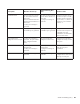
Table 51-1. Recommended VRRP Advertise Intervals
Total VRRP
Groups
Recommended
Advertise Interval Groups/Interface
S-Series
Z-Serie
s
S-Serie
s
Z-Serie
s
Less than 250 1 second 1 second 12 12
Between 250 and 450 2 - 3
seconds
2 - 3
seconds
24 24
Between 450 and 600 3 - 4
seconds
3 - 4
seconds
36 36
Between 600 and 800 4 seconds 4
seconds
48 48
Between 800 and
1000
5 seconds 5
seconds
84 84