
User manual






Translation Formats
D-44 ProMaster 2500 User Manual
Test Field (V field)
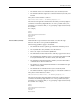
<function test> :: = [<pin list>] <test vector> {<test vector>}
<pin number> :: = <delimiter> <number>
N :: = number of pins on device
<test vector> :: = ‘V’ <number> <delimiter> < test condition> :N ‘* ‘
<test condition> :: = <digit> ‘B’ | ‘C’ | ‘D’ | ‘F’ | ‘H’ | ‘K’ | ‘L’ | ‘N’ | ‘P’
| ‘U’ | ‘X’ | ‘Z’
<reserved condition> :: = ‘A’ | ‘E’ | ‘G’ | ‘I’ | ‘J’ | ‘M’ | ‘O’ | ‘Q’ | ‘R’ |
‘S’ | ‘T’ | ‘V’ | ‘W’ | ‘Y’ | ‘Z’
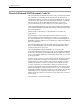
Functional test information is specified by test vectors containing test
conditions for each device pin. Each test vector contains
n
test conditions,
where n is the number of pins on the device. The following table lists the
conditions that can be specified for device pins.
When using structured test vectors to check your logic design, do NOT
use 101 or 010 transitions as tests for clock pins: use C, K, U, or D instead.
Test Conditions
Note: C, K, U, and D are clocking functions that allow for setup time.
The C, K, U, and D driving signals are presented after the other inputs are
stable. The L, H, and Z tests are performed after all inputs have
stabilized, including C, K, U, and D.
Test vectors are numbered by following the V character with a number.
The vectors are applied in numerical order. If the same numbered vector
is specified more than one time, the data in the last vector replace any
data contained in previous vectors with that number.
0 Drive input low
1 Drive input high
2-9 Drive input to supervoltage #2-9
B Buried register preload (not supported)
C Drive input low, high, low
D Drive input low, fast slew
F Float input or output
H Test output high
K Drive input high, low, high
L Verifies that the specified output pin is low
N Power pins and outputs not tested
P Preload registers
U Drive input high, fast slew
X Output not tested, input default level
Z Test input or output for high impedance