
User guide






Getting Started with CapSense Document No. 001-64846 Rev. *A 53
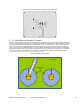
Figure 3-35. Recommended Button and Slider Layout Bottom Layer
3.7.12 Shield Electrode and Water Tolerance
Fingers and water interact in a similar, but not identical, way with electric fields. There is enough difference between
the two to make possible techniques for discriminating between a touch and a spill. On printed circuit boards and flex
circuits, a practical level of water tolerance is achieved with the use of a shield electrode. These special electrodes
add no material cost to the system because they are incorporated into the same circuit board layout as the touch
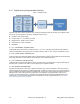
sensor. The purpose of the shield electrode is to set up an electric field pattern around the touch sensors that helps
attenuate the effects of water. The shield electrode works by mirroring the voltage of the touch sensor on the shield.
To learn more about how water tolerance is achieved with a shield electrode, refer to Cypress Application Note
AN2398, Capacitance Sensing - Waterproof Capacitance Sensing
.
Figure 3-36. Shield Electrode Plane
1 cm
1 cm
1 cm
1 cm
Sensor-1
Sensor-2
PCB
– Top Layer
Shield Electrode
Plane