
User guide





42 Document No. 001-64846 Rev. *A Getting Started with CapSense®
3.4.4 Jitter Filter
3.4.4.1 Jitter Filter for Noisy Slider Data
The centroid function is used to estimate finger position on a slider. When the signal level is low, usually as a result of
thick overlay on the slider, the estimate of finger position will appear to shake and jitter even when the finger is held at
a fixed position. This jitter noise can be removed using a jitter filter. To do this, the previous input is stored in a buffer.
The current input is compared to the previous output. If the difference is greater than ±1, the output is changed by ±1
(matching sign), as described by Equation 9. This is a nonlinear filter.
[
]
=
[
]
1, [] > [ 1] + 1 Equation 18
[
]
=
[
]
+ 1,
[
]
<
[
1
]
1
[
]
=
[
1
]
,
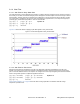
Figure 3-19 shows the results of applying a jitter filter applied to noisy centroid data
Figure 3-19. Jitter Filter Applied to Noisy Centroid Data
3.4.4.2 Jitter Filter for Raw Counts
Although the jitter filter was developed for use with noisy slider data, it has been generalized for use with noisy
buttons. If the change in the current input exceeds a set threshold level the output is changed to the previous input
plus or minus the threshold amount. The output is not changed if the current input changes by less than the threshold
amount. The general equation for a jitter filter applied to buttons is:
[
]
=
[
]
, [] > [ 1] + Equation 19
[
]
=
[
]
+ ,
[
]
<
[
1
]
[
]
=
[
1
]
,
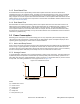
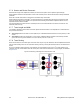
Figure 3-20 and Figure 3-21 on page 43show the result of using a jitter filter on real button data with a large
component of periodic noise.