
Specifications
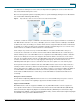
Table Of Contents
Data Sheet
© 2010 Cisco and/or its affiliates. All rights reserved. This document is Cisco Public Information. Page 4 of 9
is for data and voice sharing of a T1 or E1 service, the drop-and-insert capability also can be used for video and
data, or data and data sharing of the service.
Moreover, the integrated drop-and-insert capability enhances system availability by allowing the Cisco IOS Software
to be reloaded while maintaining TDM switching.
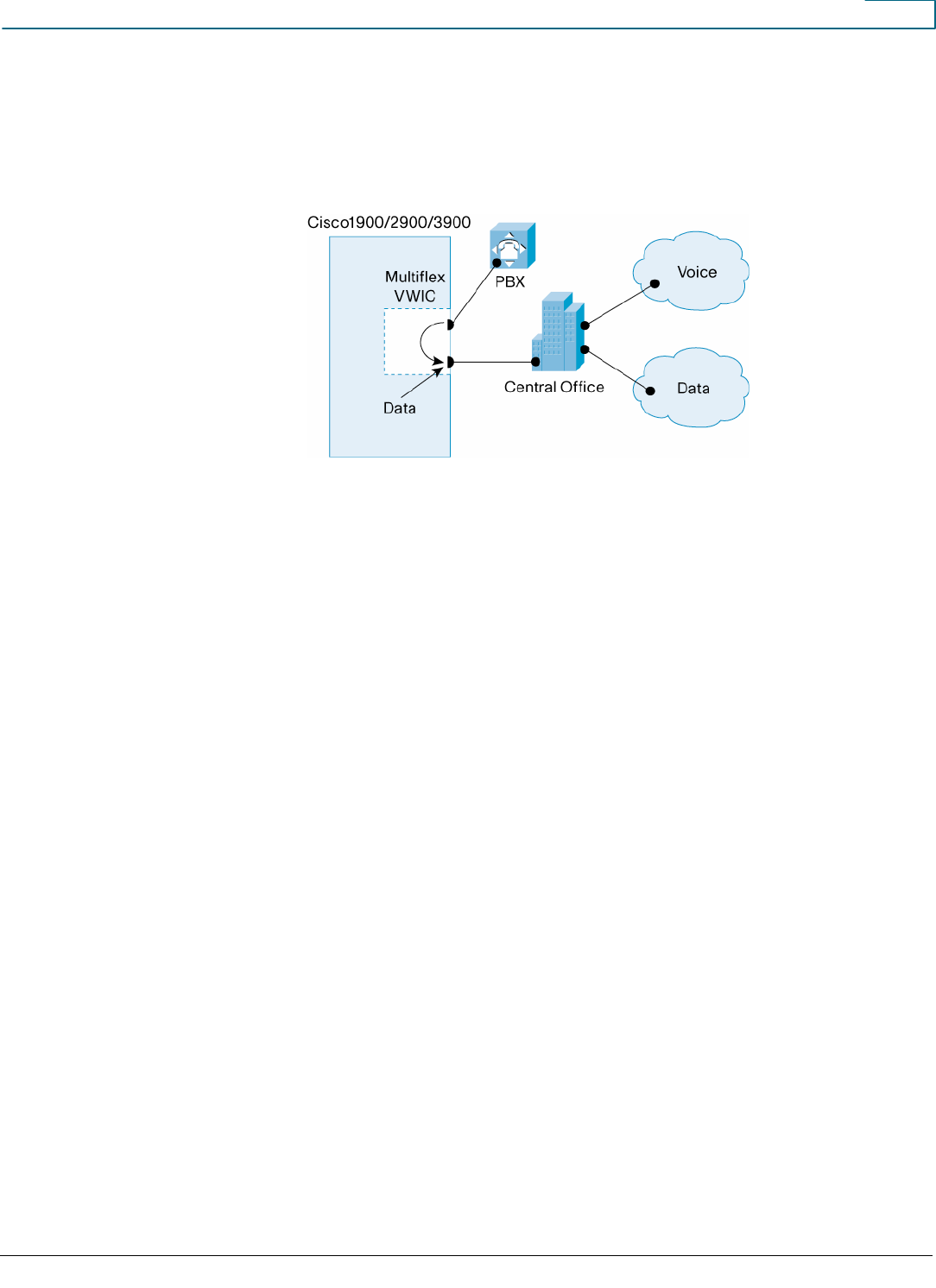
Figure 2. Drop and Insert to Share a T1/FT1 or E1/FE1 Service between Data and TDM
To illustrate, consider the example of a PBX with a T1 interface that needs to support a maximum of 10 simultaneous
calls. With 24 DS-0 channels in a T1 service (1.544 Mbps), this leaves 14 DS-0 channels or 896 kbps of bandwidth
for data from the router (14 x 64 kbps). The number of DS-0 channels assigned for PBX calls and the remainder that
are available for use with router data are fully configurable (statically, not dynamically). In the case of an E1 service,
30 DS-0 channels are available for division between voice and router data.
In this example one port of the Cisco 2-port T1/E1 MFT VWIC3 is connected to the PBX and the other port is
connected to the central office. The 10 DS-0 channels from the PBX are TDM switched to the “central-office port,”
and this switching is done on the MFT VWIC3 itself. The configuration of this TDM switching is flexible so that DS-0
channels on the “PBX port” do not have to be mapped to DS-0 channels with the same time slots on the central-
office port. The remaining 14 DS-0 channels on the MFT VWIC3 central-office port terminate through the backplane
connector of the VWIC3 on the router as a single aggregate channel group. The 14 DS-0 channels are not
individually addressable by the router as a channelized service, but can be split into one or two channel groups.
The drop-and-insert function is included in all the Cisco MFT VWIC3 interface cards. The term “drop and insert” is
normally used when router data (or data from another data device) is multiplexed with voice calls. A more generic
term for “drop and insert” is “digital cross-connect.” For example, a single T1 connection from a PBX to the PBX port
on the MFT VWIC3 can be divided between DS-0 channels that are packetized (for example, VoIP) and DS-0
channels that are TDM switched to the central-office port of the MFT VWIC3 for standard circuit-switched voice
connectivity.
Analog Cross Connect Solution
The time-division multiplexing (TDM) DS0 channels can be cross-connected with analog voice ports to create an
analog cross connect solution. This capability is supported on the 2900 and 3900 series routers.
Support on Network-Module
MFT VWIC3 interface cards are supported on EHWIC slots only. MFT VWIC2 interface cards are supported on
Voice-capable network modules: 2 slot IP Communications Enhanced Voice/Fax Network Modules (NM-HD-2VE),
and IP Communications High-Density Digital Voice/Fax Network Modules (NM-HDV2), IP Communications High-
Density Digital Voice NM with 1 T1/E1 (part number NM-HDV2-1T1/E1), and IP Communications High-Density Digital
Voice NM with 2 T1/E1 (part number NM-HDV2-2T1/E1),