
Datasheet



Cisco Preferred Architecture for
Midmarket Collaboration PAGE 18
Call Control
Class of Service
Classes of service define which users can access which services, such as allowing only emergency and local calls from
lobby phones while allowing unrestricted calls from executive phones. The complexity of the dial plan is directly related to
the number of differentiated classes of service it supports.
To define classes of service, configure partitions and calling search spaces in Cisco Unified CM. The number of classes of
services supported by a dial plan depends on the granularity and complexity of the classes. For more information about
classes of service and details on enterprise dial plan design, see the Cisco Collaboration SRND.
Admission Control
Call admission control (CAC) mitigates congestion on WAN links due to excessive audio and video traffic. In cases where
the administrator needs to control how many media calls flow over various links in the WAN topology, Cisco Unified CM
Enhanced Location Call Admission Control (ELCAC) provides a solution. ELCAC supports various WAN topologies and
gives the administrator the ability to statically model the WAN network topology to support admission control for audio and
video calls.
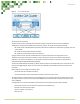
Cisco Unified CM uses locations and links to model how the WAN network topology routes media between groups of
endpoints within a location for audio and video conference calls.