
Datasheet



Cisco Preferred Architecture for
Midmarket Collaboration PAGE 15
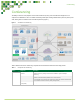
Call Control
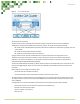
Figure 6. Cisco Unified CM Cluster
SIP Trunk Recommendations
Use SIP trunks from Cisco Unified CM to communicate with all the components in the Cisco PA for Midmarket
Collaboration, including external entities such as third-party systems. SIP trunks offer the following benefits:
•
SIP trunks provide a standards-based environment that reduces operations and maintenance complexity of the end-
to-end solution.
•
SIP trunks are enhanced with presence information.
•
SIP trunks are recommended for video communications.
Configure a SIP trunk from the Cisco Unified CM cluster to external components in the deployment, such as
TelePresence Conductor and the IM and Presence Service. Specify each server for the external component as a
destination in the SIP trunk configuration. This configuration provides continuation of services if a node goes down.
Cisco Unified Survivable Remote Site Telephony
The Cisco Survivable Remote Site Telephony (SRST) feature is critical for remote sites that require continuation of voice
services during WAN outages. SRST runs on the same Cisco ISR that provides WAN and PSTN connectivity for the
remote site.
Deploy SRST on the Cisco ISR in the following cases:
•
The remote site has local PSTN connectivity.
•
The remote site does not have local PSTN connectivity but has more than 25 users.
To avoid interruption of external voice services if a WAN outage occurs, provide local PSTN connectivity at the remote
site. SRST is required only if the remote site’s WAN reliability does not match that site’s required service level for voice
service availability.
If a WAN failure occurs at a site with SRST and local PSTN access, the following services will be available:
•
Internal point-to-point voice calls and video calls (with enhanced SRST only)
•
External voice calls through the PSTN
•
Call hold, transfer, and conference
•
Music on hold