
Specifications

Configuring Cisco Unified SIP SRST Features Using Back-to-Back User Agent Mode (for Version 3.4 and Version 4.0
Restrictions for Cisco Unified SIP SRST Features Using Back-to-Back User Agent Mode
48
Cisco Unified SIP SRST 4.0 System Administrator Guide
• Complete the necessary tasks found in the “Getting Started” chapter. Specific tasks include the
required task that is documented in the “Enabling SIP-to-SIP Connection Capabilities” section on
page 21.
• Configure the SIP registrar. The SIP registrar gives users control of accepting or rejecting
registrations. To configure acceptance of incoming SIP Register messages, see the “Configuring the
SIP Registrar” section on page 24.
Restrictions for Cisco Unified SIP SRST Features Using
Back-to-Back User Agent Mode
See the restrictions documented in the “Restrictions for Configuring Cisco Unified SIP SRST” section
in the “Cisco Unified SIP SRST Feature Overview” chapter.
Information About Cisco Unified SIP SRST Features Using
Back-to-Back User Agent Mode
A Cisco Unified SRST system can now support SIP phones with standard-based RFC 3261 feature
support locally and across SIP WAN networks. With Cisco Unified SIP SRST, SIP phones can place calls
across SIP networks with similar features, as SCCP phones do. For example, most SCCP phone features
such as caller ID, speed dial, and redial are supported now on SIP networks, which gives users the
opportunity to choose SCCP or SIP.
Cisco Unified SIP SRST also uses a back-to-back user agent (B2BUA), which is a separate call agent
that has more features than Cisco SIP SRST 3.0, which used a redirect server that only accepted and
forwarded calls. The main advantage of a B2BUA call agent is in call forwarding, because it forwards
calls on behalf of the phone. In addition, it maintains a presence as call middleman in the call path.
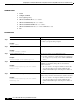
Cisco SIP SRST 3.4 supports the following call combinations:
• SIP phone to SIP phone
• SIP phone to PSTN / router voice port
• SIP phone to SCCP phone
See Figure 1 on page 6 and Figure 2 on page 7 for an illustration of Cisco Unified SIP SRST using a
B2BUA.
Cisco Unified SIP SRST and Cisco SIP CallManager Express Feature Crossover
Cisco Unified SIP SRST uses is a voice register dn configuration mode. However, in a typical
Cisco Unified SIP SRST setup, voice register dn commands are not used, so they are not discussed in
this book. Although you are not restricted from using voice register dn commands, they are not likely
to be needed in a Cisco Unified SIP SRST environment. The voice register dn commands are most likely
to be used in a Cisco Unified SIP CallManager Express (CME) environment. If you work in a
Cisco Unified SIP CME environment and would like to know which commands are also applicable to
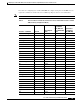
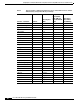
Cisco Unified SIP SRST, Table 5 lists Version 3.4 commands for CME and SRST. Commands marked
under the column “Cisco (SIP) CME Mode Only” show up if mode cme is configured in voice register
global configuration mode; these commands apply to Cisco CME only.