
Specifications
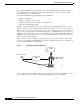



Cisco Unified SIP SRST Feature Overview
Prerequisites for Configuring Cisco Unified SIP SRST
9
Cisco Unified SIP SRST 4.0 System Administrator Guide
Note When the WAN goes down, for each outgoing call the SIP phone continues to send the SIP
proxy server up to seven Invite messages. If the Invite messages are not acknowledged, the
SIP phone switches to Cisco Unified SIP SRST to route the call. Thus, there may be a few
seconds delay before SIP SRST takes over call processing from the SIP proxy server. If your
network is designed to return an ICMP host unreachable indication to the phone in response
to an outgoing SIP Invite message when the WAN is down, the phone responds by switching
to the Cisco Unified SIP SRST router more rapidly.
Dual registration is not supported on the Cisco Unified IP Phone 7905G, Cisco Unified IP
Phone 7912G, or Cisco Analog Telephone Adaptor (ATA) series with a SIP image. Therefore auto
registration to the SIP SRST router is not available.
• If the WAN is down, and you reboot your Cisco Unified SIP SRST router, when the router reloads
it will have no database of SIP phone registrations. The SIP phones will have to register again, which
could take several minutes, because SIP phones do not use a keepalive functionality. To shorten the
time before the phones re-register, the registration expiry can be adjusted with the registrar server
command. The default expiry is 3600 seconds; an expiry of 600 seconds is recommended.