
User Manual

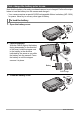


Table Of Contents
- Accessories
- Read this first!
- Contents
- General Guide
- Monitor Screen Contents and How to Change Them
- Quick Start Basics
- What you can do with your CASIO camera
- Tilting the Monitor Screen
- Using the Stand
- First, charge the battery prior to use.
- Configuring Basic Settings the First Time You Turn On the Camera
- Preparing a Memory Card
- Turning the Camera On and Off
- Holding the Camera Correctly
- To shoot a snapshot
- Viewing Snapshots
- Deleting Snapshots and Movies
- Snapshot Shooting Precautions
- Snapshot Tutorial
- Selecting the Recording Mode
- Using the Control Panel
- Using the Self-timer (Self-timer)
- Adjusting White Balance (White Balance)
- Selecting a Focus Mode (Focus)
- Specifying ISO Sensitivity (ISO)
- Recording Beautiful Portraits (Make-up Level)
- Correcting Image Brightness (EV Shift)
- Using Flash (Flash)
- Specifying the Metering Mode (Metering)
- Shooting with Zoom
- Shooting with Bracketing (Intelligent Bracketing)
- Shooting Multiple Images Over a Specified Period (Interval Shot)
- Shooting a Burst of Images (CS)
- Triggering a Self-timer Operation with Motion (Handsfree)
- Shooting with Artistic Effects (ART SHOT)
- Creating and Using Your Own Setups (CUSTOM SHOT)
- Recording Movies
- Using BEST SHOT
- To shoot with BEST SHOT
- Shooting with Triple Shot
- Shooting with a Blurred Background (Blurred Background)
- Shooting with Full Focus Macro (All-In-Focus Macro)
- Digitally Correcting for Overexposure and Underexposure (HDR)
- Shooting with High Speed Anti Shake (HS Anti Shake)
- Shooting Bright Images in the Dark without Flash (HS Night Shot)
- Shooting with Priority on Subject Faces (HS Best Selection)
- Shooting a Panorama Image (Slide Panorama)
- Shooting with a Super Wide Angle of View (Wide Shot)
- Using a TV Screen to Shoot Snapshots (HDMI TV Output)
- Advanced Settings (REC MENU)
- Configuring Recording Settings
- Using a Smartphone as a Camera Remote Controller (Remote Capture)
- Assigning Functions to the Control Dial (Key Customize)
- Displaying Functions Assigned to the Control Dial and Function Ring (EX Finder)
- Changing the Monitor Screen when Recording (Shooting Info)
- Turning on Image Review (Review)
- Assigning a Recording Function to the Front Shutter Button (Front Shutter)
- Reducing Light Intensity (ND Filter)
- Shooting a Burst of Images (CS)
- Saving a Second Normal Image When Shooting with HDR Art (Double (HDR ART))
- Configuring Handsfree Settings (Handsfree)
- Configuring Motion Position Settings (Motion Position)
- To select the snapshot image size (Image Size)
- Specifying Snapshot Image Quality (Image Quality)
- Movie Image Quality Settings (Movie Quality)
- Specifying ISO Sensitivity (ISO)
- Specifying the ISO Sensitivity Upper Limit (ISO High Limit)
- Reducing the Effects of Camera and Subject Movement (Anti Shake)
- Zooming with Super Resolution (Zoom (SR))
- Turning Digital Zoom On or Off (Digital Zoom)
- Selecting a Focus Mode (Focus)
- Shooting with Face Detection (Face Detection)
- Specifying the Auto Focus Area (AF Area)
- Recording Beautiful Portraits (Make-up Level)
- Shooting with Continuous Auto Focus (Continuous AF)
- Optimizing Image Brightness (Lighting)
- Reducing Wind Noise during Movie Recording (Wind Noise Cut)
- Correcting Image Brightness (EV Shift)
- Adjusting White Balance (White Balance)
- Using the Self-timer (Self-timer)
- Specifying the Metering Mode (Metering)
- Specifying Flash Intensity (Flash Intensity)
- Controlling Image Sharpness (Sharpness)
- Controlling Color Saturation (Saturation)
- Adjusting Image Contrast (Contrast)
- Using the Auto Focus Assist Light (AF Assist Light)
- Using Icon Help (Icon Help)
- Configuring Power On Default Settings (Memory)
- Viewing Snapshots and Movies
- Other Playback Functions (PLAY MENU)
- Assigning a Function to the Front Shutter Button (Front Shutter)
- Sending a Snapshot or Movie File from Camera Memory to a Smartphone (Send to phone)
- Viewing Snapshots and Movies in Camera Memory on a Smartphone (View on phone)
- Playing a Slideshow on the Camera (Slideshow)
- Using Snapshots to Create a Movie (Make Movie)
- Editing a Movie on the Camera (Movie Editing)
- To merge two movies (Movie Merge)
- Creating a Snapshot of Movie Frames (MOTION PRINT)
- Optimizing Image Brightness (Lighting)
- Adjusting White Balance (White Balance)
- Adjusting the Brightness of an Existing Snapshot (Brightness)
- Selecting Images for Printing (DPOF Printing)
- Protecting a File Against Deletion (Protect)
- Editing the Date and Time of an Image (Date/Time)
- Rotating an Image (Rotation)
- Resizing a Snapshot (Resize)
- Cropping a Snapshot (Trimming)
- Copying Files (Copy)
- Dividing Up a Continuous Shutter Group (Divide Group)
- Combining CS Images into a Single Still Image (CS Multi Print)
- Editing a CS Image (Edit Group)
- Changing Available Image Menu Options (Image Menu Options)
- Establishing a Wireless LAN Connection
- Wireless LAN Functions
- Establishing a Connection between a Smartphone and Your Camera
- Using a Smartphone as a Camera Remote Controller (Remote Capture)
- Sending the Currently Displayed Image to a Smartphone (Quick Send)
- Sending a Snapshot or Movie File from Camera Memory to a Smartphone (Send to phone)
- Resizing Snapshots before Sending Them to a Smartphone (Resize before send)
- Viewing Snapshots and Movies in Camera Memory on a Smartphone (View on phone)
- Printing
- Using the Camera with a Computer
- Other Settings (SETTING)
- Enabling Power Saving (ECO Mode)
- Adjusting Monitor Screen Brightness (Screen)
- Resizing Snapshots before Sending Them to a Smartphone (Resize before send)
- Configuring Camera Sound Settings (Sounds)
- Creating an Image Storage Folder (Create Folder)
- Time Stamping Snapshots (Timestamp)
- Auto Image Orientation Detection and Rotation (Auto Rotate)
- Specifying the File Name Serial Number Generation Rule (File No.)
- Configuring Sleep State Settings (Sleep)
- Configuring Auto Power Off Settings (Auto Power Off)
- Specifying the Operation when the Monitor Screen is Tilted (Screen Tilt)
- Configuring [>] Setting (PLAY)
- Disabling File Deletion (Delete Key)
- Configuring World Time Settings (World Time)
- Setting the Camera’s Clock (Adjust)
- Specifying the Date Style (Date Style)
- Specifying the Display Language (Language)
- Selecting the HDMI Terminal Output Method (HDMI Output)
- Changing the Camera Password for Wireless LAN Connection (WLAN password)
- Formatting Built-in Memory or a Memory Card (Format)
- Resetting the Camera to Factory Defaults (Reset)
- Appendix

26
Quick Start Basics
. To charge using a USB connection to a computer
USB connection lets you charge the battery while it is loaded in the camera.
While the camera is turned off, connect in the sequence shown below (
1
,
2
).
• If the camera is on, press [ON/OFF] (Power) to turn it off before connecting it to
your computer.
IMPORTANT!
• The first time you connect the camera to your computer with the USB cable, an
error message may appear on your computer. If this happens, disconnect and then
reconnect the USB cable.
• A battery that has not been used for a long time, certain types of computers, and
connection conditions can cause charging to take more than approximately five
hours, which will trigger a timer that terminates charging automatically, even if the
battery is not fully charged. If this happens, disconnect and then reconnect the
USB cable to restart charging. To complete charging faster, use of the included
USB-AC adaptor is recommended.
• If the battery has not been used for a very long time, charging may terminate
automatically and the back lamp may start flashing red or go out after only about
60 minutes. In either case, use of the USB-AC adaptor that comes with the camera
is recommended.
• If you turn on the camera while charging over a USB connection to a computer is in
progress, the camera will establish a USB connection with the computer. Though
charging normally should continue at this time, certain types of computers or
connection environments may stop charging if supply power is low. This will be
indicated by the camera’s back lamp lighting green.
• Charging is not performed while the connected computer is in the hibernate mode.
2
USB
1
Micro USB cable
(included with camera)
u mark of the small (micro USB) connector facing the
monitor screen side of the camera.
[USB] port
USB port
Computer
(power turned on)