
User`s guide


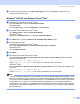


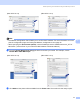


Table Of Contents
- NETWORK USER’S GUIDE
- Table of Contents
- 1 Introduction
- 2 Configuring your machine for a network
- Overview
- IP addresses, subnet masks and gateways
- Step by step chart
- Setting the IP address and subnet mask
- Changing the print server settings
- Using the BRAdmin Light utility to change the print server settings
- Using the BRAdmin Professional 3 utility to change print server settings (Windows®)
- Using the control panel to change the print server settings
- Using Web Based Management (web browser) to change the print/scan server settings
- Using Remote Setup to change the print server settings (Not available for Windows Server® 2003/2008) (Not available for DCP-8085DN)
- Using other methods to change print server settings
- 3 Control panel setup
- 4 Driver Deployment Wizard (Windows® only)
- 5 Network printing from Windows®: basic TCP/IP Peer-to-Peer printing
- 6 Internet printing for Windows®
- 7 Network printing from Macintosh using the BR-Script 3 driver
- 8 Web Based Management
- Overview
- How to configure the machine settings using Web Based Management (web browser)
- Password information
- Secure Function Lock 2.0 (Not available for MFC-8370DN)
- Changing the Scan to FTP configuration using a web browser
- Changing the Scan to Network configuration using a web browser
- Changing the LDAP configuration using a web browser (For MFC-8880DN)
- 9 LDAP operation (For MFC-8880DN)
- 10 Internet fax and Scan to E-mail (E-mail server) (For MFC-8880DN)
- Internet fax Overview
- Getting connected
- Control panel key functions
- Sending an Internet fax
- Manually entering text
- Receiving E-mail or Internet fax
- Receiving an Internet fax to your computer
- Forwarding received E-mail and fax messages
- Relay broadcasting
- TX Verification Mail
- Setup Mail TX
- Setup Mail RX
- Error mail
- Important information on Internet fax
- Scan to E-mail (E-mail server) overview
- Internet fax Overview
- 11 Security features
- 12 Troubleshooting
- Appendix A
- Using services
- Other ways to set the IP address (for advanced users and administrators)
- Using DHCP to configure the IP address
- Using BOOTP to configure the IP address
- Using RARP to configure the IP address
- Using APIPA to configure the IP address
- Using ARP to configure the IP address
- Using the TELNET console to configure the IP address
- Using the Brother Web BRAdmin server software for IIS to configure the IP address
- Installation when using web services (Windows Vista®)
- Installation when using a Network Print Queue or Share (printer driver only)
- Appendix B
- Appendix C
- Index

Internet printing for Windows
®
57
6
l To test the printer connection, click Print a test page, and then click Finish. The printer is now
configured and ready to print.
Windows
®
2000/XP and Windows Server
®
2003 6
a (Windows
®
XP and Windows Server
®
2003)
Click the Start button and choose Printers and Faxes.
(Windows
®
2000)
Click the Start button and choose Settings and then Printers.
b (Windows
®
XP and Windows Server
®
2003)
Click Add a printer to start the Add Printer Wizard.
(Windows
®
2000)
Double click the Add Printer icon to start the Add Printer Wizard.
c Click Next when you see the Welcome to the Add Printer Wizard screen.
d Choose Network Printer.
(Windows
®
XP and Windows Server
®
2003)
Choose A network printer, or a printer attached to another computer.
(Windows
®
2000)
Choose Network Printer.
e Click Next.
f (Windows
®
XP and Windows Server
®
2003)
Choose Connect to a printer on the Internet or on a home or office network and then enter the
following in the URL field:
http://printer’s IP address:631/ipp
(where “printer’s IP address” is the printer’s IP address or the node name.)
(Windows
®
2000)
Choose Connect to a printer on the Internet or on your intranet and then enter the following in the
URL field:
http://printer’s IP address:631/ipp
(Where “printer’s IP address” is the printer’s IP address or the node name).
Note
If you have edited the hosts file on your computer or are using a Domain Name System (DNS), you can
also enter the DNS name of the print server. As the print server supports TCP/IP and NetBIOS names,
you can also enter the NetBIOS name of the print server. The NetBIOS name can be seen in the Network
Configuration List. (To learn how to print the Network Configuration List, see Printing the Network
Configuration List on page 45.) The NetBIOS name assigned is the first 15 characters of the node name
and by default it will appear as “BRNxxxxxxxxxxxx”. (“xxxxxxxxxxxx” is your machine’s MAC Address /
Ethernet Address.)