USER’S GUIDE MFC-7420 MFC-7820N Version C
If you need to call Customer Service Please complete the following information for future reference: Model Number: MFC-7420 and MFC-7820N (Circle your model number) Serial Number:* Date of Purchase: Place of Purchase: * The serial number can be displayed on the LCD screen (Menu/Set, 4, 1) for MFC-7420 or (Menu/Set, 6, 1) for MFC-7820N. Retain this User’s Guide with your sales receipt as a permanent record of your purchase, in the event of theft, fire or warranty service.
THIS EQUIPMENT IS DESIGNED TO WORK WITH A TWO WIRE ANALOGUE PSTN LINE FITTED WITH THE APPROPRIATE CONNECTOR. APPROVAL INFORMATION Brother advises that this product may not function correctly in a country other than where it was originally purchased, and does not offer any warranty in the event that this product is used on public telecommunication lines in another country. Compilation and Publication Notice Under the supervision of Brother Industries Ltd.
ii
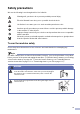
Safety precautions We use the following icons throughout this User’s Guide. Warnings tell you what to do to prevent possible personal injury. Electrical Hazard icons alert you to a possible electrical shock. Hot Surface icons warn you not to touch machine parts that are hot. Cautions specify procedures you must follow or avoid to prevent possible damage to the machine or other objects. Improper Setup icons alerts you to devices and operations that are not compatible with the machine.
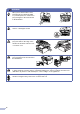
WARNING After you use the machine, some internal parts are extremely HOT! To prevent injuries, be careful not to put your fingers in the areas shown in the illustration. The fuser unit is marked with a caution label. Please do not remove or damage the label. To prevent injuries, be careful not to put your hands on the edge of the machine under the document cover or scanner cover. To prevent injuries, be careful not to put your fingers in the area shown in the illustrations.
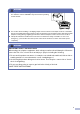
WARNING ■ When you move the machine, grasp the side hand holds that are under the scanner. DO NOT carry the machine by holding it at the bottom. ■ Use caution when installing or modifying telephone lines. Never touch telephone wires or terminals that are not insulated unless the telephone line has been disconnected at the wall socket. Never install telephone wiring during a lightning storm. Never install a telephone wall socket in a wet location.
Quick Reference Guide Sending Faxes Storing Speed-Dial numbers Automatic Transmission using the ADF 1 2 1 If it is not illuminated in green, press (Fax). Press Menu/Set, 2, 3, 2. Using the dial pad, enter a three-digit Speed-Dial location number (001 - 200). Press Menu/Set. 2 3 Load your document. 4 Press Start. Enter the fax number using One-Touch, Speed-Dial, Search or the dial pad. 3 Enter the number (up to 20 digits). Press Menu/Set.
Using Search 1 If it is not illuminated in green, press (Fax). 2 3 Load your document. ▲ Press or ▲ 4 5 Press Search/Speed Dial, and then enter the first letter of the name you’re looking for. to search the memory. Press Start. Making copies Single copy 1 Press green. 2 3 Load your document. (Copy) to illuminate it in Press Start. Sorting copies using the ADF 1 Press green. 2 3 Load your document. 4 Press Options and ▲ or ▼ to select Stack/Sort .
Table of Contents 1 Introduction Using this Guide ..................................................................................................1-1 Choosing a location .............................................................................................1-2 How to access the complete User’s Guide ..........................................................1-3 To view Documentation (For Windows®).......................................................1-3 How to find Scanning instructions ...........
Setting up the password ............................................................................2-8 Changing the TX Lock password...............................................................2-8 Turning TX Lock on ...................................................................................2-9 Turning TX Lock off ...................................................................................2-9 Memory Security (MFC-7820N only) .............................................................
4 Setup Receive Basic receiving operations...................................................................................4-1 Choosing the Receive Mode ........................................................................4-1 To select or change your Receive Mode ...................................................4-2 Setting the Ring Delay ..................................................................................4-2 Setting the F/T Ring Time (Fax/Tel mode only).................................
7 Printing reports Fax settings and activity ......................................................................................7-1 Customizing the Transmission Verification Report ........................................7-1 Setting the Journal Period .............................................................................7-2 Printing reports ..............................................................................................7-2 How to print a report ......................................
Paper jams ..................................................................................................11-7 Paper is jammed inside the machine.......................................................11-7 Paper is jammed at the back of the machine ..........................................11-8 Paper is jammed inside the drum unit and toner cartridge assembly....11-10 If you are having difficulty with your machine ............................................11-11 Improving the print quality ..............
Inserting spaces ..................................................................................... B-10 Making corrections ................................................................................. B-10 Repeating letters .................................................................................... B-10 Special characters and symbols ............................................................ B-10 G Glossary S Specifications G-1 Product description ...................................
1 Introduction Using this Guide Throughout this Guide you will see special symbols alerting you to important warnings, notes and actions. Special fonts identify keys you should press, messages that appear on the LCD, and important points or related topics. Bold Bold typeface identifies specific keys on the machine’s control panel. Italics Italicized typeface emphasizes an important point or refers you to a related topic. Courier Courier type face identifies the messages on the LCD of the machine.
Introduction Choosing a location Place your machine on a flat, stable surface that is free of vibration and shocks, such as a desk. Put the machine near a telephone socket and a standard, grounded electrical socket. Choose a location where the temperature remains between 10°C and 32.5°C. CAUTION ■ Avoid placing your machine in a high-traffic area. ■ Do not place the machine near heaters, air conditioners, water, chemicals, or refrigerators.
Chapter 1 How to access the complete User’s Guide This User’s Guide does not contain all the information about the machine such as how to use the advanced features of the Fax, Printer, Scanner, PC Fax and Network. When you are ready to learn detailed information about these operations, read the complete User’s Guide located in the ‘Documentation’ section of the CD-ROM. Note Network is not available for MFC-7420. MFC-7420: Network features are available only with an optional Print or Print/Scan server.
Introduction To view Documentation (For Macintosh®) 1 How to find Scanning instructions Turn on your Macintosh®. Insert the Brother CD-ROM labelled Macintosh® into your CD-ROM drive. The following window will appear. There are several ways you can scan documents. You can find the instructions as follows: Software User's Guide: ■ Scanning from a Macintosh® in Chapter 7 (For Mac OS® 9.1 - 9.2/Mac OS® X 10.2.4 or greater) ■ Using ControlCenter2.0 (For Mac OS® X 10.2.
Chapter 1 Control panel overview MFC-7420 and MFC-7820N have similar control keys. 5 One-Touch Keys These 4 keys give you instant access to 8 previously stored numbers. 2 Shift To access One-Touch numbers 5 to 8, hold down Shift as you press the One-Touch key. 3 Fax and telephone keys: Redial/Pause Redials the last number you called. It also inserts a pause in quick dial numbers. Resolution Sets the resolution when you send a fax. 4 Mode keys: Fax Lets you access Fax mode.
Introduction 1 6 Dial Pad A Use these keys to dial telephone or fax numbers and as a keyboard for entering information into the machine. The # key lets you temporarily switch the dialling mode during a telephone call from Pulse to Tone. 7 Start Lets you start sending faxes or make copies. 8 Stop/Exit Stops an operation or exits from the menu. 9 Reports Print the Transmission Verification Report, Help List, Quick-Dial List, Fax Journal, User Settings, Order Form and Network Configuration*.
Chapter 1 Load document 2 Adjust the paper guides to fit the width of your documents. 3 Unfold the ADF document output support flap. You can send a fax, make copies, and scan from the ADF (automatic document feeder) and from the scanner glass. Using the automatic document feeder (ADF) The ADF can hold up to 35 pages and feeds each sheet individually. Use standard 80 g/m2 paper and always fan the pages before putting them in the ADF.
Introduction Using the scanner glass You can use the scanner glass to fax, copy or scan pages of a book or one page at a time. Documents can be up to 215.9 mm wide and 297 mm long. 3 Close the document cover. 1 CAUTION If the document is a book or is thick, do not slam the cover or press on it. Note To use the scanner glass, the ADF must be empty. 1 2 Lift the document cover. Using the document guidelines on the left, centre the document face down on the scanner glass.
Chapter 1 About paper Choosing acceptable paper Recommended paper To get the best print quality, we suggest using the following paper. Paper Type Plain paper Item Xerox Premier 80 g/m2 Xerox Business 80 g/m2 M-real DATACOPY 80 g/m2 IGEPA X-Press 80 g/m2 Recycled paper Xerox Recycled Supreme Transparency 3M CG 3300 Labels Avery laser label L7163 ■ Use paper that is made for plain-paper copying. ■ Use paper that is 75 to 90 g/m2. ■ Use neutral paper. Do not use acidic or alkaline paper.
Introduction CAUTION 1 Do not use the following types of paper or envelopes; they may cause a paper jam and damage your machine.
Chapter 1 How to load paper 4 Put paper in the paper tray. To load paper or other media in the paper tray 1 Maximum paper mark Pull the paper tray completely out of the machine. 5 2 Put the paper tray firmly back in the machine and unfold the output paper tray support flap before you use the machine. Output Paper Tray Support Flap While pressing the paper guide release lever, slide the adjusters to fit the paper size. Check that the guides are firmly in the slots.
Introduction To load paper or other media in the manual feed slot You can load envelopes and special print media one at a time into this slot. Use the manual feed slot to print or copy on labels, envelopes or thicker paper. 1 Slide the paper guides to fit the paper size. Note When you put paper in the manual feed slot, please remember the following: ■ The side to be printed on must be face up. ■ Put the leading edge (top of the paper) in first and push it gently into the slot.
Chapter 1 About fax machines Custom features Do you have BT’s Call Minder on the phone line? If you have Call Minder on the phone line where you will install your new machine, there is a strong possibility that Call Minder and the machine may conflict with each other while receiving incoming calls. Why should there be problems? Since both the machine and Call Minder will pick up the call, after the number of rings you have set, each of them has the ability to keep the other from receiving calls.
Introduction ECM (Error Correction Mode) 1 The Error Correction Mode (ECM) is a way for the machine to check a fax transmission while it is in progress. If the machine detects errors during fax transmission, it resends the pages of the fax that had an error. ECM transmissions are only possible between fax machines that both have this feature. If they do, you may send and receive fax messages that are continuously being checked by the machine.
2 Getting started Initial setup 5 Enter the time in 24-Hour format. Press Menu/Set. (For example, enter 15:25 for 3:25 P.M.) Setting the Date and Time When the machine is not in use it will display the date and time. If you set up the Station ID the date and time displayed by your machine will be printed on every fax you send. If there is a power failure, you may have to reset the date and time. No other settings will be affected.
Getting started Setting the Station ID It is important that you enter the fax number in the internationally standardised format, i.e. in accordance with the following strict sequence: ■ The “+” (plus) character (by pressing key) ▲ You should store your name or company name and fax number so they print on all fax pages you send. Note ■ You cannot enter a hyphen in the number. To enter a space press once between numbers. ■ The telephone number you enter is only used for Cover Page features.
Chapter 2 Setting the Phone Line Type If you are connecting the machine to a line that features a PABX (PBX) or ISDN to send and receive faxes, it is also necessary to change the Phone Line Type accordingly by completing the following steps. 1 Press Menu/Set, 0, 5. Initial Setup 5.Phone Line Set 2 Press ▲ or ▼ to select PBX, ISDN (or Normal). Press Menu/Set. 3 2-3 Press Stop/Exit.
Getting started General Setup Setting the Paper Type Setting the Mode Timer To get the best print quality, set the machine for the type of paper you are using. The machine has three temporary mode keys on the control panel: Fax, Scan and Copy. You can change the number of seconds or minutes the machine takes after the last Scan or Copy operation before it returns to Fax mode. If you select Off, the machine stays in the mode you used last. 1 2 Press Menu/Set, 1, 2. General Setup 2.
Chapter 2 Setting the Paper Size Setting the Ring Volume You can use seven sizes of paper for printing copies: Letter, A4, B5, A5, B6, A6 and Executive and two sizes for printing faxes: Letter and A4. When you change the size of paper you load in the paper tray, you will need to change the paper size setting at the same time so your machine can fit an incoming fax or a reduced copy on the page. You can turn the ring Off or you can select the ring volume level. 1 Volume 1.
Getting started Setting the Beeper Volume You can change the beeper volume. The default setting is Med. When the beeper is on, the machine will beep when you press a key, make a mistake, or after you sent or received a fax. 1 Press Menu/Set, 1, 4, 2. Volume 2.Beeper 2 You can set the machine to change automatically for Daylight Savings Time. It will reset itself forward one hour in the Spring and backward one hour in the Autumn. Make sure you have set the correct day and time in the Date/Time setting.
Chapter 2 Sleep Time Setting the LCD Contrast Setting the Sleep Time reduces power consumption by turning off the fuser inside the machine while it is idle. You can choose how long the machine is idle (from 00 to 99 minutes) before it goes into sleep mode. The timer is automatically reset when the machine receives a Fax or PC data or makes a copy. The factory setting is 05 minutes. While the machine is in sleep mode you will see Sleep on the LCD.
Getting started Security You can set up your machine with multiple levels of security using TX Lock (MFC-7420 only), Memory Security (MFC-7820N only) and Setting Lock. Setting up the password Note ■ If you have already set the password, you will not need to set it, again. ■ If you forget the TX Lock password, please call your Brother dealer for service. TX Lock (MFC-7420 only) TX Lock lets you prevent unauthorized access to the machine.
Chapter 2 Turning TX Lock on 1 Press Menu/Set, 1, 8, 1. Security 1.TX Lock 2 Press ▲ or ▼ to select Set TX Lock. Press Menu/Set. 3 Enter the registered four-digit password. Press Menu/Set. The machine goes offline and the LCD shows TX Lock Mode. Turning TX Lock off 1 Press Menu/Set. Enter the registered four-digit password. 2 Press Menu/Set. TX Lock is automatically turned off. Note If you enter the wrong Password, the LCD shows Wrong Password and stays offline.
Getting started Setting up the password Note Turning Memory Security on 1 ■ If you have already set the password, you will not need to set it, again. Security 1.Mem Security ■ If you forget the Memory Security password, please call your Brother dealer for service. 2 1 3 Press Menu/Set, 1, 8, 1. 3 Note Press Menu/Set. If you are entering the password for the first time, the LCD shows Verify. Re-enter the password. 1 Press Stop/Exit. Press Menu/Set, 1, 8, 1.
Chapter 2 Setting Lock Setting Lock lets you prevent unauthorized access to the machine settings. While Setting Lock is On, the following operations are NOT available without password: ■ Date & Time ■ Station ID Setting up the password Note ■ If you have already set the password, you will not need to set it, again. ■ If you forget the Setting Lock password, please call your Brother dealer for service. 1 ■ Set Quick-Dial (One-Touch Dial, Speed-Dial and Setup Groups) ■ Mode Timer ■ Paper Type Security 2.
Getting started Changing the Setting Lock password Turning Setting Lock off 1 2 1 Press Menu/Set, 1, 8, 2. Press ▲ or ▼ to select Set Password. Security 2.Setting Lock Press Menu/Set. 3 Enter the registered four-digit password. Press Menu/Set. 4 Enter a four-digit number for the new password. Press Menu/Set. 5 If the LCD shows Verify , re-enter the new password. Press Menu/Set, 1, 8, 2. 2 2 Enter the registered four-digit password. Press Menu/Set twice. Press Stop/Exit.
3 Setup Send How to enter Fax mode One-Touch Dialling Before sending faxes or changing fax send or Press the One-Touch key of the location you want to call. (See Storing One-Touch numbers on page 5-1.) receiving settings, make sure (Fax) is illuminated in green. If it is not, press (Fax) to enter Fax mode. The default setting is Fax mode. Note To dial One-Touch numbers 5 to 8, hold down Shift as you press the One-Touch key.
Setup Send Search Fax Redial You can search for names you have stored in the One-Touch and Speed-Dial memories. Press Search/Speed Dial and the navigation keys to search. (See Storing One-Touch numbers on page 5-1 and Storing Speed-Dial numbers on page 5-2.) If you are sending a fax manually and the line is busy, press Redial/Pause, and then press Start to try again. If you want to make a second call to the last number dialled, you can save time by pressing Redial/Pause and Start.
Chapter 3 How to Fax 4 Next Page? 1.Yes 2.No(Send) Faxing from the ADF 1 —OR— If it is not illuminated in green, press To send a single page, press 2 (or press Start again). (Fax). 2 3 The machine starts sending the document. Put the document face up in the ADF. Dial the fax number. Press Start. The machine starts scanning the document. Faxing from the scanner glass To send more than one page, press 1 and go to Step 5. 5 Place the next page on the scanner glass.
Setup Send Automatic transmission Out of Memory message This is the easiest way to send a fax. If you get an Out of Memory message while scanning the first page of a fax, press Stop/Exit to cancel the fax. Do not pick up the handset of the external phone. Press Start immediately after dialling. (For an example of automatic faxing, follow the steps in Faxing from the ADF on page 3-3.
Chapter 3 Basic sending operations Contrast Sending faxes using multiple settings Use Light to send a light document. When you send a fax you can choose any combination of these settings: cover page, contrast, resolution, overseas mode, delayed fax timer, polling transmission or real time transmission. 1 1 If it is not illuminated in green, press If your document is very light or very dark, you may want to change the contrast. Use Dark to send a dark document. (Fax). 2 3 Next 1.Yes 2.
Setup Send Fax Resolution Dual Access After you load the document, you can use Resolution to change the setting temporarily You can dial a number, and begin scanning the fax into memory—even when the machine is sending from memory, receiving faxes or printing PC data. The LCD shows the new job number. (for this fax only). In Fax mode , press Resolution and ▲ or ▼ to select the setting you want, and then press Menu/Set.
Chapter 3 Real Time Transmission Broadcasting When you are sending a fax, the machine will scan the documents into the memory before sending. Then, as soon as the phone line is free, the machine will start dialling and sending. Broadcasting is when the same fax message is automatically sent to more than one fax number. You can include Groups, One-Touch, Speed-Dial numbers and up to 50 manually dialled numbers in the same broadcast.
Setup Send Note ■ If you did not use up any of the numbers for Groups, access codes or credit card numbers, you can ‘broadcast’ faxes to as many as 258 different numbers. ■ The available memory will vary depending on the types of jobs in the memory and the number of locations used for broadcasting. If you broadcast to the maximum numbers available, you will not be able to use Dual Access and Delayed fax.
Chapter 3 Advanced sending operations Composing your own comments You can set up two comments of your own. 1 Composing the electronic Cover Page The Cover Page is sent to the receiving party’s machine. Your Cover Page includes the name stored in the One-Touch or Speed-Dial memory. If you are dialling manually, the name is left blank. The Cover Page shows your Station ID and the number of pages you’re sending. (See Setting the Station ID on page 2-2.
Setup Send Cover page for the next fax only Send a cover page for all faxes If you have not yet set your Station ID this feature will not work. Make sure you have programmed the Station ID before continuing. (See Setting the Station ID on page 2-2.) If you only want to send a Cover Page with a particular fax, your machine will ask you to enter the number of pages you are sending so it can be printed on the Cover Page. If you have not yet set your Station ID this feature will not work.
Chapter 3 Using a printed cover page If you prefer to use a printed cover page that you can write on, you can print the sample page and attach it to your fax. 1 If it is not illuminated in green, press (Fax). 2 Press Menu/Set, 2, 2, 7. Setup Send 7.Coverpg Setup 3 Press ▲ or ▼ to select Print Sample . Press Menu/Set. 4 Overseas Mode If you are having difficulty sending a fax overseas due to possible interference on the phone line, we recommend that you turn on the Overseas Mode.
Setup Send Delayed Fax Delayed Batch Transmission During the day you can store up to 50 faxes in the memory to be sent within 24 hours. These faxes will be sent at the time of day you enter in Step 4. Before sending the delayed faxes, your machine will help you economize by sorting all the faxes in the memory by destination and scheduled time. All delayed faxes that are scheduled to be sent at the same time to the same fax number will be sent as one fax to save transmission time.
Chapter 3 Setup for Polled Transmit (Standard) Setup for Polled Transmit with Secure Code Polled Transmit is when you set up the machine to wait with a document so another fax machine can retrieve it. Polled Transmit with Secure Code is a way to keep your documents from falling into the wrong hands while the machine is set up for polling. Note ■ When someone polls your machine to receive a fax, they pay for the call. ■ If you poll someone’s fax machine to receive a fax, you pay for the call.
4 Setup Receive Basic receiving operations Choosing the Receive Mode There are four different Receive Modes for your machine. You can choose the mode that best suits your needs. 4 LCD How it works When to use it Fax Only The machine automatically answers every call as a fax. For dedicated fax lines. The machine controls the line and automatically answers every call. If the call is a fax it will receive the fax. If the call is not a fax it will ring (pseudo/double ring) for you to pick up the call.
Chapter 4 To select or change your Receive Mode Setting the Ring Delay 1 The Ring Delay sets the number of times the machine rings before it answers in Fax Only or Fax/Tel mode. If you have extension phones on the same line as the machine or subscribe to the BT Call Sign service, keep the Ring Delay setting of 4. (See Operation from extension telephones on page A-2 and Fax Detect on page 4-3.) Press Menu/Set, 0, 1. Initial Setup 1.
Setup Receive Setting the F/T Ring Time (Fax/Tel mode only) If you set the Receive Mode to Fax/Tel, you’ll need to decide how long the machine will signal you with its special pseudo/double-ring when you have a voice call. (If it’s a fax call, the machine receives the fax.) This pseudo/double-ring happens after the initial ringing from the phone company. Only the machine rings and no other phones on the same line will ring with the special pseudo/double-ring.
Chapter 4 Printing a reduced incoming fax (Auto Reduction) If you choose On, the machine automatically reduces an incoming fax to fit on one page of Letter or A4 size paper. The machine calculates the reduction ratio by using the page size of the document and your Paper Size setting (Menu/Set, 1, 3). 1 If it is not illuminated in green, press (Fax). 2 Use ▲ or ▼ to select On (or Off). Press Menu/Set.
Setup Receive Reception into memory Polling As soon as the paper tray becomes empty during fax reception, the screen will display No Paper Fed; please put some paper in the paper tray. (See How to load paper on page 1-11.) Polling is the process of retrieving faxes from another fax machine. You can use your machine to 'poll' other machines. Everyone who is involved in Polling needs to set up their fax machines for Polling. If Memory Receive is On at this time...
Chapter 4 Secure Polling Setup for Polling Receive (Timer) Secure Polling is a way to keep the documents from falling into the wrong hands while the other fax machine is set up for polling. You can set the machine to begin Polling Receive at a later time. 1 If it is not illuminated in green, press Setup for Polling Receive (Secure) You need to make sure you are using the same secure code as the other party. 1 4 Enter a four-digit secure code.
Setup Receive Sequential Polling The machine can request documents from several fax machines in a single operation. You just specify several destinations in Step 5. Afterwards, a Sequential Polling Report will be printed. 1 Note ■ Press Stop/Exit while the machine is dialling to cancel the polling process. ■ To cancel all sequential polling receive jobs, press Menu/Set, 2, 6. (See Cancelling a scheduled job on page 3-8.) If it is not illuminated in green, press (Fax). 2 4 Press Menu/Set, 2, 1, 8.
5 Quick-Dial numbers and dialling options Storing numbers for easy dialling 3 You can set up your machine to do following types of easy dialling: One-Touch, Speed-Dial and Groups for Broadcasting faxes. When you dial a quick-dial number, the LCD shows the name, if you stored it, or the number. 4 Press Menu/Set. Storing One-Touch numbers Use the dial pad to enter the name (up to 15 characters). Press Menu/Set. (You can use the chart on page B-10 to help you enter letters.
Quick-Dial numbers and dialling options Storing Speed-Dial numbers You can store Speed-Dial numbers, so that when you dial you will only have to press a few keys (Search/Speed Dial, #, the three-digit number, and Start). The machine can store 200 Speed-Dial numbers. 1 Press Menu/Set, 2, 3, 2. Set Quick-Dial 2.
Chapter 5 Setting up Groups for Broadcasting Groups, which can be stored on a One-Touch key or a Speed-Dial location, allow you to send the same fax message to many fax numbers by pressing only a One-Touch key and Start or Search/Speed Dial, #, the three-digit location and Start. First, you’ll need to store each fax number as a One-Touch or Speed-Dial number. Then, you can combine them into a Group. Each Group uses up a One-Touch key or a Speed-Dial location.
Quick-Dial numbers and dialling options Dialling options Access codes and credit card numbers Sometimes you may want to choose from several long distance carriers when you make a call. Rates may vary depending on the time and destination. To take advantage of low rates, you can store the access codes or long-distance carriers and credit card numbers as One-Touch and Speed-Dial numbers.
6 Remote Fax Options Setting up Remote Fax Options Note You can only use one remote fax option at a time: Fax Forwarding—OR—Fax Storage—OR— PC FAX Receive—OR—Off. Note If you select Backup Print:On, the machine will also print the fax at your machine so you will have a copy. This is a safety feature in case if there is a power failure before the fax is forwarded or a problem at the receiving machine. The MFC-7820N can store faxes up to 4 days if there is a power failure.
Remote Fax Options PC Fax Receive (including when the PC is turned off) If you turn on the PC Fax Receive feature your machine will store your received fax in memory and send them to your PC automatically. You can then use your PC to view and store these faxes. Even if you have turned off your PC (at night or at the weekend, for example), your machine will receive and store your faxes in its memory.
Chapter 6 Turning off Remote Fax Options Changing Remote Fax Options 1 If received faxes are left in your machine’s memory when you change from PC Fax Receive to another remote fax option (Fax Forward or Fax Storage , the LCD will ask you the following message: Press Menu/Set, 2, 5, 1. Remote Fax Opt 1.Forward/Store 2 Press ▲ or ▼ to select Off. Press Menu/Set. 3 Press Stop/Exit.
Remote Fax Options Setting your Remote Access Code The remote access code lets you access the Remote Retrieval features when you are away from your machine. Before you use the remote access and retrieval features, you have to set up your own code. The default code is inactive code (--- ). 1 1 Enter a three-digit code using numbers 0-9, or #. Press Menu/Set. (The preset ‘ cannot be changed.) ’ Note Do not use the same code which is set in your Fax Receive Code ( 51) or Telephone Answer Code (#51).
Chapter 6 Remote commands Follow the commands below to access features when you are away from the machine. When you call the machine and enter your Remote Access Code (3 digits followed by ), the system will give two short beeps and you must enter a remote command. Remote commands 95 Change the Fax Forwarding or Fax Storage settings 1 OFF You can select Off after you have retrieved or erased all your messages. 2 Fax Forwarding If you hear one long beep, the change has been accepted.
Remote Fax Options Retrieving fax messages You can call your machine from any touch tone phone and have your fax messages sent to a fax machine. 1 2 3 4 Dial your fax number. When your machine answers, immediately enter your Remote Access Code (3 digits followed by ). If you hear one long beep, you have messages. As soon as you hear two short beeps, use the dial pad to press 9 6 2.
7 Printing reports Fax settings and activity You need to set up the Transmission Verification Report and Journal Period in the menu table. Press Menu/Set, 2, 4, 1. Report Setting 1.XMIT Report —OR— Press Menu/Set, 2, 4, 2. Report Setting 2.Journal Period Customizing the Transmission Verification Report You can use the Transmission Report as proof that you sent a fax. This report lists the time and date of transmission and whether the transmission was successful (OK).
Printing reports Setting the Journal Period Printing reports You can set the machine to print a journal at specific intervals (every 50 faxes, 6, 12 or 24 hours, 2 or 7 days). If you set the interval to Off, you can print the report by following the steps on Printing reports. The default setting is Every 50 Faxes. Following reports are available: 1 Press Menu/Set, 2, 4, 2. Report Setting 2.Journal Period 2 Press ▲ or ▼ to choose an interval. Press Menu/Set.
‘ 8 Making copies Using the machine as a copier The printable area of your machine begins at approximately 2 mm from both sides and 3 mm from the top or bottom of the paper. You can use your machine as a copier, making up to 99 copies at a time. Enter Copy mode Before making copies, make sure that 2 mm Unprintable area (Copy) is illuminated in green. If it is not, press 3 mm (Copy) to enter Copy mode. The default setting is Fax mode.
Making copies Making multiple copies 1 Press green. (Copy) to illuminate it in 2 3 Load your document. 4 Press Start. Use the dial pad to enter the number of copies you want (up to 99). Note To sort the copies, press Options and ▲ or ▼ to select Stack/Sort. (See Sorting copies using the ADF on page 8-5.) Stop copying To stop copying, press Stop/Exit. Using the temporary Copy keys When you want to quickly change the copy settings temporarily for the next copy, use the Temporary Copy keys.
Chapter 8 Enlarging or reducing the image copied 4 Press ▲ or ▼ to select the enlargement or reduction ratio you want. Press Menu/Set. You can select the following enlargement or reduction ratios. —OR— Auto* sets the machine to calculate the reduction ratio that best fits the size of paper. Use the dial pad to enter an enlargement or reduction ratio from 25% to 400%. Custom(25-400%) allows you to enter a ratio from 25% to 400%. Press Menu/Set.
Making copies Changing the temporary copy settings Use the Options key to quickly set the following copy settings temporarily for the next copy. Press Menu Selections Options select Page select Quality Auto Text Photo 8-5 Stack/Sort Stack Sort 8-5 Contrast ▼ ▼ ▼ ▼ ▼ ▲ ▲ ▲ ▲ ▲ 8-5 Page Layout Off(1 in 1) 2 in 1 (P) 2 in 1 (L) 4 in 1 (P) 4 in 1 (L) Poster(3 x 3) 8-6 + + - + - + - + 8 Note The factory settings are shown in Bold.
Chapter 8 Quality Sorting copies using the ADF You can select the copy quality. The default setting is Auto. You can sort multiple copies. Pages will be stacked in the order (1, 2, 3), (1, 2, 3) and so on. Auto Suitable for documents that contain both text and photographs. Text Suitable for documents containing only text. Photo Suitable for copying photographs. 1 Press green. 2 3 Load your document. 4 Press Options and ▲ or ▼ to select Quality.
Making copies Making N in 1 copies (Page Layout) If you are using the scanner glass: You can reduce the amount of copies by using the N in 1 copy feature. This allows you to copy two or four pages onto one page, allowing you to save paper. 7 Next Page? 1.Yes 2.No Note ■ Please make sure paper size is set to A4 or Letter. ■ You can use N in 1 copy feature with 100% copy size only. Press 1 to scan the next page. 8 Repeat Steps 7 and 8 for each page of the layout. 9 Press green.
Chapter 8 When using the scanner glass, place document face down in the direction shown below. 2 in 1 (P) 2 in 1 (L) Making a poster (Page Layout) You can create a poster. When you use the Poster feature your machine divides your document into sections, then enlarges the sections so you can assemble them into a poster. If you want to print a poster, use the scanner glass. Note ■ Please make sure paper size is set to A4 or Letter.
Making copies Changing the default copy settings Out of Memory message You can save the copy settings you use most often by setting them as default. These settings will remain until you change them again. If the memory becomes full while you are making copies, the LCD message will guide you through the next step. Quality 1 Press Menu/Set, 3, 1. Copy 1.Quality 2 3 Note Press ▲ or ▼ to select Auto, Text or Photo. To gain extra memory, you can turn off Fax Storage.
9 Software and Network Features The User’s Guide on the CD-ROM includes the Software and Network User’s Guides for features available when connected to a computer (for example, Printing and Scanning). The availability of the features listed below varies by model: ■ Using the machine as a Printer (See Chapter 1 in the Software User’s Guide on the CD-ROM.) ■ How to Scan (See Chapter 2 in the Software User’s Guide on the CD-ROM.) ■ Using ControlCenter2.
10 Important information IEC 60825-1 Specification Disconnect device This machine is a Class 1 laser product as defined in IEC 60825-1 specifications. The label shown below is attached in countries where required. This product must be installed near an electrical socket that is easily accessible. In case of emergencies, you must disconnect the power cord from the electrical socket to shut off power completely.
Chapter 10 Radio interference Important safety instructions This product complies with EN55022 (CISPR Publication 22)/Class B. Before this product is used, ensure that you use the following interface cables. 1 2 3 1.A shielded parallel interface cable with twisted-pair conductors and that is marked “IEEE 1284 compliant”. The cable must not exceed 2.0 metres in length. 4 2.A USB cable. The cable must not exceed 2.0 metres in length. 5 6 7 8 9 0 10 - 2 Read all of these instructions.
Important information A B C Do not place anything in front of the machine that will block received faxes. Do not place anything in the path of received faxes. Wait until pages have exited the machine before picking them up. Unplug this product from the power socket and refer servicing to Authorized Service Personnel under the following conditions: • When the power cord is damaged or frayed. • If liquid has been spilled into the product. • If the product has been exposed to rain or water.
11 Troubleshooting and routine maintenance Troubleshooting Error messages As with any sophisticated office product, errors may occur. If this happens, your machine identifies the problem and displays an error message. The most common error messages are shown below. You can correct most problems by yourself. If you need more help, the Brother Solutions Center offers latest FAQs and troubleshooting tips. Visit us at http://solutions.brother.com.
Troubleshooting and routine maintenance ERROR MESSAGES ERROR MESSAGE CAUSE ACTION Document Jam The document was not inserted or fed properly, or the document scanned from the ADF was too long. See Document jams on page 11-6. See Using the automatic document feeder (ADF) on page 1-7. Drum Error The drum unit needs to be cleaned. See Cleaning the corona wire on page 11-24. Fail to Warm up The fuser unit is too cold. Unit is too Hot The fuser unit is too hot.
Chapter 11 ERROR MESSAGES ERROR MESSAGE CAUSE ACTION No cartridge The toner cartridge is not installed properly. Reinstall the toner cartridge. No Paper Fed The machine is out of paper or paper is not properly loaded in the paper tray. Refill the paper in the paper tray, and then press Start. —OR— Remove the paper and load it again and then press Start. No Response/Busy The number you dialled does not answer or is busy. Verify the number and try again.
Troubleshooting and routine maintenance ERROR MESSAGES ERROR MESSAGE CAUSE ACTION Toner Life End The toner cartridge and drum unit assembly are not installed or is not installed properly. Re-install the toner cartridge and drum unit assembly. —OR— The toner is used up and printing is not possible. —OR— Replace the toner cartridge with a new one. (See Replacing the toner cartridge TN-2000 on page 11-25.
Chapter 11 Checking if the machine has faxes in its memory 1 2 Press Menu/Set, 9, 0, 1. If the LCD shows No Data, there are no faxes left in the machine’s memory. Transferring faxes to your PC You can transfer the faxes from your machine’s memory to your PC. 1 2 Press Stop/Exit. 3 Make sure you have set PC Fax Receive on the machine. (See Setting PC Fax Receive on page 6-2.) —OR— If the LCD shows Enter Fax No. there are faxes in the machine’s memory.
Troubleshooting and routine maintenance Document jams Document is jammed inside the ADF unit If the document is jammed, follow the steps below. 1 Take out any paper from the ADF that is not jammed. 2 3 Lift the document cover. 4 5 Close the document cover. Document is jammed in the top of the ADF unit 1 Take out any paper from the ADF that is not jammed. 2 3 Open the ADF cover. Pull the jammed document out to the right. Pull the jammed document out to the left. Press Stop/Exit.
Chapter 11 Paper jams 3 Open the front cover. 4 Pull out the drum unit and toner cartridge assembly. The jammed paper may be pulled out with the toner cartridge and drum unit assembly, or this may release the paper so you can pull it out of the paper tray opening. 5 If you can not remove the drum unit and toner cartridge assembly easily, do not use extra force. Instead, lift the scanner cover and use both hands to carefully pull the jammed paper up and out of the output tray opening.
Troubleshooting and routine maintenance CAUTION To prevent damage to the machine caused by static electricity, do not touch the electrodes shown in the following diagram. 7 Put the drum unit and toner cartridge assembly back into the machine. 8 9 Close the front cover. Paper is jammed at the back of the machine 1 Open the front cover. 2 Pull out the drum unit and toner cartridge assembly. 3 Open the back cover. Put the paper tray in the machine.
Chapter 11 4 5 Pull the tab toward you to open the rear chute cover. 6 Close the back cover. 7 Put the drum unit and toner cartridge assembly back into the machine. 8 Close the front cover. Pull the jammed paper out of the fuser unit. If the jammed paper cannot be pulled out easily, push down the blue tab with one hand as you gently pull out the paper with the other hand.
Troubleshooting and routine maintenance Paper is jammed inside the drum unit and toner cartridge assembly 1 2 3 4 Put the toner cartridge back into the drum unit until you hear it lock into place. If you put it in properly, the lock lever will lift automatically. 5 Put the drum unit and toner cartridge assembly back into the machine. 6 Close the front cover. Open the front cover. Pull out the drum unit and toner cartridge assembly.
Chapter 11 If you are having difficulty with your machine If you think there is a problem with the way your faxes look, make a copy first. If the copy looks good, the problem is probably not your machine. Check the chart below and follow the troubleshooting tips. The Brother Solutions Center offers the latest FAQs and troubleshooting tips. Visit us at http://solutions.brother.com.
Troubleshooting and routine maintenance DIFFICULTY SUGGESTIONS Transmission Verification Report says ‘RESULT:NG’ or ‘RESULT:ERROR’. There is probably temporary noise or static on the line. Try sending the fax again. If you send a PC FAX message and get ‘RESULT:NG’ on the Transmission Verification Report, your machine may be out of memory.
Chapter 11 DIFFICULTY SUGGESTIONS Printer Difficulties The machine does not print. Please make sure: • The machine is plugged in and the power switch is turned On. —OR— • The toner cartridge and drum unit are installed properly. (See Replacing the drum unit (DR-2000) on page 11-28.) —OR— • The interface cable is securely connected between the machine and computer. (See the Quick Setup Guide.) —OR— • The correct printer driver has been installed and selected.
Troubleshooting and routine maintenance DIFFICULTY SUGGESTIONS Scanning Difficulties TWAIN errors appear while scanning. Make sure the Brother TWAIN driver is selected as the primary source. In PaperPort®, click Scan in the File menu and select the Brother TWAIN driver. Software Difficulties Cannot install software or print. Run the Repair MFL-Pro Suite program on the CD-ROM. This program will repair and reinstall the software. Cannot perform ‘2 in 1’ or ‘4 in 1’ printing.
Chapter 11 DIFFICULTY SUGGESTIONS Paper Handling Difficulties The machine does not load paper. The LCD shows No Paper Fed or Paper Jam. If there is no paper, load a new stack of paper into the paper tray. If there is paper in the paper tray, make sure it is straight. If the paper is curled, you should straighten it. Sometimes it is helpful to remove the paper, turn the stack over and put it back into the paper tray. Reduce the amount of paper in the paper tray, and then try again.
Troubleshooting and routine maintenance Improving the print quality Examples of poor print quality ABCDEFGH CDEF abcdefghijk defg ABCD abcde 01234 Faint Recommendation Check the machine’s environment. Conditions such as humidity, high temperatures, and so on may cause this print fault. (See Choosing a location on page 1-2.) If the whole page is too light, Toner Save mode may be on. Turn off Toner Save mode in the machine’s menu setting or in the printer Properties of the driver.
Chapter 11 Examples of poor print quality Recommendation Clean the primary corona wire on the drum unit. (See Cleaning the corona wire on page 11-24.) If the print quality has not improved, install a new drum unit. (See Replacing the drum unit (DR-2000) on page 11-28.) All black Cleaning the drum unit 78.5 mm 78.5 mm White Spots on black text and graphics at 78.5 mm intervals 78.
Troubleshooting and routine maintenance Examples of poor print quality ABCDEFGH abcdefghijk ABCD abcde 01234 Black toner marks across the page Recommendation Make sure that you use paper that meets our specifications. (See About paper on page 1-9.) If you use label sheets for laser printers, the glue from the sheets may sometimes stick to the OPC drum surface. Clean the drum unit. (See Cleaning the corona wire on page 11-24.
Chapter 11 Examples of poor print quality Recommendation Check the paper type and quality. High temperatures and high humidity will cause paper to curl. Curl or wave If you don’t use the machine very often, the paper may have been in the paper tray too long. Turn over the stack of paper in the paper tray. Also, fan the paper stack and then rotate the paper 180° in the paper tray. Make sure that paper is loaded properly. B DEFGH abc efghijk Check the paper type and quality.
Troubleshooting and routine maintenance Compatibility If you are having difficulty sending or receiving a fax due to possible interference on the phone line, we recommend that you adjust the Equalization for compatibility to reduce the modem speed for fax operations. 1 When you transport the machine, use the packing materials that came with your machine. If you do not pack the machine properly, you could void your warranty. Press Menu/Set, 2, 0, 1. Miscellaneous 1.
Chapter 11 9 Pack the drum unit and toner cartridge assembly, AC power cord and printed materials in the original carton as shown below: Routine maintenance CAUTION The drum unit contains toner, so handle it carefully. If toner scatters and your hands or cloths get dirty, immediately wipe or wash it off with cold water. Cleaning the outside of the machine CAUTION ■ Use neutral detergents. Cleaning with volatile liquids such as thinner or benzine will damage the outside surface of the machine.
Troubleshooting and routine maintenance 2 Wipe the outside of the machine with a soft cloth to remove dust. Cleaning the scanner glass Turn off the machine’s power switch and lift the document cover. Clean the scanner glass and the white plastic surface underneath the document cover with isopropyl alcohol on a soft lint-free cloth. Document Cover 3 Remove any paper that is in the paper tray. 4 Wipe the inside and the outside of the paper tray with a soft cloth to remove dust.
Chapter 11 Cleaning the laser scanner window CAUTION CAUTION To prevent damage to the machine from static electricity, do not touch the electrodes shown below. ■ Do not use isopropyl alcohol to clean the laser scanner window. ■ Do not touch the laser scanner window with your fingers. 1 2 Before you clean the inside of the machine, turn off the machine’s power switch. Unplug the telephone line cord first, and then unplug the power cord from the electrical socket.
Troubleshooting and routine maintenance 4 Put the drum unit and toner cartridge assembly back into the machine. Cleaning the corona wire We recommend placing the drum unit and toner cartridge assembly on a cloth or large disposable paper to avoid spilling and scattering toner. 5 6 1 Open the front cover and pull out the drum unit and toner cartridge assembly. 2 Clean the primary corona wire inside the drum unit by gently sliding the blue tab from right to left several times. Close the front cover.
Chapter 11 Replacing the toner cartridge TN-2000 The toner cartridge can print up to 2,500 pages. When the toner cartridge is running low, the LCD shows Toner Low. Actual page count will vary depending on your average type of document (i.e., standard letter, detailed graphics). How to replace the toner cartridge WARNING Just after you use the machine, some internal parts of the machine will be extremely HOT! Never touch the shaded parts shown in the illustration.
Troubleshooting and routine maintenance 2 Hold down the lock lever on the left and pull the toner cartridge out of the drum unit. CAUTION ■ Place the drum unit on a drop cloth or large piece of disposable paper to avoid spilling and scattering the toner. ■ Handle the toner cartridge carefully. If toner scatters on your hands or clothes, immediately wipe it off or wash it with cold water.
Chapter 11 4 Gently rock the toner cartridge from side to side five or six times to distribute the toner evenly inside the cartridge. 5 Remove the protective cover. 6 Insert the new toner cartridge in the drum unit until it clicks into place. If you put it in properly, the lock lever will lift automatically. 11 - 27 7 Clean the primary corona wire inside the drum unit by gently sliding the blue tab from right to left several times.
Troubleshooting and routine maintenance Replacing the drum unit (DR-2000) The machine uses a drum unit to create print images on paper. If the LCD shows Change Drum Soon, the drum unit is near the end of its life and it is time to buy a new one. Even if the LCD shows Change Drum Soon, you may be able to continue printing without having to replace the drum unit for a while.
Chapter 11 2 Hold down the lock lever on the left and pull the toner cartridge out of the drum unit. 3 4 Unpack the new drum unit. 5 Install the drum unit and toner cartridge assembly in the machine. Install the toner cartridge into the new drum unit until it clicks into place. If you put it in properly, the lock lever will lift automatically. Do not close the front cover. Note Discard the used drum unit according to local regulations, keeping it separate from domestic waste.
Troubleshooting and routine maintenance Machine Information Checking the Drum Life Checking the Serial Numbers You can view the machine’s drum life on the LCD. You can view the machine’s serial number on the LCD. 1 MFC-7420: Press Menu/Set, 4, 3. MFC-7820N: Press Menu/Set, 6, 3. Drum Life Remaining:XXX% MFC-7420: Press Menu/Set, 4, 1. MFC-7820N: Press Menu/Set, 6, 1. Serial No. XXXXXXXXXXX 2 1 2 Press Stop/Exit. Press Stop/Exit.
A Appendix A Telephone services BT Call Sign This machine feature lets you use the BT Call Sign subscriber service which allows you to have at least two separate telephone numbers on one phone line. Each phone number has its own distinctive ringing pattern, so you know which phone number is ringing. This is one way you can have a separate phone number for your machine.
Appendix A Advanced receiving operations Operation from extension telephones If you answer a fax call on an extension, or an external telephone that is correctly connected to the machine into the correct socket on the machine, you can make your machine take the call by using the Fax Receive Code. When you press the Fax Receive Code 51, the machine starts to receive the fax. If you answer a call and no one is on the line, you should assume that you’re receiving a manual fax.
Changing the remote codes If you want to use Remote Activation, you have to turn on the remote codes. The preset Fax Receive Code is 51. The preset Telephone Answer Code is #51. If you want to, you can replace them with your own codes. 1 If it is not illuminated in green, press (Fax). 2 Press ▲ or ▼ to select On (or Off). Press Menu/Set. 4 Enter the new Fax Receive Code. Press Menu/Set. 5 Enter the new Telephone Answer Code. Press Menu/Set. 6 Press Stop/Exit.
Appendix A Connecting an external telephone answering device (TAD) Note If you do not receive all your faxes, reduce the Ring Delay setting on your external TAD. Sequence You may choose to connect an external answering device. However, when you have an external TAD on the same telephone line as the machine, the TAD answers all calls and the machine “listens” for fax calling (CNG) tones. If it hears them, the machine takes over the call and receives the fax.
Recording outgoing message (OGM) on an external TAD Timing is important in recording this message. 1 Record 5 seconds of silence at the beginning of your message. (This allows your machine time to listen for the fax CNG tones of automatic transmissions before they stop.) 2 Limit your speaking to 20 seconds. Note We recommend beginning your OGM with an initial 5-second silence because the machine cannot hear fax tones over a resonant or loud voice.
Appendix A EXTENSION SOCKET EXTENSION SOCKET MASTER SOCKET INCOMING LINE Most offices use a central telephone system. While it is often relatively simple to connect the machine to a key system or a PBX (Private Branch Exchange), we suggest that you contact the company that installed your telephone system and ask them to connect the machine for you. It is advisable to have a separate line for the machine. FAX INADVISABLE CONNECTION OF EXTENSION SOCKETS Fig. 1.
B Appendix B On-screen programming Your machine is designed to be easy to use with LCD on-screen programming using the navigation keys. User-friendly programming helps you take full advantage of all the menu selections your machine has to offer. Since your programming is done on the LCD, we have created step-by-step on-screen instructions to help you program your machine. All you need to do is follow the instructions as they guide you through the menu selections and programming options.
Appendix B Navigation keys You can scroll more quickly through each menu level by pressing the arrow for the direction you want: ▲ or ▼. Select an option by pressing Menu/Set when that option appears on the LCD. The LCD will then show the next menu level. Press ▲ or ▼ to scroll to your next menu selection. Press Menu/Set. Access the menu Go to the next menu level Accept an option When you finish setting an option, the LCD shows Accepted.
Select & Set Select & Set to accept to exit Main Menu Submenu Menu Selections Options Descriptions Page 1. General Setup 1. Mode Timer — 5 Mins 2 Mins 1 Min 30 Secs 0 Sec Off Sets the time to return to Fax mode. 2-4 2. Paper Type — Sets the type of paper in Thin the paper tray. Plain Thick Thicker Transparency Recycled Paper 2-4 3. Paper Size — A4 Letter Executive A5 A6 B5 B6 Sets the size of the paper in the paper tray. 2-5 4. Volume 1.
Appendix B Select & Set Select & Set to accept to exit Main Menu Submenu Menu Selections Options Descriptions Page 1. General Setup 8. Security 1. TX Lock Prohibits most operations except receiving faxes. 2-8 (MFC-7420 only) (Continued) Prohibits most operations 2-9 except receiving faxes into the memory. 1.Mem Security (MFC-7820N only) 2.Setting Lock 2. Fax 1. Setup Receive Prohibits the settings for Date & Time, Station ID, Quick-Dial and General Setup. 2-11 4-2 1.
Select & Set Select & Set to accept to exit Main Menu Submenu Menu Selections Options Descriptions Page 2. Fax 2. Setup Send 1. Contrast (In Fax mode only) Changes the lightness or darkness of faxes you send. 3-5 (Continued) Auto Light Dark 2. Fax Resolution Standard Fine S.Fine Photo Sets the default resolution for outgoing faxes. 3-6 3. Delayed Fax — Sets the time of day in 24 3-12 hour format that the delayed faxes will be sent. 4.
Appendix B Select & Set Select & Set to accept to exit Main Menu Submenu Menu Selections Options Descriptions Page 2. Fax 3. Set Quick-Dial 1. One-Touch Dial — Stores One-Touch Dial numbers, so you can dial by pressing one key (and Start). 5-1 2. Speed-Dial — Stores Speed-Dial numbers, so you can dial by pressing only a few keys (and Start). 5-2 3. Setup Groups — Sets up a Group number for Broadcasting. 5-3 1.
Select & Set Select & Set to accept to exit Main Menu Submenu Menu Selections Options Descriptions Page 2. Fax 6. Remaining Jobs — Checks which jobs are in the memory and lets you cancel selected jobs. 3-8 (Continued) 3. Copy 4. Printer 0. Miscellaneous 1. Compatibility Normal Basic (For MFC-7420) Adjusts the Equalization 11-20 for transmission problems. 1. Compatibility High (For MFC-7820N) Normal Basic Adjusts the Equalization 11-20 for transmission problems. 2.
Appendix B Select & Set Select & Set to accept to exit Main Menu Submenu Menu Selections Options Descriptions Page 5. LAN 1. Setup TCP/IP 1. BOOT Method Auto Static RARP BOOTP DHCP You can choose the BOOT method that best suits your needs. 2. IP Address [000-255]. [000-255]. [000-255]. [000-255] Enter the IP address. See Network User’s Guide on the CD-ROM 3. Subnet Mask [000-255]. [000-255]. [000-255]. [000-255] Enter the Subnet mask. 4. Gateway [000-255]. [000-255]. [000-255].
Select & Set Select & Set to accept to exit Main Menu Submenu Menu Selections Options Descriptions Page 4. Machine Info. 1. Serial No. — — Lets you check the serial number of your machine. 11-30 (MFC-7420 only) 2. Page Counter — Lets you check the number of total pages the machine has printed during its life. 11-30 (MFC-7820N only) Total Copy Print List/Fax 3. Drum Life — — You can check the percentage of drum life that remains available. 11-30 0. Initial Setup 1.
Appendix B Entering Text Special characters and symbols Press , # or 0, and then press or to move the cursor under the special character or symbol you want. Then press Menu/Set to select it. ▲ By pressing the appropriate number key repeatedly, you can access the character you want.
G Glossary ADF (automatic document feeder) The document can be placed in the ADF and scanned one page at a time automatically. Auto Reduction Reduces the size of incoming faxes. Automatic fax transmission Sending a fax without picking up the handset of an external phone. Automatic Redial A feature that enables your machine to redial the last fax number after five minutes if the fax did not go through because the line was busy.
Glossary Extension phone A telephone using the same line as your fax but plugged into a separate wall socket. External phone A TAD (telephone answering device) or telephone that is connected to your machine. F/T Ring Time The length of time that the Brother machine rings (when the Receive Mode setting is Fax/Tel) to notify you to pick up a voice call that it answered. Fax Detect Enables your machine to respond to CNG tones if you interrupt a fax call by answering it.
Out of Paper Reception Receives faxes into the machine’s memory when the machine is out of paper. Overseas Mode Makes temporary changes to the fax tones to accommodate noise and static on overseas phone lines. Pause Allows you to place a 3.5 second delay in the dialling sequence stored on One-Touch keys and Speed-Dial numbers. Press Redial/Pause as many times as needed for longer pauses. Photo resolution A resolution setting that uses varying shades of grey for the best representation of photographs.
Glossary Temporary settings You can select certain options for each fax transmission and copy without changing the default settings. Tone A form of dialling on the telephone line used for Touch Tone telephones. Transmission The process of sending faxes over the phone lines from your machine to the receiving fax machine. User Settings A printed report that shows the current settings of the machine.
S Specifications Product description General Memory Capacity 16 MB (MFC-7420) 32 MB (MFC-7820N) Automatic Document Feeder (ADF) Up to 35 pages Paper Tray 250 Sheets (80 g/m2) Printer Type Laser Print Method Electrophotography by semiconductor laser beam scanning LCD (Liquid Crystal Display) 16 characters × 2 lines Power Source 220 - 240V 50/60Hz Power Consumption Copying: Average 460 W Sleep: Average 10 W Standby: Average 75 W Dimensions 432 mm 294 mm 395 mm Weight S-1 Without Drum/T
Specifications Noise Operating: Standby: 53 dB A or less 30 dB A or less Temperature Operating: Storage: 10 - 32.5°C 0 - 40°C Humidity Operating: Storage: 20 to 80% (without condensation) 10 to 90% (without condensation) Print media Paper Input Paper Tray ■ Paper type: Plain paper, Recycled paper or Transparencies ■ Paper size: A4, Letter, Executive, A5, A6, B5 and B6 For more details, see About paper on page 1-9.
Copy Colour/Monochrome Monochrome Document Size ADF Width: 147.3 to 215.9 mm ADF Height: 147.3 to 356 mm Scanner Glass Width: Max. 215.9 mm) Scanner Glass Height: Max. 297 mm) Multiple Copies Stacks or Sorts up to 99 pages Reduce/Enlarge 25% to 400% (in increments of 1%) Resolution Max.
Specifications Fax Compatibility ITU-T Group 3 Coding System MH/MR/MMR/JBIG* (*not available for MFC-7420) Modem Speed Automatic Fallback: 14400 bps (MFC-7420) 33600 bps (MFC-7820N) Document Size ADF Width: 147.3 to 215.9 mm ADF Height: 147.3 to 356 mm Scanner Glass Width: Max. 215.9 mm Scanner Glass Height: Max. 297 mm Scanning Width Max. 208 mm Printing Width Max.
Scanner Colour/Monochrome Yes TWAIN Compliant Yes (Windows® 98/98SE/Me/2000 Professional/XP/Windows NT® Workstation Version 4.0) Mac OS® 9.1 - 9.2/Mac OS® X 10.2.4 or greater WIA Compliant Yes (Windows® XP) Colour Depth 24 bit colour Resolution Up to 9600 × 9600 dpi (interpolated)* Up to 600 × 2400 dpi (optical) * Maximum 1200 x 1200 dpi scanning with Windows® XP (resolution up to 9600 x 9600 dpi can be selected by using the Brother scanner utility) Document Size ADF Width: 147.3 to 215.
Specifications Interfaces Interface Recommended Cable Parallel A bi-directional shielded parallel cable that is IEEE 1284 compliant and no longer than 2.0 m. USB A USB 2.0 interface cable that is not longer than 2.0 m. LAN cable (MFC-7820N only) Ethernet UTP cable category 5 or greater. (Cables are not included.) Note Your machine has a full-speed USB 2.0 interface. This interface is compatible with Hi-Speed USB 2.0; however, the maximum data transfer rate will be 12 Mbits/s.
Computer requirements Minimum System Requirements Computer Platform & Operating System Version Processor Minimum Speed Minimum RAM Recommended RAM Available Hard Disk Space for Drivers for Applications Windows® Operating System Pentium ® II or equivalent 32 MB 64 MB 90 MB 130 MB 64 MB 128 MB 98, 98SE Me NT® Workstation 4.0 2000 Professional XP 1 Apple® Mac OS® 9.1 - 9.2 Macintosh® Operating System (Printing, Scanning 2 and PC Fax Sending Only) Mac OS® X 10.2.
Specifications Consumable items Toner Cartridge Life (TN-2000) Standard Toner Cartridge : Up to 2,500 pages * *(when printing letter or A4 size paper at 5% print coverage) Note Toner life expectancy will vary depending upon the type of average print job. Drum Unit Life Expectancy (DR-2000) Up to 12,000 pages Note There are many factors that determine the drum life, such as temperature, humidity, type of paper, toner you use and number of pages per print job.
Network (LAN) (MFC-7820N only) LAN You can connect your machine to a network for Network Printing, Network Scanning and PC Fax Send. Also included is the Brother BRAdmin Professional Network Management software. Support for Windows® 98/98SE/Me/2000/XP/Windows NT® Workstation Version 4.0 Mac OS® 9.1 - 9.2/Mac OS® X 10.2.
Specifications Optional External Print Server (NC-2100p) NC-2100p External Print Server (Optional) Connecting the optional External Print Server (NC-2100p) to the Parallel port of your machine will allow you to print over a wired Ethernet network. Support for Windows® 98/98SE/Me/2000/XP/Windows NT® Workstation Version 4.
I Index A Access codes, storing and diallling ......... 5-4 ADF (automatic document feeder) .......... 1-7 ADF cover ............................................. 11-6 Answering machine (TAD) ......................A-4 connecting ............................................A-4 Automatic fax receive ............................................ 4-1 Fax Detect ......................................... 4-3 fax redial ............................................... 3-2 transmission .............................
Index F H Fax codes changing ...................................... 6-4, A-3 Fax Receive Code ...............................A-2 Remote Access Code .......................... 6-4 Telephone Answer Code .....................A-2 Fax Forwarding changing remotely ......................... 6-5, 6-6 programming a number ........................ 6-1 Fax Storage ............................................. 6-1 printing from memory ........................... 4-4 turning on .......................................
size of document .................................. 1-7 Type ..................................................... 2-4 Phone Line connections ..........................................A-4 difficulties ......................................... 11-11 multi-line (PBX) ....................................A-6 Poster ...................................................... 8-7 Power failure ...........................................B-1 Print difficulties ......................................... 11-11 drivers ....
Index Toner Cartridge replacing .......................................... 11-25 Troubleshooting .................................... 11-1 document jam .................................... 11-6 error messages on LCD ..................... 11-1 if you are having difficulty incoming calls ............................... 11-12 paper handling .............................. 11-15 phone line ..................................... 11-20 printer difficulties ........................... 11-13 printing ...............
Press 9 0. EXIT REMOTE OPERATION Press 9 8 then for External TAD, press 1. Fax/Tel, press 2. Fax Only, press 3. CHANGE RECEIVE MODE 1 long beep — Fax messages 3 short beeps — No messages Press 9 7 1 CHECK RECEIVING STATUS 4 Using Remote Access Code 1 Dial your fax number from a telephone or fax machine using touch tone. 2 When your machine answers, immediately enter your Remote Access Code (3 digits followed by ).
Changing Remote Access Code The cannot be changed. 1 Press Menu/Set, 2, 5, 2 2 Enter a three-digit code using numbers 0-9, or . 3 Press Menu/Set. 4 Press Stop/Exit. Remote Commands CHANGE FAX FORWARDING SETTING Press 9 5. then to Turn feature Off, press 1. Select Fax Forwarding, press 2. 2 Program Fax Forwarding Number, press 4. Enter the new fax number where you want your fax messages forwarded followed by . Turn Fax Storage On, press 6.
This machine is approved for use in the country of purchase only, local Brother companies or their dealers will only support machines purchased in their own countries.