Multi-Protocol On-board Ethernet Multi-function Print Server and Wireless (IEEE 802.11b/g) Ethernet Multi-function Print Server NETWORK USER’S GUIDE MFC-640CW MFC-820CW Please read this manual thoroughly before using this machine on your network. You can print or view this manual from the CD-ROM at any time, please keep the CD-ROM in a convenient place for quick and easy reference at all times. The Brother Solutions Center (http://solutions.brother.
Definitions of warnings, cautions, and notes We use the following icon throughout this User’s Guide: Notes tell you how you should respond to a situation that may arise or give tips about how the operation works with other features. Improper Setup icons alert you to devices and operations that are not compatible with the printer. Trademarks Brother and the Brother logo are registered trademarks and BRAdmin Professional is a trademark of Brother Industries, Ltd.
This product is approved for use in the country of purchase only. Do not use this product outside the country of purchase as it may violate the wireless telecommunication and power regulations of that country. Windows® XP in this document represents Windows® XP Professional, Windows® XP Professional x64 Edition and Windows® XP Home Edition. Go to the Brother Solutions Center (http://solutions.brother.com) for more information on Windows® XP Professional x64 Edition support.
In USA only 1-800-521-2846 Service center locator (USA) For the location of a Brother authorized service center, call 1-800-284-4357. Service center locations (Canada) For the location of a Brother authorized service center, call 1-877-BROTHER. Internet addresses Brother Global Web Site: http://www.brother.com For Frequently Asked Questions (FAQs), Product Support, Driver Updates and Utilities: http://solutions.brother.com (In USA Only) For Brother Accessories & Supplies: http://www.brothermall.
Table of contents 1 Introduction Overview............................................................................................................................................ 1-1 Network function features .................................................................................................................. 1-2 Network printing........................................................................................................................... 1-2 Network scanning ..................
Using the control panel to change the print server settings......................................................... 2-5 Using the Remote Setup to change the print server settings (for Windows® and Mac OS® X 10.2.4 or greater)................................................................... 2-6 Remote Setup for Windows® ................................................................................................... 2-6 Remote Setup for Macintosh® ........................................................
5.Security Mode..................................................................................................................... 4-16 5.Setup Misc.............................................................................................................................. 4-16 1.Wired LAN (for wired network only).................................................................................... 4-16 2.Time Zone ............................................................................................
Wireless network troubleshooting...................................................................................................... 7-8 Wireless setup problems ............................................................................................................. 7-8 Wireless connection problem ...................................................................................................... 7-9 The wireless network connection is sometimes disabled. .............................................
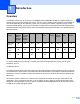
1 Introduction Overview The Brother machine can be shared on a 10/100 Mb wired or IEEE 802.11b/802.11g wireless Ethernet network using the internal network print server. The print server supports various functions and methods of connection depending on the operating system you are running on a network supporting TCP/IP. These functions include printing, scanning, PC-FAX send, PC-FAX receive, PhotoCaptureTM Center, Remote Setup and Status Monitor.
Introduction Network function features The Brother MFC-640CW and MFC-820CW has the following basic network functions. 1 Network printing The print server provides printing services for Windows® 98/98SE/Me/2000/XP supporting the TCP/IP protocols and Macintosh® supporting TCP/IP (Mac OS® 9.1-9.2 / Mac OS® X 10.2.4 or greater for a wired network and Mac OS® X 10.2.4 or greater for wireless network).
Introduction Management utilities BRAdmin Professional (for Windows®) The BRAdmin Professional utility provides powerful, easy to use configuration and management of fax and network settings. BRAdmin Light (for Mac OS® X 10.2.4 or greater) BRAdmin Light is a utility for viewing machine status and configuring network settings from a computer running Mac OS® X 10.2.4 or greater. This utility is available as a download from http://solutions.brother.com.
Introduction ■ In a smaller network of 2 or 3 computers, we recommend the Peer-to-Peer printing method as it is easier to configure than the Network Shared printing method described on the following page. See Network Shared printing on page 1-4. ■ Each computer must use the TCP/IP Protocol. ■ The Brother machine needs to have an appropriate IP address configuration. ■ If you are using a router, the Gateway address must be configured on the computers and the Brother machine.
Introduction Wireless network connection example Connected to wireless capable computer with an access point (router) in the network (Infrastructure mode) 1 This type of network has a central access point (router) at the heart of the network. The access point (router) can also act as a bridge or a gateway to a wired network. When the Brother wireless machine (your machine) is part of this network, it receives all print jobs via an access point (router).
Introduction An access point (router) is in the network, but the computer is not wireless capable This type of network has a central access point (router) at the heart of the network. The access point (router) is connected to a computer which is not wireless capable with the Ethenet cable. When the Brother wireless machine (your machine) is a part of this network, it receives all print jobs via an access point (router).
Introduction APIPA If you do not assign an IP address manually (using the BRAdmin software) or automatically (using a DHCP/BOOTP/RARP server), the Automatic Private IP Addressing (APIPA) protocol will automatically assign an IP address from the range 169.254.1.0 to 169.254.254.255. 1 DNS client The Brother print server supports the Domain Name Service (DNS) client function. This function allows the print server to communicate with other devices by using its DNS name.
2 Configuring your machine for a network with an Ethernet cable connection Overview 2 Before using your Brother machine in a network environment, you must configure the TCP/IP settings. In this chapter you will learn the basic steps required to print over the network using the TCP/IP protocol. Note You can configure the machine’s TCP/IP settings using the control panel on the front of the machine. For further information, see Control panel setup on page 4-1.
Configuring your machine for a network with an Ethernet cable connection How the IP address is assigned to your print server: If you have a DHCP/BOOTP/RARP server in your network (typically a UNIX®/Linux or Windows® 2000/XP network) the print server will automatically obtain its IP address from the DHCP server. 2 Note On smaller networks, the DHCP server may be the router.
Configuring your machine for a network with an Ethernet cable connection Gateway (and router) A gateway is a network point that acts as an entrance to another network and sends data transmitted via the network to an exact destination. The router knows where to direct data that arrives at the gateway. If a destination is located at an external network, the router transmits data to the external network. If your network communicates with other networks, you may need to configure the Gateway IP address.
Configuring your machine for a network with an Ethernet cable connection 2 Note • If the print server is set to its factory default settings without using a DHCP/BOOTP/RARP server, the device will appear as an APIPA device in the BRAdmin Professional utility screen. • You can find the node name and Ethernet address (Node Address above) by printing out the Network Configuration List.
Configuring your machine for a network with an Ethernet cable connection Changing the print server settings Using the BRAdmin Professional utility to change the print server settings (for Windows® only) 1 Start the BRAdmin Professional utility (from Windows® 98/98SE/Me/2000/XP), by clicking Start / Programs / Brother Administrator Utilities / Brother BRAdmin Professional Utilities / BRAdmin Professional. 2 Select TCP/IP in the left frame of the main BRAdmin window.
Configuring your machine for a network with an Ethernet cable connection Using the Remote Setup to change the print server settings (for Windows® and Mac OS® X 10.2.4 or greater) Remote Setup for Windows® 2 The Remote Setup application allows you to configure network settings from a Windows® application. When you access this application, the settings on your machine will be downloaded automatically to your PC and displayed on your PC screen.
3 Configuring your machine for a wireless network Overview 3 To connect your machine to your wireless network, you need to follow the steps in the Quick Setup Guide. We recommend that you use the Setup Wizard from the machine’s control panel LAN menu and the installation application on the CD-ROM we have provided with the machine. By using this method, you can easily connect your machine to your wireless network and install the network software and printer driver.
Configuring your machine for a wireless network Authentication and encryption Most wireless networks use some kind of security settings. These security settings define the authentication (how the device identifies itself to the network) and encryption (how the data is encrypted as it is sent on the network). If you do not correctly specify these options when you are configuring your Brother wireless device, it will not be able to connect to the wireless network.
Configuring your machine for a wireless network Network key There are some rules for each security method: ■ Open system/Shared key with WEP This key is a 64-bit or 128-bit value that must be entered in an ASCII or HEXADECIMAL format. • 64 (40) bit ASCII: Uses 5 text characters. e.g. “WLLAN” (this is case sensitive). • 64 (40) bit hexadecimal: Uses 10 digits of hexadecimal data. e.g. “71f2234aba” • 128 (104) bit ASCII: Uses 13 text characters. e.g.
Configuring your machine for a wireless network 2 Start to search for a SSID around the machine. Searching SSID 3 3 After a few seconds, you can select the SSID from the list using If you select the SSID displayed, go to Step 8. If you want to add a new SSID, go to Step 4. ▲ or ▼. Press Set to select the SSID. Select SSID&Set Brother 4 Select using ▲ or ▼. Select SSID&Set Press Set. 5 Enter a new SSID. For information how to type text, see Entering Text on page B-8.
Configuring your machine for a wireless network 8 Select the Encryption type, None or WEP using If you select None, go to Step 14. If you select WEP, go to Step 9. Encryption Type? None 9 ▲ or ▼, and press Set. 3 Encryption Type? WEP Select the key option; KEY1, KEY2, KEY3, KEY4 using ▲ or ▼, and press Set. Set WEP KEY KEY1:********** Set WEP KEY KEY2: Set WEP KEY KEY3: Set WEP KEY KEY4: If you select the key which shows **********, go to Step 11. If you select a blank key, go to Step 12.
Configuring your machine for a wireless network 15 The machine starts to connect to the wireless device you have selected. Connecting WLAN 16 If you wireless network is connected successfully, the display shows Connected for 2 seconds and configuration is completed. Connected If the connection failed, the display shows Connection Error for 2 seconds. See Wireless network troubleshooting on page 7-8. (For MFC-820CW) 1 Press Menu. 2 Press ▲ or ▼ to select LAN. Press OK.
Configuring your machine for a wireless network 10 Select the Authentication method using ▲ or ▼, and press OK. If you select Open System, go to Step 11. If you select Shared Key, go to Step 12. If you select WPA-PSK, go to Step 13. 11 Select the Encryption type, None or WEP using If you select None, go to Step 17. If you select WEP, go to Step 12. 12 Select the key option; KEY1, KEY2, KEY3, KEY4 using ▲ or ▼, and press OK. If you select the key which shows **********, go to Step 14.
Configuring your machine for a wireless network Using the SecureEasySetupTM software to configure your machine for a wireless network The SecureEasySetupTM software allows you to configure the wireless network easier than configuring it manually. By pushing a button on the wireless router or access point, you can complete setup and secure the wireless network. Your router or access point must also support SecureEasySetupTM.
Configuring your machine for a wireless network (For MFC-820CW) 1 2 3 Place your computer closer to the Brother machine (Less than 50 cm/20 in.). Push the SecureEasySetupTM button on your wireless router or access point. See the user’s guide for your wireless router or access point for instructions. Press Menu on the control panel of the Brother machine. 4 Press ▲ or ▼ to select LAN. Press OK. 5 Press ▲ or ▼ to select Setup WLAN. Press OK. 6 Press ▲ or ▼ to select SecureEasySetup. Press OK.
Configuring your machine for a wireless network Using the Brother automatic installer application in the CD-ROM to configure your machine for a wireless network See Chapter 8 (for Windows®) and Chapter 9 (for Macintosh®) for information on how to use the Brother automatic installer application in the CD-ROM we have provided with the machine.
Configuring your machine for a wireless network 1 Start the BRAdmin Professional utility (from Windows® 98/98SE/Me/2000/XP), by clicking Start / Programs / Brother Administrator Utilities / Brother BRAdmin Professional Utilities / BRAdmin Professional. 3 Note • If the print server is set to its factory default settings without using a DHCP/BOOTP/RARP server, the device will appear as APIPA in the BRAdmin Professional utility screen.
Configuring your machine for a wireless network Using the Remote Setup to change the print server settings (for Windows® and Mac OS® X 10.2.4 or greater) Remote Setup for Windows® 3 ® The Remote Setup application allows you to configure network settings from a Windows application. When you access this application, the settings on your machine will be downloaded automatically to your PC and displayed on your PC screen. If you change the settings, you can upload them directly to the machine.
4 Control panel setup LAN menu Before using your Brother product in a network environment, you need to configure the correct TCP/IP settings. For more information, see Configuring your machine for a network with an Ethernet cable connection on page 2-1 or Configuring your machine for a wireless network on page 3-1. In this chapter, you will learn how to configure the network settings using the control panel, located on the front of the machine.
Control panel setup (For MFC-820CW) 1 Press Menu. 2 Press ▲ or ▼ to select LAN. Press OK. 3 (For Wired) Press ▲ or ▼ to select TCP/IP(Wired). (For Wireless) Press ▲ or ▼ to select TCP/IP(WLAN) Press OK. 4 5 6 4 Press ▲ or ▼ to select BOOT Method. Press OK. Press ▲ or ▼ to select Auto, Static, RARP, BOOTP or DHCP. Press OK. Press Stop/Exit.
Control panel setup If the rarp daemon is not already running, start it (depending on the system the command can be rarpd, rarpd -a, in.rarpd -a or something else; type man rarpd or refer to your system documentation for additional information).
Control panel setup DHCP mode Dynamic Host Configuration Protocol (DHCP) is one of several automated mechanisms for IP address allocation. If you have a DHCP server in your network (typically a UNIX®, Windows® 2000/XP network) the print server will automatically obtain its IP address from a DHCP server and register its name with any RFC 1001 and 1002 compliant dynamic name services.
Control panel setup 4 Press ▲ or ▼ to select IP Address. Press OK. 5 Press ▲ or ▼ to select Change. Press OK. 6 7 4 Enter the IP address. Press OK. Press Stop/Exit. 3.Subnet Mask This field displays the current subnet mask used by the machine. If you are not using DHCP or BOOTP to obtain the subnet mask, enter the desired subnet mask. Check with your network administrator for the subnet mask to use. (For MFC-640CW) 1 (For Wired) Press Menu/Set, 5, 1, 3. (For Wireless) Press Menu/Set, 5, 2, 3.
Control panel setup 6 7 Enter the Subnet Mask address. Press OK. Press Stop/Exit. 4 4.Gateway This field displays the current gateway or router address used by the machine. If you are not using DHCP or BOOTP to obtain the gateway or router address, enter the address you wish to assign. If you do not have a gateway or router, leave this field blank. Check with your network administrator if you are unsure. (For MFC-640CW) 1 (For Wired) Press Menu/Set, 5, 1, 4. (For Wireless) Press Menu/Set, 5, 2, 4.
Control panel setup 5.Node Name You can register the machine name on the Network. This name is often referred to as a NetBIOS name; it will be the name that is registered by the WINS server on your network. Brother recommends the name BRN_xxxxxx for a wired network or BRW_xxxxxx for a wireless network (where xxxxxx is the last six digits of the Ethernet address) (up to 15 characters). (For MFC-640CW) 1 (For Wired) Press Menu/Set, 5, 1, 5. (For Wireless) Press Menu/Set, 5, 2, 5. 2 Select 1 to change.
Control panel setup 6.WINS Config This selection controls how the machine obtains the IP address of the WINS server. (For MFC-640CW) 1 4 (For Wired) Press Menu/Set, 5, 1, 6. (For Wireless) Press Menu/Set, 5, 2, 6. 2 Press ▲ or ▼ to select Auto or Static. 3 Press Menu/Set. 4 Press Stop/Exit. (For MFC-820CW) 1 Press Menu. 2 Press ▲ or ▼ to select LAN. Press OK. 3 (For Wired) Press ▲ or ▼ to select TCP/IP(Wired). (For Wireless) Press ▲ or ▼ to select TCP/IP(WLAN). Press OK.
Control panel setup 7.WINS Server (For MFC-640CW) 1 (For Wired) Press Menu/Set, 5, 1, 7. (For Wireless) Press Menu/Set, 5, 2, 7. 2 Press ▲ or ▼ to select Primary or Secondary. 3 Press Menu/Set. 4 Enter the WINS Server address. 5 Press Menu/Set. 6 Press Stop/Exit. 4 (For MFC-820CW) 1 Press Menu. 2 Press ▲ or ▼ to select LAN. Press OK. 3 (For Wired) Press ▲ or ▼ to select TCP/IP(Wired). (For Wireless) Press ▲ or ▼ to select TCP/IP(WLAN) Press OK. 4 Press ▲ or ▼ to select WINS Server.
Control panel setup Primary WINS Server IP Address This field specifies the IP address of the primary WINS (Windows® Internet Naming Service) server. If set to a non-zero value, the machine will contact this server to register its name with the Windows® Internet Name Service. Secondary WINS Server IP Address This field specifies the IP address of the secondary WINS server. It is used as a backup to the Primary WINS server address.
Control panel setup 5 Press ▲ or ▼ to select Primary or Secondary. Press OK. 6 Press ▲ or ▼ to select Change. Press OK. 7 8 4 Enter the DNS Server address. Press OK. Press Stop/Exit. Primary DNS Server IP Address This field specifies the IP address of the primary DNS (Domain Name Service) server. Secondary DNS Server IP Address This field specifies the IP address of the secondary DNS server. It is used as a backup to the Primary DNS server address.
Control panel setup (For MFC-820CW) 1 Press Menu. 2 Press ▲ or ▼ to select LAN. Press OK. 3 (For Wired) Press ▲ or ▼ to select TCP/IP(Wired). (For Wireless) Press ▲ or ▼ to select TCP/IP(WLAN). Press OK. 4 Press ▲ or ▼ to select APIPA. Press OK. 5 6 4 Press ▲ or ▼ to select On or Off. Press OK. Press Stop/Exit. 3.Setup WLAN (for wireless network only) 1.Setup Wizard The Setup Wizard guides you through the wireless network configuration.
Control panel setup 4.WLAN Status (for wireless network only) 1.Status 4 This field displays the current wireless network status; Active (802.11b), Active (802.11g), Disabled or Searching SSID. (For MFC-640CW) 1 2 3 Press Menu/Set, 5, 4, 1. The current wireless network status will be displayed; Active (802.11b), Active (802.11g), Disabled or Searching SSID. Press Stop/Exit. (For MFC-820CW) 1 Press Menu. 2 Press ▲ or ▼ to select LAN. Press OK. 3 Press ▲ or ▼ to select WLAN Status. Press OK.
Control panel setup 3 Press Stop/Exit. (For MFC-820CW) 1 4 Press Menu. 2 Press ▲ or ▼ to select LAN. Press OK. 3 Press ▲ or ▼ to select WLAN Status. Press OK. 4 Press ▲ or ▼ to select Signal. Press OK. 5 The current wireless network signal strength will be displayed; Strong, Medium, Weak or None. 6 Press Stop/Exit. 3.SSID This field displays the current wireless network SSID. The display shows less than 33 characters of the SSID name. (For MFC-640CW) 1 Press Menu/Set, 5, 4, 3.
Control panel setup 4 Press ▲ or ▼ to select SSID. Press OK. 5 The current wireless network SSID will be displayed. 6 Press Stop/Exit. 4 4.Comm.Mode This field displays the current wireless network communication mode; Ad-hoc or Infrastructure. (For MFC-640CW) 1 Press Menu/Set, 5, 4, 4. 2 The current wireless network communication mode will be displayed; Ad-hoc or Infrastructure. 3 Press Stop/Exit. (For MFC-820CW) 1 Press Menu. 2 Press ▲ or ▼ to select LAN. Press OK.
Control panel setup 5.Security Mode This field displays the current wireless network security settings; authentication method and encryption mode settings. 4 (For MFC-640CW) 1 Press Menu/Set, 5, 4, 5. 2 The current wireless network security settings will be displayed; WEP or WPA-PSK or None. 3 Press Stop/Exit. (For MFC-820CW) 1 Press Menu. 2 Press ▲ or ▼ to select LAN. Press OK. 3 Press ▲ or ▼ to select WLAN Status. Press OK. 4 Press ▲ or ▼ to select Security Mode. Press OK.
Control panel setup (For MFC-640CW) 1 Press Menu/Set, 5, 5, 1. 2 Press ▲ or ▼ to select Auto/100B-FD/100B-HD/10B-FD/10B-HD. 3 Press Menu/Set. 4 Press Stop/Exit. 4 (For MFC-820CW) 1 Press Menu. 2 Press ▲ or ▼ to select LAN. Press OK. 3 Press ▲ or ▼ to select Setup Misc.. Press OK. 4 Press ▲ or ▼ to select Wired LAN. Press OK. 5 Press ▲ or ▼ to select Auto/100B-FD/100B-HD/10B-FD/10B-HD. 6 Press Stop/Exit. 2.Time Zone This field displays your country time zone.
Control panel setup (MFC-820CW) 1 Press Menu. 2 Press ▲ or ▼ to select LAN. Press OK. 3 Press ▲ or ▼ to select Setup Misc.. Press OK. 4 Press ▲ or ▼ to select Time Zone. Press OK. 5 6 4 Press ▲ or ▼ to enter the time. Press OK. Press Stop/Exit. Windows® Time Zone Setting You can determine the time difference for your location by using the Time Zone setting in Windows®. 1 Click on Start. 2 Select Settings / Control Panel. 3 Double click on Date/Time. 4 Select Time Zone.
Control panel setup 6.Network I/F You can choose the network connection type, wired network connection or wireless network connection. If you want to use the wired network connection, select Wired LAN, and if you want to use the wireless network connection, select WLAN. You can only have one network connection type active at a time. (For MFC-640CW) 1 2 3 Press Menu/Set, 5, 6. Press ▲ or ▼ to select Wired LAN or WLAN. Press Set. If Reboot OK? is displayed, press 1.Yes.
Control panel setup Printing the Network Configuration List Note Node name: Node name appears in the Network Configuration List. The default Node name is ”BRN_xxxxxx” for a wired network or “BRW_xxxxx” for a wireless network (“xxxxxx” is the last six digits of Ethernet address.). The Network Configuration List prints a report listing all the current network configuration including the network print server settings. (For MFC-640CW) Press Menu/Set, 6, 6. 1 Press Black Start or Color Start.
Control panel setup Restoring the network settings to factory default If you wish to reset the print server back to its default factory settings (resetting all information such as the password and IP address information), please follow these steps: Note This function restores all wired and wireless network settings to the factory default. (For MFC-640CW) 1 Make sure the machine is not operating, then disconnect all the cables from the machine (except power cable). 2 Press Menu/Set, 5, 0.
5 Network printing from Windows®: basic TCP/IP Peer-to-Peer printing Overview If you are a Windows® user and want to print using the TCP/IP protocol in a Peer-to-Peer environment, please follow the instructions in this chapter. This chapter explains how to install the network software and the printer driver which you will need to be able to use as a network printer. Note • You must configure the IP address on your machine before you proceed with this chapter.
7 Click Next. 8 The Add Standard TCP/IP Printer Port Wizard will now appear. Click Next. 9 10 11 12 13 14 Enter the IP address, or the print server name you wish to configure. The Wizard will automatically enter the Port name information for you. Click Next. Windows® 2000/XP will now contact the printer that you specified. If you did not specify the correct IP address or name then you will receive an error message. Click Finish to complete the Wizard.
For Windows® 98/98SE/Me users Windows® 98/98SE/Me users can send print job using Brother Peer-to-Peer Print software provided on the CD-ROM which we have supplied with the machine. 5 Installing the Brother Peer-to-Peer software Note If you already installed the driver from the supplied CD-ROM with the machine Installer and you selected “Brother Peer-to-Peer Network Printer” during the installation then you do not need to install the Brother Network Print Software again.
10 Click OK. When prompted you must re-boot your computer. Associating to the printer 5 You must now create a printer on your Windows® system using the standard Windows® printer setup procedure. 1 To do this, go the Start button, select Settings and then Printers. 2 Double click the Add Printer icon to get the Add Printer Wizard. 3 Click Next when you get the Add Printer Wizard window.
Other sources of information See Chapter 2 of this User’s Guide to learn how to configure the IP address of the printer.
6 Network printing from Macintosh® Overview This chapter explains how to print from Macintosh® on a Network using the Simple Network Configuration capabilities on Mac OS® X 10.2.4 or greater. For more information on how to configure the Brother ink driver on a Network for Mac OS® 9.1 to 9.2, see the Quick Setup Guide included with the machine. For updated information on printing from a Macintosh®, visit the Brother Solutions Center at: http://solutions.brother.com.
Network printing from Macintosh® 6 (For Mac OS® X 10.2.4 to 10.3) Make the following selection. 6 7 8 Select Brother MFC-XXXX (XXXX is your model name), and then click Add. Click the printer, then click Make Default to set the printer as the default printer. The printer is now ready to print. Changing the configuration using the Remote Setup From a Macintosh®, the easiest way to change the printer or print server parameters is to use the Remote Setup application.
Network printing from Macintosh® Other sources of information 1 See Chapter 2 of this User’s Guide to learn how to configure the IP address of the printer. 2 Visit http://solutions.brother.com for more information on network printing.
7 Troubleshooting Overview This chapter explains how to resolve typical network problems you may encounter when using the machine. If, after reading this chapter, you are unable to resolve your problem, please visit the Brother Solutions Center at: http://solutions.brother.
Troubleshooting Network print software installation problems The Brother print server is not found during setup of the network print software installation or from the printer driver of the Brother machine in Windows®. The Brother print server is not found using the Simple Network Configuration capabilities of Mac OS® X.
Troubleshooting For Mac OS® 9.1 to 9.2 (for the wired network connection only) (1) From the Apple menu, open the Chooser. (2) Click the Brother Ink (IP) icon, and make sure that your print server name appears in the right frame. If it is visible, then the connection is good. Otherwise, go to Step 5. For Mac OS® X 10.2.4 or greater (1) From the Go menu, select Applications. (2) Open the Utilities folder. (3) Double click the Printer Setup Utility icon. (4) Click Add. (For Mac OS® X 10.2.4 to 10.
Troubleshooting For Windows® If the installation failed, the Firewall on your computer may be blocking the necessary network connection to the machine. In this case, you will need to disable the Firewall on your computer and re-install the drivers. (1) Click the Start button, Settings, and then Control Panel. (2) Double click Windows Firewall. (3) Click the General tab. Verify that Off (not recommended) is selected. (4) Click OK.
Troubleshooting For Macintosh® (for a wireless network) Select again your machine in the DeviceSelector application located in Macintosh HD/Library/Printers/Brother/Utilities or from the model pull-down list of the ControlCenter2. 7 8 7 Move your PC closer to the Brother machine and try again. Reset the print server back to its default factory settings and try again. For the information how to reset to the factory default settings, see Restoring the network settings to factory default on page 4-21.
Troubleshooting For Mac OS® X 10.2.4 or greater (1) From the Go menu, select Applications. (2) Open the Utilities folder. 7 (3) Double click the Printer Setup Utility icon. (4) Click Add. (For Mac OS® X 10.2.4 to 10.3) Go to (5). (For Mac OS® X 10.4) Go to (6). (5) (For Mac OS® X 10.2.4 to 10.3) Make the following selection. (6) Make sure that your print server appears. If it is visible, then the connection is good. Otherwise, go to Step 4.
Troubleshooting Scanning and PC-FAX problems The network scanning feature does not work in Windows® 7 The network PC-FAX feature does not work in Windows® Firewall setting on your PC may be rejecting the necessary network connection. Follow the instructions below to disable the Firewall. if you are using a personal Firewall software, see the User’s Guide for your software or contact the software manufacturer. 1 Click the Start button, Settings, and then Control Panel.
Troubleshooting Wireless network troubleshooting Wireless setup problems 7 The Brother print server is not found during setup by the Wireless Device Setup Wizard. 1 Make sure that the machine is powered on, is on-line and ready to print. 2 Move your computer closer to the Brother machine and try again. 3 Reset the print server back to its default factory settings and try again.
Troubleshooting Wireless connection problem The wireless network connection is sometimes disabled. The wireless network connection status is affected by the environment where the Brother printer and other wireless devices are located. The following conditions may cause connection problems: ■ A concrete or metal framed wall is located between the Brother machine and the access point.
8 Wireless installation for Windows® Installation using a wireless computer in Infrastructure mode 8 For Windows® 98/98SE/Me/2000 Professional/XP Important If you have previously configured the wireless settings of the machine, you must reset the network LAN settings before you can configure the wireless settings again. For MFC-640CW: Press Menu/Set, 5, 0, 1 and then press 1.Yes to accept the change. The machine will restart automatically. For MFC-820CW: Press Menu, ▲ or ▼ for LAN and press OK.
Wireless installation for Windows® 4 The CD-ROM main menu will appear. Click Install MFL-Pro Suite. 8 Note • If this window does not appear, use Windows® Explorer to run the setup.exe program from the root folder of the Brother CD-ROM. • If you are using Windows® 2000 Professional and have not installed Service Pack 3 (SP3) or greater: To access the PhotoCapture Center™ features from your computer you may have to install a Windows® 2000 update first.
Wireless installation for Windows® 6 Choose Wireless Setup and Driver Install, and then click Next. 8 7 8 Choose Automatic (Recommended) and then click Next. For configuration, it is recommended that you temporarily connect your Brother wireless device directly to a free port on your access point, hub or router using a network cable. If you can temporarily connect with a network cable: Choose I’m able to temporarily connect my device to my access point with a network cable and then click Next.
Wireless installation for Windows® 9 Read the Important Notice. For MFC-640CW: Press Menu/Set, 5, 6 on the control panel, and then press ▲ or ▼ to choose Wired LAN. Press Menu/Set. If Reboot OK? is displayed, press 1.Yes. The wireless network interface will become inactive with this setting. The machine will restart automatically. After it restarts, check the box on the screen and click Next. 8 For MFC-820CW: Press Menu on the control panel. Press ▲ or ▼ for LAN and press OK.
Wireless installation for Windows® Note If you do not have a network cable, check I don’t have a network cable and click Next. You will need to configure the wireless settings from the control panel. Follow the onscreen instruction to complete the setup. When the setup is finished, go to step 22 for driver installation. 10 8 (Continued from step 8) If you choose This PC has wireless capability., check I am using an access point in infrastructure mode, and then click Next.
Wireless installation for Windows® Network I/F and press OK. Press ▲ or ▼ for WLAN and press OK. If Reboot OK? is displayed, press 1 for Yes. The wired network interface will become inactive with this setting. The machine will restart automatically. After it restarts, check the box on the screen and click Next. If Accepted is displayed, press Stop/Exit. Check the box and click Next.
Wireless installation for Windows® 12 To communicate with the un-configured wireless machine, temporarily change the wireless settings on your PC to match machine’s default settings shown on this screen. Click Next. 8 13 If more than one wireless machine is available on the network, the following list appears. If the list is blank, check if the access point and the machine are powered on, and then click Refresh. Choose the machine you wish to configure, and click Next.
Wireless installation for Windows® • • • 15 16 If your target access point does not appear on the list, you can manually add it by clicking the Add button. Follow the on-screen instructions for entering the Name (SSID) and the Channel number. “SETUP” is the default SSID of the machine. Do not choose this SSID. If the list is blank, check that the access point has power, and then see if the machine and the access point are within range for wireless communication. Then, click Refresh.
Wireless installation for Windows® 17 Click Next. The settings will be sent to your machine. The settings will remain unchanged if you click Cancel. 8 Note • If you want to manually enter the IP address settings of your machine, click Change IP Address and enter the necessary IP address settings for your network. After making your selection, click Next and the Wizard will search for available wireless networks.
Wireless installation for Windows® 21 Using the information you recorded in step 11, return the wireless settings of your computer back to their original settings. Click Next. 8 You have completed the wireless setup. A four level indicator of your machine’s LCD represents the wireless signal strength. If you chose to install the drivers in step 6, go to step 22. 22 23 24 The driver installation starts. After reading and accepting the ScanSoft ® PaperPort® 9.0SE License Agreement, click Yes.
Wireless installation for Windows® 25 The installation of the Brother drivers will automatically start. The installation screens appear one after another. Please wait for a while. 8 Improper Setup • • 26 DO NOT try to cancel any of the screens during this installation. If your wireless settings fail, and error message will appear during the installation of MFL-Pro Suite and the installation will be terminated. If you encounter this failure, please go to step 4 and setup the wireless connection again.
Wireless installation for Windows® 28 When the Brother and ScanSoft ® on-line Registration screen is displayed, make your selection and follow the on-screen instructions. 8 29 Click Finish to restart your computer. (For Windows® 2000 Professional, you must be logged on with Administrator rights.) Note After restarting the computer, the Installation Diagnostics will run automatically. If the installation is unsuccessful, the installation results window will be shown.
Wireless installation for Windows® Installation using a wired computer in infrastructure mode For Windows® 98/98SE/Me/2000 Professional/XP 8 Important If you have previously configured the wireless settings of the machine, you must reset the network LAN settings before you can configure the wireless settings again. For MFC-640CW: Press Menu/Set, 5, 0, 1 and then press 1.Yes to accept the change. The machine will restart automatically. For MFC-820CW: Press Menu, ▲ or ▼ for LAN and press OK.
Wireless installation for Windows® 4 The CD-ROM main menu will appear. Click Install MFL-Pro Suite. 8 Note • If this window does not appear, use Windows® Explorer to run the setup.exe program from the root folder of the Brother CD-ROM. • If you are using Windows® 2000 Professional and have not installed Service Pack 3 (SP3) or greater: To access the PhotoCapture Center™ features from your computer you may have to install a Windows® 2000 update first.
Wireless installation for Windows® 6 Choose Wireless Setup and Driver Install, and then click Next. 8 7 8 Choose Automatic (Recommended) and then click Next. For configuration, it is recommended that you temporarily connect your Brother wireless device directly to a free port on your access point, hub or router using a network cable. If you can temporarily connect with a network cable: Choose I’m able to temporarily connect my device to my access point with a network cable and then click Next.
Wireless installation for Windows® 9 Read the Important Notice. For MFC-640CW:Press Menu/Set, 5, 6 on the control panel, and then press ▲ or ▼ to choose Wired LAN. Press Menu/Set. If Reboot OK? is displayed, press 1.Yes. The wireless network interface will become inactive with this setting. The machine will restart automatically. After it restarts, check the box on the screen and click Next. 8 For MFC-820CW: Press Menu on the control panel. Press ▲ or ▼ for LAN and press OK.
Wireless installation for Windows® Note If you do not have a network cable, check I don’t have a network cable and click Next. You will need to configure the wireless settings from the control panel. Follow the onscreen instruction to complete the setup. When the setup is finished, go to step 19 for driver installation. 10 11 12 8 (Continued from step 8) Choose This PC has a network cable to connect to the wireless network., and then click Next.
Wireless installation for Windows® Note The Default Node name of the NC-xxxx (where “xxxx” is your model name) is “BRW_xxxxxx” or “BRN_xxxxxx” (where “xxxxxx” is the last six digits of Ethernet address). 13 8 The wizard will search for wireless networks available from your machine. If more than one wireless network is available, the following list appears. Choose the access point you wish to associate the machine with, and then click Next.
Wireless installation for Windows® 15 If your network is configured for Authentication and Encryption, the following screen will appear. When configuring your Brother wireless machine, you must ensure that it is configured to match the Authentication and Encryption settings of your existing wireless network. Choose the Authentication Method and Encryption Mode from the pull-downs in each setting box. Then enter the Network key and click Next.
Wireless installation for Windows® 17 Disconnect the network cable between your access point (hub or router) and the machine, and click Next. 8 18 The machine will restart automatically. After the machine is restarted, check Checked and confirmed., and then click Next. Wait until the restart is completed. You have completed the wireless setup. A four level indicator of your machine’s LCD represents the wireless signal strength. If you chose to install the drivers in step 6, go to step 19.
Wireless installation for Windows® 21 When the Brother MFL-Pro Suite Software License Agreement window appears, click Yes if you agree to the Software License Agreement. 8 22 The installation of the Brother drivers will automatically start. The installation screens appear one after another. Please wait for a while. Improper Setup • • 23 DO NOT try to cancel any of the screens during this installation.
Wireless installation for Windows® 24 If the machine is not yet configured for use on your network, the following screen appears. Click OK. The Configure IP Address windows will appear. Enter the proper IP address information for your network by following the on-screen instructions. 25 When the Brother and ScanSoft ® on-line Registration screen is displayed, make your selection and follow the on-screen instructions. 26 Click Finish to restart your computer.
Wireless installation for Windows® Installation using with an access point that supports SecureEasySetupTM (Windows® 98/98SE/Me/2000 Professional/XP) 8 Important If you have previously configured the wireless settings of the machine, you must reset the network LAN settings before you can configure the wireless settings again. For MFC-640CW: Press Menu/Set, 5, 0, 1 and press 1.Yes to accept the change. The machine will restart automatically. For MFC-820CW: Press Menu, ▲ or ▼ for LAN and press OK.
Wireless installation for Windows® 4 The CD-ROM main menu will appear. Click Install MFL-Pro Suite. 8 Note • If this window does not appear, use Windows® Explorer to run the setup.exe program from the root folder of the Brother CD-ROM. • If you are using Windows® 2000 Professional and have not installed Service Pack 3 (SP3) or greater: To access the PhotoCapture Center™ features from your computer you may have to install a Windows® 2000 update first.
Wireless installation for Windows® 6 Choose Wireless Setup and Driver Install, and then click Next. 8 7 8 9 Choose I’d like to use the SecureEasySetupTM function of my access point to configure my wireless device. and click Next. Ensure the on-screen message and click Next. Temporary place the machine within a 50 cm/20 inch range from the access point.
Wireless installation for Windows® 10 Refer to the instruction manual that came with your access point to set the SecureEasySetupTM mode of your access point. 11 Put the machine in SecureEasySetupTM mode. For MFC-640CW, press Menu/Set, 5, 3, 2 on the control panel. For MFC-820CW: Press Menu, ▲ or ▼ for LAN and press OK. Press ▲ or press OK. Press ▲ or ▼ for SecureEasySetup and press OK.
Wireless installation for Windows® 15 16 17 18 The driver installation starts. After reading and accepting the ScanSoft ® PaperPort® 9.0SE License Agreement, click Yes. (Not available if you chose Driver Install Only in step 6.) 8 The installation of PaperPort® 9.0SE will automatically start and is followed by the installation of MFL-Pro Suite. When the Brother MFL-Pro Suite Software License Agreement window appears, click Yes if you agree to the Software License Agreement.
Wireless installation for Windows® 19 If the machine is configured for your network, choose the machine from the list, and then click Next. 8 Note This window will not appear if there is only one machine connected on the network as it will be chosen automatically. 20 If the machine is not yet configured for use on your network, the following screen appears. Click OK. The Configure IP Address windows will appear.
Wireless installation for Windows® Note After restarting the computer, the Installation Diagnostics will run automatically. If the installation is unsuccessful, the installation results window will be shown. If the Diagnostics shows a failure, please follow the on-screen instructions or read on-line help and FAQ’s in Start/All Programs/Brother/MFL-Pro Suite MFC-640CW or MFC-820CW.
Wireless installation for Windows® Installation using a wireless computer in Ad-hoc Mode For Windows® 98/98SE/Me/2000 Professional/XP 8 Important If you have previously configured the wireless settings of the machine, you must reset the network LAN settings before you can configure the wireless settings again. For MFC-640CW: Press Menu/Set, 5, 0, 1 and then press 1.Yes to accept the change. The machine will restart automatically. For MFC-820CW: Press Menu, ▲ or ▼ for LAN and press OK.
Wireless installation for Windows® 4 The CD-ROM main menu will appear. Click Install MFL-Pro Suite. 8 Note • If this window does not appear, use Windows® Explorer to run the setup.exe program from the root folder of the Brother CD-ROM. • If you are using Windows® 2000 Professional and have not installed Service Pack 3 (SP3) or greater: To access the PhotoCapture Center™ features from your computer you may have to install a Windows® 2000 update first.
Wireless installation for Windows® 6 Choose Wireless Setup and Driver Install, and then click Next. 8 7 8 9 Choose Automatic (Recommended) and then click Next. Choose I’m not able to connect my device to my access point with a network cable. Click Next. If you are using a wireless computer, choose This PC has wireless capability, and make sure I am using an access point in infrastructure mode is not checked. Click Next.
Wireless installation for Windows® If you are using a wired computer, choose This PC uses a network cable to connect to the wireless network., and you must configure the wireless settings from the control panel. Click Next and follow the on-screen instructions to complete the setup. See Using the Setup Wizard from the control panel LAN menu for a wireless network on page 3-3. When finished, go to the driver installation in step 19. 10 8 Read the Important Notice.
Wireless installation for Windows® Item Record the current wireless computer settings Communication mode: (Infrastructure/Ad-hoc) 8 Channel: (1-14) Network name (SSID/ESSID) Authentication method (Open system/Shared key) Encryption: (None/WEP/Other) Encryption key: 11 12 To communicate with the un-configured wireless machine, change the wireless settings on this PC to the machine’s default settings which are shown on the screen. Click Next.
Wireless installation for Windows® 13 The wizard will search for wireless networks available from your machine. If more than one wireless network is available, the following list appears. Choose the Ad-hoc network you wish to associate the machine with, and then click Next. 8 If no Ad-hoc wireless network are available, you need to create a new wireless network. Go to step 16. Note • If your target Ad-hoc network does not appear on the list, you can manually add it by clicking the Add button.
Wireless installation for Windows® Note • If you want to set more than one WEP key, click Advanced. • If you do not know the Authentication or Encryption settings for network, contact your network administrator. 16 8 Enter a new SSID and choose the Authentication Method and Encryption Mode from the pull-downs in each setting box. Then enter the Network key and click Next. Note If you do not know the Authentication or Encryption settings for network, contact your network administrator. 17 Click Next.
Wireless installation for Windows® 18 To communicate with the configured wireless device, you must configure your PC to use same wireless settings. Manually change the wireless settings on your PC to match the machine’s wireless settings shown on this screen. Click Next. (The settings shown on this screen are for example only. Your settings will not be the same.) 8 You have completed the wireless setup. A four level indicator of your machine’s LCD represents the wireless signal strength.
Wireless installation for Windows® 22 The installation of the Brother drivers will automatically start. The installation screens appear one after another. Please wait for a while. Improper Setup • • 23 DO NOT try to cancel any of the screens during this installation. If your wireless settings fail, and error message will appear during the installation of MFL-Pro Suite and the installation will be terminated. If you encounter this failure, please go to step 4 and setup the wireless connection again.
Wireless installation for Windows® 25 When the Brother and ScanSoft ® on-line Registration screen is displayed, make your selection and follow the on-screen instructions. 8 26 Click Finish to restart your computer. (For Windows® 2000 Professional, you must be logged on with Administrator rights.) Note After restarting the computer, the Installation Diagnostics will run automatically. If the installation is unsuccessful, the installation results window will be shown.
9 Wireless installation for Macintosh® Installation using a wireless computer in Infrastructure mode for Mac OS® X 10.2.4 or greater Important If you have previously configured the wireless settings of the machine, you must reset the network LAN settings before you can configure the wireless settings again. For MFC-640CW: Press Menu/Set, 5, 0, 1 and then press 1.Yes to accept the change. For MFC-820CW: Press Menu, ▲ or ▼ for LAN and press OK. Press ▲ or ▼ for Factory Reset and then press OK.
Wireless installation for Macintosh® 5 Click MFL-Pro Suite to install. 9 6 7 8 Choose Wireless Network Connection, and then click Next. Choose Wireless Setup and Driver Install, and then click Next. Choose Automatic (Recommended) and then click Next.
Wireless installation for Macintosh® 9 For configuration, it is recommended that you temporarily connect your Brother wireless device directly to a free port on your access point, hub or router using a network cable. 9 If you can temporarily connect with a network cable: Choose I’m able to temporarily connect my device to my access point with a network cable and then click Next. Go to step 10.
Wireless installation for Macintosh® When the following screen appears, open the scanner cover to its open position. Insert the network cable to your access point (hub or router) and then to the machine. You will find the LAN socket above and to the left of the ink cartridge slots, as shown. Click Next and go to step 14. 9 Note If you do not have a network cable, check I don’t have a network cable and click Next. You will need to configure the wireless settings from the control panel.
Wireless installation for Macintosh® Note If you choose This PC uses a network cable to connect to the wireless network., you must configure the wireless settings from the control panel. Click Next and follow the on-screen instructions to complete the setup. When finished, go to the driver installation in step 23. 12 9 Read the Important Notice. For MFC-640CW: Press Menu/Set, 5, 6 on the control panel, and then press ▲ or ▼ to choose WLAN. Press Menu/Set. If Reboot OK? is displayed, press 1.Yes.
Wireless installation for Macintosh® Item Record the current wireless computer settings Communication mode: (Infrastructure/Ad-hoc) 9 Channel: (1-14) Network name (SSID/ESSID) Authentication method (Open system/Shared key) Encryption: (None/WEP/Other) Encryption key: 13 14 To communicate with the un-configured wireless machine, temporarily change the wireless settings on your Macintosh® to match machine’s default settings shown on this screen. Click Next.
Wireless installation for Macintosh® 15 The wizard will search for wireless networks available from your machine. If more than one wireless network is available, the following list appears. Choose the access point you wish to associate the machine with, and then click Next. 9 Note • If your target access point does not appear on the list, you can manually add it by clicking the Add button. Follow the on-screen instructions for entering the Name (SSID) and the Channel number.
Wireless installation for Macintosh® Note • If you want to set more than one WEP key, click Advanced. • If you do not know the Authentication or Encryption settings for network, contact your network administrator. 18 9 Click Next. The settings will be sent to your machine. The settings will remain unchanged if you click Cancel. Note • If you want to manually enter the IP address settings of your machine, click Change IP Address and enter the necessary IP address settings for your network.
Wireless installation for Macintosh® 21 The machine will restart automatically. After the machine is restarted, check Checked and confirmed., and then click Next. Wait until the restart is completed. Go to step 23. 9 22 Using the information you recorded in step 12, return the wireless settings of your computer back to their original settings. Click Exit. You have completed wireless setup. A four level indicator of your machine’s LCD represents the wireless signal strength.
Wireless installation for Macintosh® 25 If you want to use the machine’s Scan key to scan over the network, you must check the Register your computer with the “Scan To” functions at the machine box. You must also enter a name for your Macintosh® in Display Name. The name you enter will appear on the machine’s LCD when you press the Scan key and choose a scan option. You can enter any name up to 15 characters long.
Wireless installation for Macintosh® 29 Double-click the Utilities folder. 9 30 Mac OS® X 10.3 or greater users: Double-click the Printer Setup Utility icon. For Mac OS® X 10.2.x users: Double-click the Print Center icon. 31 Click Add. Mac OS X 10.2.4 to 10.3 users; go to step 32. Mac OS X 10.4 users; go to step 33. 32 Make the selection shown (For Mac OS X 10.2.4 to 10.3 users).
Wireless installation for Macintosh® 33 Choose Brother MFC-XXXX (where XXXX is your model name), and then click Add. 9 34 Mac OS® X 10.3 or greater users: Click Printer Setup Utility, then Quit Printer Setup Utility. For Mac OS® X 10.2.x users: Click Print Center, then Quit Print Center. The MFL-Pro Suite, Printer driver, Scanner driver and Control Center2 have been installed.
Wireless installation for Macintosh® 35 To install Presto!® PageManager®, click the Presto!PageManager icon and follow the on-screen instructions. 9 Note When Presto!® PageManager® is installed, OCR capability is added to the Brother ControlCenter2. You can also easily scan, share, and organize photos and documents using Presto!® PageManager®. Presto!® PageManager® has been installed and the installation is now complete.
Wireless installation for Macintosh® Installation using a wired computer in Infrastructure mode for Mac OS® X 10.2.4 or greater 9 Important If you have previously configured the wireless settings of the machine, you must reset the network LAN settings before you can configure the wireless settings again. For MFC-640CW: Press Menu/Set, 5, 0, 1 and then press 1.Yes to accept the change. For MFC-820CW: Press Menu, ▲ or ▼ for LAN and press OK. Press ▲ or ▼ for Factory Reset and then press OK.
Wireless installation for Macintosh® 5 Click MFL-Pro Suite to install. 9 6 7 8 Choose Wireless Network Connection, and then click Next. Choose Wireless Setup and Driver Install, and then click Next. Choose Automatic (Recommended) and then click Next.
Wireless installation for Macintosh® 9 For configuration, it is recommended that you temporarily connect your Brother wireless device directly to a free port on your access point, hub or router using a network cable. 9 If you can temporarily connect with a network cable: Choose I’m able to temporarily connect my device to my access point with a network cable and then click Next. Go to step 10.
Wireless installation for Macintosh® When the following screen appears, open the scanner cover to its open position. Insert the network cable to your access point (hub or router) and then to the machine. You will find the LAN socket above and to the left of the ink cartridge slots, as shown. Click Next and go to step 13. 9 Note If you do not have a network cable, check I don’t have a network cable and click Next. You will need to configure the wireless settings from the control panel.
Wireless installation for Macintosh® 12 13 Follow the on-screen instructions to complete the setup by the control panel. See Using the Setup Wizard from the control panel LAN menu for a wireless network on page 3-3. When finished, go to the driver installation in step 20. 9 If more than one wireless machine is available on the network, the following list appears. If the list is blank, check that the access point and the machine are powered on, and then click Refresh.
Wireless installation for Macintosh® Note • If your target access point does not appear on the list, you can manually add it by clicking the Add button. Follow the on-screen instructions for entering the Name (SSID) and the Channel number. • “SETUP” is the default SSID of the machine. Do not choose this SSID. • If the list is blank, check that the access point has power, and then see if the machine and the access point are within range for wireless communication. Then, click Refresh.
Wireless installation for Macintosh® 17 Click Next. The settings will be sent to your machine. The settings will remain unchanged if you click Cancel. 9 Note • If you want to manually enter the IP address settings of your machine, click Change IP Address and enter the necessary IP address settings for your network. After making your selection, click Next and the Wizard will search for available wireless networks.
Wireless installation for Macintosh® 20 21 22 The driver installation starts. Follow the on-screen instructions and restart your Macintosh®. (Not available if you chose Driver Install Only in step 7.) When the Brother DeviceSelector window appears, choose Network and then click OK.
Wireless installation for Macintosh® 25 Click Go, then Applications. 9 26 27 Double-click the Utilities folder. Mac OS® X 10.3 or greater users: Double-click the Printer Setup Utility icon. For Mac OS® X 10.2.x users: Double-click the Print Center icon. 28 Click Add. Mac OS X 10.2.4 to 10.3 users; go to step 29. Mac OS X 10.4 users; go to step 30.
Wireless installation for Macintosh® 29 Make the selection shown (For Mac OS X 10.2.4 to 10.3 users). 9 30 31 Choose Brother MFC-XXXX (where XXXX is your model name), and then click Add. Mac OS® X 10.3 or greater users: Click Printer Setup Utility, then Quit Printer Setup Utility. For Mac OS® X 10.2.x users: Click Print Center, then Quit Print Center. The MFL-Pro Suite, Printer driver, Scanner driver and Control Center2 have been installed.
Wireless installation for Macintosh® 32 To install Presto!® PageManager®, click the Presto!PageManager icon and follow the on-screen instructions. 9 Note When Presto!® PageManager® is installed, OCR capability is added to the Brother ControlCenter2. You can also easily scan, share, and organize photos and documents using Presto!® PageManager®. Presto!® PageManager® has been installed and the installation is now complete.
Wireless installation for Macintosh® Installation using a wireless computer in Ad-hoc Mode for Mac OS® X 10.2.4 or greater 9 Important If you have previously configured the wireless settings of the machine, you must reset the network LAN settings before you can configure the wireless settings again. For MFC-640CW: Press Menu/Set, 5, 0, 1 and then press 1.Yes to accept the change. For MFC-820CW: Press Menu, ▲ or ▼ for LAN and press OK. Press ▲ or ▼ for Factory Reset and then press OK.
Wireless installation for Macintosh® 5 Click MFL-Pro Suite to install. 9 6 7 8 Choose Wireless Network Connection, and then click Next. Choose Wireless Setup and Driver Install, and then click Next. Choose Automatic (Recommended) and then click Next.
Wireless installation for Macintosh® 9 Choose I’m not able to connect my device to my access point with a network cable. Click Next. 9 10 If you are using a wireless computer, choose This PC has wireless capability., and make sure I am using an access point in infrastructure mode is not checked. Click Next. If you are using a wired computer, choose This PC uses a network cable to connect to the wireless network., and you must configure the wireless settings from the control panel.
Wireless installation for Macintosh® automatically. After it restarts, check the box on the screen and click Next. If Accepted is displayed, press Stop/Exit. Check the box and click Next. Note It will take approximately one minute for the LAN menu to become available after the machine restarts or is turned on. You need to temporarily change the wireless settings of your Macintosh®. Please follow the on-screen instructions.
Wireless installation for Macintosh® 12 To communicate with the un-configured wireless machine, change the wireless settings on your Macintosh® to the machine’s default settings which are shown on the screen. Click Next. 9 13 If more than one wireless machine is available on the network, the following list appears. If the list is blank, check if the machine is powered on, and then click Refresh. Choose the machine you wish to configure, and click Next.
Wireless installation for Macintosh® Note • If your target Ad-hoc network does not appear on the list, you can manually add it by clicking the Add button. Follow the on-screen instructions for entering the Name (SSID) and the Channel number. • If the list is blank, check if the machine is within range for wireless communication. Then, click Refresh. 15 16 9 If your network is not configured for Authentication and Encryption, the following screen will appear.
Wireless installation for Macintosh® 17 Enter a new SSID and choose Authentication Method and Encryption Mode from the pull-downs in each setting box. Then enter the Network Key and click Next. 9 Note If you do not know the Authentication or Encryption settings for network, contact your network administrator. 18 Click Next. The settings will be sent to your machine. The settings will remain unchanged if you click Cancel.
Wireless installation for Macintosh® 20 21 22 The driver installation starts. Follow the on-screen instructions and restart your Macintosh®. (Not available if you chose Driver Install Only in step 7.) When the Brother DeviceSelector window appears, choose Network and then click OK.
Wireless installation for Macintosh® 25 Click Go, then Applications. 9 26 27 Double-click the Utilities folder. Mac OS® X 10.3 or greater users: Double-click the Printer Setup Utility icon. For Mac OS® X 10.2.x users: Double-click the Print Center icon. 28 Click Add. Mac OS X 10.2.4 to 10.3 users; go to step 29. Mac OS X 10.4 users; go to step 30.
Wireless installation for Macintosh® 29 Make the selection shown (For Mac OS X 10.2.4 to 10.3 users). 9 30 31 Choose Brother MFC-XXXX (where XXXX is your model name), and then click Add. Mac OS® X 10.3 or greater users: Click Printer Setup Utility, then Quit Printer Setup Utility. For Mac OS® X 10.2.x users: Click Print Center, then Quit Print Center. The MFL-Pro Suite, Printer driver, Scanner driver and Control Center2 have been installed.
Wireless installation for Macintosh® 32 To install Presto!® PageManager®, click the Presto!PageManager icon and follow the on-screen instructions. 9 Note When Presto!® PageManager® is installed, OCR capability is added to the Brother ControlCenter2. You can also easily scan, share, and organize photos and documents using Presto!® PageManager®. Presto!® PageManager® has been installed and the installation is now complete.
A Appendix A Other ways to set the IP address (for advanced users and administrators) A For information on how to configure your machine for a network using the BRAdmin Professional utility or a web browser, see Setting the IP address and subnet mask on page 2-3. Using DHCP to configure the IP address The Dynamic Host Configuration Protocol (DHCP) is one of several automated mechanisms for IP address allocation.
Appendix A Note In order to enable BOOTP, simply use an editor to delete the “#” (if there is no “#”, then BOOTP is already enabled). Then edit the BOOTP configuration file (usually /etc/bootptab) and enter the name, network type (1 for Ethernet), Ethernet address and the IP address, subnet mask and gateway of the print server.
Appendix A Using APIPA to configure the IP address The Brother print server supports the Automatic Private IP Addressing (APIPA) protocol. With APIPA, DHCP clients automatically configure an IP address and subnet mask when a DHCP server is not available. The device chooses it's own IP address in the range 169.254.1.0 through to 169.254.254.255. The subnet mask is automatically set to 255.255.0.0 and the gateway address is set to 0.0.0.0. By default, the APIPA protocol is enabled.
Appendix A Note You must be on the same Ethernet segment (that is, there cannot be a router between the print server and operating system) to use the arp -s command. If there is a router, you may use BOOTP or other methods described in this chapter to enter the IP address. If your Administrator has configured the system to deliver IP addresses using BOOTP, DHCP or RARP your Brother print server can receive an IP address from any one of these IP address allocation systems.
Appendix A The leftmost group of digits in your IP address can identify the type of network you have. The value of this group ranges from 1 through 127 for Class A networks (e.g., 13.27.7.1), 128 through 191 for Class B networks (e.g.,128.10.1.30), and 192 through 255 for Class C networks (e.g., 192.168.1.4). If you have a gateway (router), enter its address with the command SET IP ROUTER routeraddress, where routeraddress is the desired IP address of the gateway you wish to assign to the print server.
Appendix A Updating other machines through the network (Windows® only) It is possible to program a Brother machine on the network with either settings from an already programmed machine or with data from the Brother PC-FAX Address Book. (See Chapter 5 of the Software User’s Guide) When Brother PC-FAX is used from a PC that has BRAdmin Professional installed, an extra option appears in BRAdmin Professional.
Appendix A Illustrated below is a screenshot of the Brother PC-FAX Address Book dialog box. The left side of the dialog box displays the One-Touch / Speed-Dial numbers read from the machine. The right side displays a list of Brother Address Book members. You can add One-Touch / Speed-Dial numbers from the machine to this list or send members from the Address Book list to the machine.
Appendix A Installation when using a Network Print Queue or Share (printer driver only) Note • You must configure the IP address on your machine before you proceed with this chapter. If you have not configured the IP address, see Chapter 2 first. • Verify the host computer and print server are either on the same subnet, or that the router is properly configured to pass data between the two devices. • Before installation, if you are using Personal Firewall software (e.g.
B Appendix B Print server specifications B Ethernet wired network Model name NC-110h Operating system support Windows® 98/98SE/Me/2000/XP Mac OS ® 9.1 to 9.2, Mac OS® X 10.2.4 or greater Protocol support TCP/IP Network type 10/100BASE-TX Ethernet network Network printing Windows® 98/98SE/Me Peer-to-Peer printing Windows® 2000/XP TCP/IP printing Macintosh® printing (Mac OS® 9.1-9.2 and Mac OS ® 10.2.4 or greater supporting TCP/IP) Network PC-FAX Windows® 98/98SE/Me/2000/XP Mac OS ® 9.1-9.
Appendix B Management utilities Windows® 98/98SE/Me/2000/XP BRAdmin Professional BRAdmin Light 1 Web BRAdmin 1 Mac OS ® X 10.2.4 or greater Windows® 2000 Professional / Server / Advanced Server, Windows® XP Professional B 1. BRAdmin Light and Web BRAdmin are available as a download from http://solutions.brother.com. Ethernet wireless network Model name NC-120w Operating system support Windows® 98/98SE/Me/2000/XP Mac OS® X 10.2.4 or greater Protocol support TCP/IP Network type IEEE 802.
Appendix B Computer requirements (for drivers, BRAdmin Professional, Peer-to-Peer software, etc.
Appendix B Function table and default factory settings (For MFC-640CW) B Level one Level two Level three Options 1 Options 2 Factory settings 5.LAN 1.TCP/IP (Wired) 1.BOOT Method Auto/ Static/ RARP/ BOOTP/ DHCP — Auto 2.IP Address 1.Change [000-255].[000-255].[000-255].[000-255] [169].[254].[001-254]. [000-255] 1 2.Exit — 1.Change [000-255].[000-255].[000-255].[000-255] 255.255.0.0 2.Exit — 3.Subnet Mask 4.Gateway 5.Node Name 2.TCP/IP (WLAN) — 2 — 1.Change [000-255].[000-255].
Appendix B Level one Level two Level three Options 1 Options 2 Factory settings 5.LAN 3.Setup WLAN 1.Setup Wizard Searching SSID Select SSID & Set (Select SSID from list or manually add SSID) — 2.SecurEasySetup Connecting WLAN/ Connected/ Connection Error — — 1.Status Active(802.11b)/ Active(802.11g)/ Disabled/ Searching SSID — — 2.Signal Strong/ Medium/ Weak/ None — — 3.SSID (Shows SSID with less than 33 digits) — — 4.Comm.Mode Ad-hoc/ Infrastructure — — 5.
Appendix B (For MFC-820CW) Level one Level two Level three Options 1 Options 2 Factory settings LAN TCP/IP (Wired) BOOT Method Auto/ Static/ RARP/ BOOTP/ DHCP — Auto IP Address Change [000-255].[000-255].[000-255].[000-255] [169].[254].[001-254]. [000-255] 1 Exit — Change [000-255].[000-255].[000-255].[000-255] 255.255.0.0 Exit — Change [000-255].[000-255].[000-255].[000-255] 000.000.000.
Appendix B Level one Level two Level three Options 1 Options 2 Factory settings LAN Setup WLAN Setup Wizard Searching SSID Select SSID & OK (Select SSID from list or manually add SSID) — SecureEasySetup Connecting WLAN/ Connected/ Connection Error — — Status Active(802.11b)/ Active(802.11g)/ Disabled/ Searching SSID — — Signal Strong/ Medium/ Weak/ None — — SSID (Shows SSID with less than 33 digits) — — Comm.
Appendix B Entering Text When you are setting certain menu selections, such as the Station ID, you may need to enter text into the machine. Most number keys have three or four letters printed on keys. The keys for 0, # and do not have printed letters because they are used for special characters. By pressing the proper number key repeatedly, you can access the character you want.
Appendix B Press for (space) ! " # $ % & ' ( ) ∗ + , - .
I Index A M Ad-hoc mode ........................................... 1-5 APIPA ..................................... 1-7, 4-11, A-3 ARP .........................................................A-3 Authentication ......................................... 3-2 Macintosh Printing ................................... 6-1 mDNS ...................................................... 1-7 B Network Configuration List .................... 4-20 Network key ............................................
Index TELNET .......................................... 1-7, A-4 Text, entering ..........................................B-8 special characters ................................B-8 TKIP (Temporary Key Integrity Protocol) 3-2 Trademarks ................................................ -i I W Web BRAdmin .........................................A-5 WEP (Wired Equivalent Privacy) ............. 3-2 Windows 2000 ......................................... 5-1 Windows 2000/XP Printing ......................