
Quick Start Manual





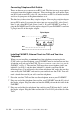
Table Of Contents
- YL4MFC_US.PDF
- Front Cover
- Inside Front Cover
- Brother Numbers
- Ordering Accessories and Supplies
- Quick Reference Guide
- How to Access the Complete Owner's Manual (For MFC-4800 Only)
- How to Access Brother Support (For MFC-4800 Only) (For Windows® Only)
- Download the Printer Driver from the Brother Web Site (For FAX-2900 and FAX-3800 Only)
- Table of Contents
- 1.Introduction
- 2.Assembly and Connections
- Packing List
- Choosing a Location
- Assembly
- Installing the Drum Unit Assembly (with Toner Cartridge)
- Setting Up the FAX/MFC
- Loading Paper
- Acceptable Paper
- Paper Capacity of Multi-purpose Sheet Feeder
- Connecting an External Telephone
- Connecting an External Telephone Answering Device (TAD)
- Special Line Considerations
- Multi-Line Connections (PBX)
- Custom Features on Your Phone Line
- 3.On-Screen Programming
- 4.Initial Setup
- Getting Started
- Setting the Paper Size
- Setting the Date and Time
- Setting the Station ID
- Setting the Ring Volume
- Setting the Beeper Volume
- Setting the Speaker Volume
- Setting the Handset Volume
- Choosing the Handset Volume (For Volume Amplify)
- Setting Volume Amplify
- Memory Storage
- Turning On Automatic Daylight Savings Time
- Toner Save
- Sleep Mode
- Setting Tone/Pulse Dialing Mode (For Canada Only)
- Getting Started
- 5.Setup Receive
- 6.Setup Send
- 7.Auto Dial Numbers and Dialing Options
- 8.Telephone Services
- 9.Remote Fax Options
- 10.Printing Reports
- 11.Making Copies
- 12.Important Information
- 13.Troubleshooting and Routine Maintenance
- Glossary
- Specifications
- Index
- Remote Retrieval Access Card
- Rear Cover

ASSEMBLY AND CONNECTIONS
2 - 11
Outgoing Message (OGM) on External TAD
Timing is important in recording this message.
1
Record 5 seconds of silence at the beginning of your message. (This allows your
FAX/MFC time to listen for the fax CNG tones of automatic transmissions
before they stop.)
2
Limit your speaking to 20 seconds.
3
End your 20-second message by giving your Fax Receive Code for people
sending manual faxes. For example:
“After the beep, leave a message or send a fax by pressing 51 and Start.”
Special Line Considerations
Roll-Over Phone Lines
A roll-over phone system is a group of two or more separate telephone lines that
pass incoming calls each other if they are busy. The calls are usually passed
down or “rolled over” to the next available phone line in a preset order.
Your FAX/MFC can work in a roll-over system as long as it is the last number
in the sequence, so the call cannot roll away. Do not put the FAX/MFC on any
of the other numbers; when the other lines are busy and a second fax call would
be received, the fax call is transferred to a line that does not have a fax machine.
Your FAX/MFC will work best on a dedicated line.
Two-Line Phone System
A two-line phone system is nothing more than two separate phone numbers on
the same wall outlet. The two phone numbers can be on separate jacks (RJ11)
or combined into one jack (RJ14). Your FAX/MFC must be plugged into an
RJ11 jack. RJ11 and RJ14 jacks may be equal in size and appearance and both
may contain four wires (black, red, green, yellow). To test the type of jack, plug
in a two-line phone and see if it can access both lines. If it can, you must separate
the line for your FAX/MFC. (See
Easy Receive, page 5-3.)