
Network Card User's Manual
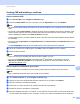

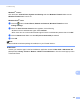
Table Of Contents
- NETWORK USER’S GUIDE MFC-9125CN MFC-9325CW
- Table of Contents
- 1 Introduction
- 2 Configuring your machine for a network
- Overview
- IP addresses, subnet masks and gateways
- Step by step chart
- Setting the IP address and subnet mask
- Changing the print server settings
- Using the BRAdmin Light utility to change the print server settings
- Using the BRAdmin Professional 3 utility to change print server settings (Windows®)
- Using the control panel to change the print server settings
- Using Web Based Management (web browser) to change the print/scan server settings
- Using Remote Setup to change the print server settings (Not available for Windows Server® 2003/2008)
- Using other methods to change print server settings
- 3 Configuring your machine for a wireless network (For MFC-9325CW)
- Overview
- Wireless network terms and concepts
- Step by step chart for wireless network configuration
- Confirm your network environment
- Confirm your wireless network setup method
- Configuration using the Brother installer application on the CD-ROM to configure your wireless network machine (Recommended)
- Configuration using the WPS or AOSS control panel menu (Automatic Wireless mode) (Infrastructure mode only)
- Configuration using the machine’s control panel Setup Wizard to configure your machine for a wireless network
- Configuration using the PIN Method of Wi-Fi Protected Setup (Infrastructure mode only)
- Configure your machine for a wireless network
- Using the Brother installer application on the CD-ROM to configure your machine for a wireless network
- Using the WPS or AOSS control panel menu to configure your machine for a wireless network (Automatic Wireless mode)
- Using the Setup Wizard from the control panel
- Using the PIN Method of Wi-Fi Protected Setup
- 4 Wireless configuration for Windows® using the Brother installer application (For MFC-9325CW)
- 5 Wireless configuration for Macintosh using the Brother installer application (MFC-9325CW only)
- 6 Control panel setup
- Network menu
- TCP/IP
- Ethernet (wired network only)
- Setup Wizard (MFC-9325CW wireless network only)
- WPS/AOSS (MFC-9325CW wireless network only)
- WPS w/PIN Code (MFC-9325CW wireless network only)
- WLAN Status (MFC-9325CW wireless network only)
- Set to Default (MFC-9325CW only)
- Wired Enable (MFC-9325CW wired network only)
- WLAN Enable (MFC-9325CW wireless network only)
- E-mail / IFAX (available as a download)
- How to set a new default for Scan to E-mail (E-mail server) (available as a download)
- How to set a new default for Scan to FTP
- How to set a new default for Scan to Network
- Fax to Server (available as a download)
- Time Zone
- Restoring the network settings to factory default
- Printing the Network Configuration List
- Network menu
- 7 Driver Deployment Wizard (Windows® only)
- 8 Network printing from Windows®: basic TCP/IP Peer-to-Peer printing
- 9 Internet printing for Windows®
- 10 Network printing from Macintosh using the BR-Script 3 driver
- 11 Web Based Management
- 12 Internet fax and Scan to E-mail (E-mail server)
- Internet fax overview
- Getting connected
- Control panel key functions
- Sending an Internet fax
- Manually entering text
- Receiving E-mail or Internet fax
- Receiving an Internet fax to your computer
- Forwarding received E-mail and fax messages
- Relay broadcasting
- TX Verification Mail
- Setup Mail TX
- Setup Mail RX
- Error mail
- Important information on Internet fax
- Scan to E-mail (E-mail server) overview
- Internet fax overview
- 13 Security features
- Overview
- Configuring the protocol settings
- Managing your network printer securely
- Printing documents securely using IPPS
- Using E-mail notification with user authentication
- Creating and installing a certificate
- 14 Troubleshooting
- Appendix A
- Using services
- Other ways to set the IP address (for advanced users and administrators)
- Using DHCP to configure the IP address
- Using BOOTP to configure the IP address
- Using RARP to configure the IP address
- Using APIPA to configure the IP address
- Using ARP to configure the IP address
- Using the TELNET console to configure the IP address
- Using the Brother Web BRAdmin server software for IIS to configure the IP address
- Installation when using web services (For Windows Vista® and Windows® 7 users)
- Installation when using a Network Print Queue or Share (printer driver only)
- Appendix B
- Index

Security features
134
13
Creating CSR and installing a certificate 13
How to create the CSR 13
a Click Create CSR on the Configure Certificate page.
b Enter a Common Name and your information, such as Organization. Then click Submit.
Note
• We recommend that the Root Certificate from the CA be installed on your computer before creating the
CSR.
• The length of the Common Name is less than 64 bytes. Enter an identifier such as an IP address, node
name or domain name to use when accessing this printer through SSL/TLS communication. The node
name is displayed by default. The Common Name is required.
• A warning will pop-up if you enter a different name in the URL than the Common Name that was used for
the certificate.
• The length of the Organization, the Organization Unit, the City/Locality and the State/Province is less
than 64 bytes.
• The Country/Region should be an ISO 3166 country code composed of two characters.
c When the contents of the CSR appear, click Save to save the CSR file to your computer.
d Now the CSR is created.
Note
• Follow your CA policy regarding the method to send a CSR to your CA.
• If you are using Enterprise root CA of Windows Server
®
2003/2008, we recommend using the
Web Server Certificate Template when creating the certificate. For more information, visit us at
http://solutions.brother.com/
.
How to install the certificate to your printer 13
When you receive the certificate from a CA, follow the steps below to install it into the print server.
Note
Only a certificate issued with this printer’s CSR can be installed.
a Click Install Certificate on the Configure Certificate page.
b Specify the file of the certificate that has been issued by a CA, and then click Submit.
c Now the certificate is created successfully.
d Follow the on-screen instructions to configure the other security settings.
e Restart the printer to activate the configuration.
f Now the certificate is saved in your printer. To use SSL/TLS communication, the Root Certificate from
the CA needs to be installed on your computer. Contact your network administrator about installation.