
Home Theater Server User Manual
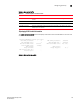
Table Of Contents
- Contents
- About This Document
- Network Security
- TCP SYN attacks
- IP TCP syn-proxy
- Granular application of syn-proxy feature
- Syn-def
- No response to non-SYN first packet of a TCP flow
- Prioritizing management traffic
- Peak BP utilization with TRAP
- Transaction Rate Limit (TRL)
- Understanding transaction rate limit
- Configuring transaction rate limit
- Configuring the maximum number of rules
- Saving a TRL configuration
- Transaction rate limit command reference
- Global TRL
- TRL plus security ACL-ID
- security acl-id
- Transaction rate limit hold-down value
- Displaying TRL rules statistics
- Displaying TRL rules in a policy
- Displaying IP address with held down traffic
- Refusing new connections from a specified IP address
- HTTP TRL
- Overview of HTTP TRL
- Configuring HTTP TRL
- Displaying HTTP TRL
- Display all HTTP TRL policies
- Display HTTP TRL policy from index
- Display HTTP TRL policy client
- Display HTTP TRL policy starting from index
- Display HTTP TRL policy matching a regular expression
- Display HTTP TRL policy client index (MP)
- Display HTTP TRL policy client index (BP)
- Display HTTP TRL policy for all client entries (BP)
- Downloading an HTTP TRL policy through TFTP
- HTTP TRL policy commands
- Logging for DoS Attacks
- Maximum connections
- clear statistics dos-attack
- Maximum concurrent connection limit per client
- Firewall load balancing enhancements
- Syn-cookie threshhold trap
- Service port attack protection in hardware
- Traffic segmentation
- DNS attack protection
- Access Control List
- How ServerIron processes ACLs
- Default ACL action
- Types of IP ACLs
- ACL IDs and entries
- ACL entries and the Layer 4 CAM
- Configuring numbered and named ACLs
- Modifying ACLs
- Displaying a list of ACL entries
- Applying an ACLs to interfaces
- ACL logging
- Dropping all fragments that exactly match a flow-based ACL
- Enabling ACL filtering of fragmented packets
- Enabling hardware filtering for packets denied by flow-based ACLs
- Enabling strict TCP or UDP mode for flow-based ACLs
- ACLs and ICMP
- Using ACLs and NAT on the same interface (flow-based ACLs)
- Displaying ACL bindings
- Troubleshooting rule-based ACLs
- IPv6 Access Control Lists
- Network Address Translation
- Syn-Proxy and DoS Protection
- Understanding Syn-Proxy
- Configuring Syn-Proxy
- DDoS protection
- Configuring a security filter
- Configuring a Generic Rule
- Configuring a rule for common attack types
- Configuring a rule for ip-option attack types
- Configuring a rule for icmp-type options
- Configuring a rule for IPv6 ICMP types
- Configuring a rule for IPv6 ext header types
- Binding the filter to an interface
- Clearing DOS attack statistics
- Clearing all DDOS Filter & Attack Counters
- Logging for DoS attacks
- Displaying security filter statistics
- Address-sweep and port-scan logging
- Secure Socket Layer (SSL) Acceleration
- SSL overview
- SSL acceleration on the ServerIron ADX
- Configuring SSL on a ServerIron ADX
- Basic SSL profile configuration
- Advanced SSL profile configuration
- Configuring Real and Virtual Servers for SSL Termination and Proxy Mode
- Configuration Examples for SSL Termination and Proxy Modes
- SSL debug and troubleshooting commands
- Displaying socket information

ServerIron ADX Security Guide 119
53-1002440-03
Configuring Syn-Proxy
5
The <mss-value> variable specifies MSS value for all SYN-ACK packets generated by the ServerIron
ADX for this virtual server regardless of the client’s MSS value. This value can be from 64 to 9216.
Make sure that the IP MTU of the interfaces is always greater than the MSS value.
Setting the MSS value at the virtual port level
To set the MSS value for a specific virtual port on a ServerIron ADX, use the following command:
ServerIronADX(config)# server virtual-name-or-ip v1
ServerIronADX(config-vs-v1)# port http tcp-mss 128
Syntax: [no] port <port-value> tcp-mss <mss-value>
The <mss-value> variable specifies MSS value for all SYN-ACK packets generated by the ServerIron
ADX for the port specified by the <port-value> variable regardless of the client’s MSS value. This
value can be from 64 to 9216. Make sure that the IP MTU of the interfaces is always greater than
the MSS value.
Setting the MSS value for pass-through traffic to a specified destination IP
address
To set the MSS value for ServerIron ADX pass-through traffic to a specified destination IP address,
use the following commands.
ServerIronADX(config)# tcp-mss 128 destination-ip 207.95.55.1
For IPv4
Syntax: [no] tcp-mss <mss-value> destination-ip <ip-address>
For IPv6
Syntax: [no] tcp-mss <mss-value> destination-ipv6 <ipv6-address>
The <mss-value> variable specifies MSS value for all SYN-ACK packets that are ServerIron ADX
pass-through traffic to a destination IP address specified by the <ip-address> variable. This value
can be from 64 to 9216. Make sure that the IP MTU of the interfaces is always greater than the
MSS value.
The <ip-address> or <ipv6-address> cannot be a Virtual server IP address.
Negotiated MSS value set
Once tcp-mss is configured with the minimum value, the ServerIron ADX will generate a negotiated
MSS value in SYN-ACK base on the configured minimum MSS value. This MSS value will be the
final MSS value after negotiation.
For example, if a user configures tcp-mss 1200, which is in the range of 1024 and 1440, a
ServerIron ADX will use the lower 1024 as the negotiated MSS value in the SYN-ACK.
TABLE 9 MSS values for IPv4, IPv6 and IPv4 jumbo
MSS value
IPv4 64, 256, 536, 966, 1024, 1440, 1452, 1460