
Home Theater Server User Manual
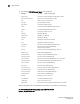
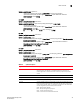
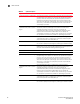


Table Of Contents
- Contents
- About This Document
- Network Security
- TCP SYN attacks
- IP TCP syn-proxy
- Granular application of syn-proxy feature
- Syn-def
- No response to non-SYN first packet of a TCP flow
- Prioritizing management traffic
- Peak BP utilization with TRAP
- Transaction Rate Limit (TRL)
- Understanding transaction rate limit
- Configuring transaction rate limit
- Configuring the maximum number of rules
- Saving a TRL configuration
- Transaction rate limit command reference
- Global TRL
- TRL plus security ACL-ID
- security acl-id
- Transaction rate limit hold-down value
- Displaying TRL rules statistics
- Displaying TRL rules in a policy
- Displaying IP address with held down traffic
- Refusing new connections from a specified IP address
- HTTP TRL
- Overview of HTTP TRL
- Configuring HTTP TRL
- Displaying HTTP TRL
- Display all HTTP TRL policies
- Display HTTP TRL policy from index
- Display HTTP TRL policy client
- Display HTTP TRL policy starting from index
- Display HTTP TRL policy matching a regular expression
- Display HTTP TRL policy client index (MP)
- Display HTTP TRL policy client index (BP)
- Display HTTP TRL policy for all client entries (BP)
- Downloading an HTTP TRL policy through TFTP
- HTTP TRL policy commands
- Logging for DoS Attacks
- Maximum connections
- clear statistics dos-attack
- Maximum concurrent connection limit per client
- Firewall load balancing enhancements
- Syn-cookie threshhold trap
- Service port attack protection in hardware
- Traffic segmentation
- DNS attack protection
- Access Control List
- How ServerIron processes ACLs
- Default ACL action
- Types of IP ACLs
- ACL IDs and entries
- ACL entries and the Layer 4 CAM
- Configuring numbered and named ACLs
- Modifying ACLs
- Displaying a list of ACL entries
- Applying an ACLs to interfaces
- ACL logging
- Dropping all fragments that exactly match a flow-based ACL
- Enabling ACL filtering of fragmented packets
- Enabling hardware filtering for packets denied by flow-based ACLs
- Enabling strict TCP or UDP mode for flow-based ACLs
- ACLs and ICMP
- Using ACLs and NAT on the same interface (flow-based ACLs)
- Displaying ACL bindings
- Troubleshooting rule-based ACLs
- IPv6 Access Control Lists
- Network Address Translation
- Syn-Proxy and DoS Protection
- Understanding Syn-Proxy
- Configuring Syn-Proxy
- DDoS protection
- Configuring a security filter
- Configuring a Generic Rule
- Configuring a rule for common attack types
- Configuring a rule for ip-option attack types
- Configuring a rule for icmp-type options
- Configuring a rule for IPv6 ICMP types
- Configuring a rule for IPv6 ext header types
- Binding the filter to an interface
- Clearing DOS attack statistics
- Clearing all DDOS Filter & Attack Counters
- Logging for DoS attacks
- Displaying security filter statistics
- Address-sweep and port-scan logging
- Secure Socket Layer (SSL) Acceleration
- SSL overview
- SSL acceleration on the ServerIron ADX
- Configuring SSL on a ServerIron ADX
- Basic SSL profile configuration
- Advanced SSL profile configuration
- Configuring Real and Virtual Servers for SSL Termination and Proxy Mode
- Configuration Examples for SSL Termination and Proxy Modes
- SSL debug and troubleshooting commands
- Displaying socket information
ServerIron ADX Security Guide 91
53-1002440-03
IACL overview
3
Syntax: permit | deny <protocol>
<ipv6-source-prefix/prefix-length> | any | host <source-ipv6_address>
<ipv6-destination-prefix/prefix-length> | any | host <ipv6-destination-address>
[ipv6-operator [<value>]] [log]
For ICMP
Syntax: [no] ipv6 access-list <acl-name>
Syntax: permit | deny icmp <ipv6-source-prefix/prefix-length> | any | host
<source-ipv6_address>
<ipv6-destination-prefix/prefix-length> | any | host <ipv6-destination-address>
[ipv6-operator [<value>]]
[ [<icmp-type>][<icmp-code>] ] | [<icmp-message>] [log]
For TCP
Syntax: [no] ipv6 access-list <acl-name>
Syntax: permit | deny <tcp>
<ipv6-source-prefix/prefix-length> | any | host <source-ipv6_address> [tcp-udp-operator
[source-port-number]]
<ipv6-destination-prefix/prefix-length> | any | host <ipv6-destination-address>
[tcp-udp-operator [destination-port- number]]
[ipv6-operator [<value>]] [log]
For UDP
Syntax: [no] ipv6 access-list <acl-name>
Syntax: permit | deny <udp>
<ipv6-source-prefix/prefix-length> | any | host <source-ipv6_address> [tcp-udp-operator
[source port number]]
<ipv6-destination-prefix/prefix-length> | any | host <ipv6-destination-address>
[tcp-udp-operator [destination port number]]
[ipv6-operator [<value>]] [log]
TABLE 6 Syntax Descriptions
Arguments... Description...
ipv6 access-list <acl-name> Enables the IPv6 configuration level and defines the name of the IPv6 ACL.
The <acl-name> can contain up to 199 characters and numbers, but
cannot begin with a number and cannot contain any spaces or quotation
marks.
permit The ACL will permit (forward) packets that match a policy in the access list.
deny The ACL will deny (drop) packets that match a policy in the access list.
icmp Indicates the you are filtering ICMP packets.
protocol The type of IPv6 packet you are filtering. You can specify a well-known name
for some protocols whose number is less than 255. For other protocols, you
must enter the number. Enter “?” instead of a protocol to list the well-known
names recognized by the CLI. IPv6 protocols include:
AHP – Authentication Header
ESP – Encapsulating Security Payload
IPv6 – Internet Protocol version 6
SCTP – Stream Control Transmission Protocol