
Installation guide

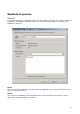


BlipNode Properties
15
Power Control
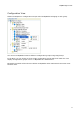
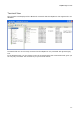
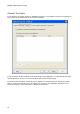
In the Power Control window in BlipNode Properties it is possible to specify the power levels of
the BlipNode.
BlipNode requirements
Hardware
Power control is possible when using BlipNode L1 hardware, which is a power
class 1 Bluetooth device (+20 dBm ). Power control is not possible when using
BlipNode S1 hardware or older, which are power class 2 Bluetooth devices (+4
dBm).
Software
BlipNode software version must be BlipNode_R3A or newer.
Power control in Bluetooth
Power control is required for power class 1 equipment. The power control is used for limiting
the transmitted power over 0 dBm. Power control capability could be used for optimizing the
power consumption and overall interference level. Equipment with power control capability
optimizes the output power in a link by measuring a Radio Signal Strength Indicator (RSSI)
and if the RSSI value differs too much from the preferred value of a Bluetooth device, it can
request an increase or a decrease of the other device’s data transmit power.
The power of the output of a Bluetooth device is normally specified in units of dBm. The dBm is
an abbreviation used to represent power levels above or below 1 milliwatt. Negative dBm (-
dBm) represents power levels below 1 milliwatt, and positive dBm (+dBm) represents power
levels above 1 milliwatt. In other words, a dBm value is a specific amount of power; 0 dBm is
equal to 1 milliwatt and +20 dBm is equal to 100 milliwatt.