
Diamond Storage Array Installation, Operations, Maintenance Manual
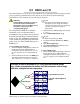
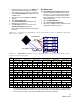

Table Of Contents
- Preface
- 1.0 Diamond Storage Array Product Overview
- 2.0 Diamond Storage Array Technical Overview
- 3.0 Installation Instructions
- 3.2 Physical Set Up
- 4.0 Determining Drive and Sled Designations
- 5.0 Accessing the Array
- Command Line Interface
- ATTO ExpressNAV
- In-band SCSI over Fibre Channel
- RS-232 port
- Ethernet port
- SNMP
- I/O details
- Browser compatibility
- Opening an ExpressNAV session
- Navigating ExpressNAV
- Exhibit 5.4-1 Atypical page in the ATTO ExpressNAV configuration tool.
- Status
- Ethernet
- SNMP
- Serial Port
- Fibre Channel
- Storage Management
- RAID
- Clear Data
- Logical Units
- Rebuild
- Configuration
- Advanced
- Restart
- Help
- FirmwareRestart
- Help
- RestoreConfiguration
- SaveConfiguration
- SystemSN
- VerboseMode
- EthernetSpeed
- FTPPassword
- IPAddress
- IPDHCP
- IPGateway
- IPSubnetMask
- SNMPTrapAddress
- SNMPTraps
- SNMPUpdates
- TelnetPassword
- TelnetTimeout
- TelnetUsername
- FcConnMode
- FcDataRate
- FcFairArb
- FcFrameLength
- FcFullDuplex
- FcHard
- FcHardAddress
- FcNodeName
- FcPortInfo
- FcPortList
- FcPortName
- FcWWName
- SerialPortBaudRate
- SerialPortEcho
- SerialPortHandshake
- SerialPortStopBits
- AudibleAlarm
- DiamondModel
- DiamondName
- DriveCopyStatus
- DriveInfo
- FcNodeName
- FcPortList
- FcPortName
- Help
- IdentifyDiamond
- Info
- LUNInfo
- SerialNumber
- SledFaultLED
- SMARTData
- Temperature
- VirtualDriveInfo
- FcScsiBusyStatus
- FirmwareRestart
- MaxEnclTempAlrm
- MinEnclTempAlrm
- Temperature
- Zmodem
- ATADiskState
- AutoRebuild
- ClearDiskReservedAreaData
- DriveCopy
- DriveCopyHalt
- DriveCopyResume
- DriveCopyStatus
- DriveInfo
- DriveSledPower
- DriveWipe
- IdeTransferRate
- LUNInfo
- LUNState
- QuickRAID0
- QuickRAID1
- QuickRAID5
- QuickRAID10
- RAID5ClearData
- RAID5ClearDataStatus
- RAIDInterleave
- RAIDHaltRebuild
- RAIDManualRebuild
- RAIDRebuildState
- RAIDRebuildStatus
- RAIDResumeRebuild
- RebuildPriority
- ResolveLUNConflicts
- RestoreModePages
- SledFaultLED
- VirtualDriveInfo
- 6.0 Configuring Drives
- JBOD (Just a Bunch of Disks)
- RAID Level 0
- RAID Level 1
- RAID Level 10
- RAID Level 5
- Interleave
- Hot Spare sleds
- Enhancing performance
- Sled-based versus disk-based
- Exhibit 6.2-1 Sled-based QuickRAID0 stripe groups with LUN designations in a fully populated Array set up as QuickRAID0 6 sled. If sled 6 were to be withdrawn from the array, LUN 3 (grayed boxes) would be unavailable.
- Exhibit 6.2-2 Drive-based QuickRAID0 stripe groups with LUN designations in a fully populated Array set up as QuickRAID0 6 Drive. If sled 6 were to be withdrawn from the array, LUNs 2 and 5 would be unavailable.
- Exhibit 6.2-3 Configurations of a fully populated Diamond Storage Array in RAID Level 0.
- Exhibit 6.3-1 Drive sleds, LUNs and mirror partners in a RAID Level 1 configuration.
- Hot Spare sleds
- Configuring a fully-populated array
- Configuring a partially-populated array
- Removing RAID groups
- Hot Spare sleds
- 7.0 Hardware Maintenance
- 8.0 Copying Drives
- 9.0 Updating Firmware
- 10.0 System Monitoring and Reporting
- RS-232 monitoring port and CLI
- Ethernet monitoring port and CLI
- Power On Self Test (POST)
- Ready LED
- Audible alarm
- Thermal monitoring
- Power supply monitoring
- System fault LED and error codes
- Disk drive activity and disk fault LEDs
- Windows 2000 special instructions
- Error messages
- Specific situations and suggestions
- Default
- Factory Default
- Appendix A ATA Disk Technology
- Appendix B Information Commands Results
- Appendix C Product Safety
- Appendix D Specifications
- Appendix E Warranty

63
ATTO Technology Inc. Diamond Storage Array Installation and Operation Manual
6.5 RAID Level 10
The Diamond Storage Array can be set up into RAID Level 10 (striped and mirrored) groups to provide
greater reliability by simultaneously writing data to two sleds. Each sled partnered through
QuickRAID10, a CLI command, has the same data as its partner.
CAUTIONCAUTION
Selecting RAID configuration causes all
previous drive data on the Diamond
Storage Array to be erased. Make sure all
information is backed up before
configuring RAID groups.
The configuration of RAID Level 10 stripes
information across several mirrored drives,
performing the same operations on two partnered
sleds at the same time thus providing an automatic
backup of data. The
QuickRAID10
command first
creates six mirrored groups, then stripes them into
groups of one, two or three RAID 10 groups (see
Exhibit 6.5-2).
To set up RAID Level 10 groups
1 Connect to Diamond Storage Array services via
the RS-232 port or the optional Ethernet
management services card (refer to
Accessing
the Array
on page 17). You should now be in
CLI.
2 Continue with the CLI or access the RAID page
of the ExpressNAV interface (refer to
ATTO
ExpressNAV: Browser-based Interface
on page 25).
Note
Because the ExpressNAV pages take you
through this process easily, the following
instructions are based on the CLI commands.
Use these instructions as a guide in
ExpressNAV.
3 Decide how many RAID10 groups you want (0,
1, 2 or 3).
4Type set QuickRAID10 [0 |1 | 2| 3].
Note
0
will return the array to JBOD.
5 The array will update NVRAM. The Ready*
displays.
6Type SaveConfiguration.
7Type FirmwareRestart to reboot the array.
8 Reboot the host computer.
To remove RAID groups
1 Connect to Diamond Storage Array services via
the RS-232 port or the optional Ethernet
management services card (refer to
Accessing
the Array
on page 17). You should now be in
CLI.
An example of RAID 10 (QuickRAID10 2) in a fully populated Diamond Storage
Array: 6 sleds, each partnered with another sled, with each partner a mirror image
of the other, configured into two stripe groups
2 virtual devices
2 spanned drives per sled
each sled a mirror image of its
partner