
Diamond Storage Array Installation, Operations, Maintenance Manual
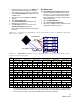

Table Of Contents
- Preface
- 1.0 Diamond Storage Array Product Overview
- 2.0 Diamond Storage Array Technical Overview
- 3.0 Installation Instructions
- 3.2 Physical Set Up
- 4.0 Determining Drive and Sled Designations
- 5.0 Accessing the Array
- Command Line Interface
- ATTO ExpressNAV
- In-band SCSI over Fibre Channel
- RS-232 port
- Ethernet port
- SNMP
- I/O details
- Browser compatibility
- Opening an ExpressNAV session
- Navigating ExpressNAV
- Exhibit 5.4-1 Atypical page in the ATTO ExpressNAV configuration tool.
- Status
- Ethernet
- SNMP
- Serial Port
- Fibre Channel
- Storage Management
- RAID
- Clear Data
- Logical Units
- Rebuild
- Configuration
- Advanced
- Restart
- Help
- FirmwareRestart
- Help
- RestoreConfiguration
- SaveConfiguration
- SystemSN
- VerboseMode
- EthernetSpeed
- FTPPassword
- IPAddress
- IPDHCP
- IPGateway
- IPSubnetMask
- SNMPTrapAddress
- SNMPTraps
- SNMPUpdates
- TelnetPassword
- TelnetTimeout
- TelnetUsername
- FcConnMode
- FcDataRate
- FcFairArb
- FcFrameLength
- FcFullDuplex
- FcHard
- FcHardAddress
- FcNodeName
- FcPortInfo
- FcPortList
- FcPortName
- FcWWName
- SerialPortBaudRate
- SerialPortEcho
- SerialPortHandshake
- SerialPortStopBits
- AudibleAlarm
- DiamondModel
- DiamondName
- DriveCopyStatus
- DriveInfo
- FcNodeName
- FcPortList
- FcPortName
- Help
- IdentifyDiamond
- Info
- LUNInfo
- SerialNumber
- SledFaultLED
- SMARTData
- Temperature
- VirtualDriveInfo
- FcScsiBusyStatus
- FirmwareRestart
- MaxEnclTempAlrm
- MinEnclTempAlrm
- Temperature
- Zmodem
- ATADiskState
- AutoRebuild
- ClearDiskReservedAreaData
- DriveCopy
- DriveCopyHalt
- DriveCopyResume
- DriveCopyStatus
- DriveInfo
- DriveSledPower
- DriveWipe
- IdeTransferRate
- LUNInfo
- LUNState
- QuickRAID0
- QuickRAID1
- QuickRAID5
- QuickRAID10
- RAID5ClearData
- RAID5ClearDataStatus
- RAIDInterleave
- RAIDHaltRebuild
- RAIDManualRebuild
- RAIDRebuildState
- RAIDRebuildStatus
- RAIDResumeRebuild
- RebuildPriority
- ResolveLUNConflicts
- RestoreModePages
- SledFaultLED
- VirtualDriveInfo
- 6.0 Configuring Drives
- JBOD (Just a Bunch of Disks)
- RAID Level 0
- RAID Level 1
- RAID Level 10
- RAID Level 5
- Interleave
- Hot Spare sleds
- Enhancing performance
- Sled-based versus disk-based
- Exhibit 6.2-1 Sled-based QuickRAID0 stripe groups with LUN designations in a fully populated Array set up as QuickRAID0 6 sled. If sled 6 were to be withdrawn from the array, LUN 3 (grayed boxes) would be unavailable.
- Exhibit 6.2-2 Drive-based QuickRAID0 stripe groups with LUN designations in a fully populated Array set up as QuickRAID0 6 Drive. If sled 6 were to be withdrawn from the array, LUNs 2 and 5 would be unavailable.
- Exhibit 6.2-3 Configurations of a fully populated Diamond Storage Array in RAID Level 0.
- Exhibit 6.3-1 Drive sleds, LUNs and mirror partners in a RAID Level 1 configuration.
- Hot Spare sleds
- Configuring a fully-populated array
- Configuring a partially-populated array
- Removing RAID groups
- Hot Spare sleds
- 7.0 Hardware Maintenance
- 8.0 Copying Drives
- 9.0 Updating Firmware
- 10.0 System Monitoring and Reporting
- RS-232 monitoring port and CLI
- Ethernet monitoring port and CLI
- Power On Self Test (POST)
- Ready LED
- Audible alarm
- Thermal monitoring
- Power supply monitoring
- System fault LED and error codes
- Disk drive activity and disk fault LEDs
- Windows 2000 special instructions
- Error messages
- Specific situations and suggestions
- Default
- Factory Default
- Appendix A ATA Disk Technology
- Appendix B Information Commands Results
- Appendix C Product Safety
- Appendix D Specifications
- Appendix E Warranty

61
ATTO Technology Inc. Diamond Storage Array Installation and Operation Manual
Configuring a partially-populated array
The simplest way to attain RAID Level 5 in a
partially-populated array (an array with three or
more sleds but less than 12 sleds) is to create one
RAID Level 5 group, with or without hot spare
sleds, encompassing all the available sleds by
using the CLI command
QuickRAID5 ALL
.
To set up a partially populated arrays, you must
have at least three sleds filling contiguous slots as
shown in Exhibit 6.4-4, beginning with the slot
closest to the management card.
Exhibit 6.4-4 Examples of RAID Level 5 configurations in partially-populated array with at least six sleds. Hot Spare
sleds are in the highest slot numbers.
To set up RAID Level 5 groups
1 Connect to Diamond Storage Array services via
the RS-232 port or the optional Ethernet
management services card (refer to
Accessing
the Array
on page 17). You should now be in the
CLI.
2 Continue with the CLI or access the RAID page
of the ExpressNAV interface (refer to
ATTO
ExpressNAV: Browser-based Interface
on page 25).
Note
Because the ExpressNAV pages take you
through this process easily, the following
instructions are based on the CLI commands.
Use these instructions as a guide in
ExpressNAV.
3 Decide the RAID Level 5 configuration you
want based on the number of sleds you are
using and Exhibit 6.4-4 above.
4Type set QuickRAID5 [2 | 3 | 4 | ALL]
5Type SaveConfiguration Restart to save the
RAID Level 5 configuration.
6A Ready prompt displays. You must zero all
drives and parity to make all RAID Level 5
drives coherent. Type RAID5ClearData al
l
CAUTIONCAUTION
This is a destructive operation: all
information stored on these drives is lost.
DO NOT interrupt power until the
RAID5ClearData operation has completed
(three to six hours).
Sled
1 2 3
4 5 6
7 8 9
10 11 12
QuickRAID5 4
3 contiguous sleds in slots 1-3
and slots 4-6 with no Hot Spare
sled
LUN1
LUN 2
QuickRAID5 3
4 contiguous sleds in slots 1-4
and slots 5-8 with no Hot Spare
sled
LUN 1
LUN 2
QuickRAID5 2
6 contiguous sleds in slots 1-6
with no Hot Spare sled
LUN 1
QuickRAID5 2 1
5 contiguous sleds in slots 1-5
with up to 2 Hot Spare sleds
LUN 1
Hot
Spare
QuickRAID5 ALL
3-12 contiguous sleds with no
Hot Spare sleds
LUN 1
QuickRAID5 ALL 1
3-11 contiguous sleds with 1 Hot
Spare sled
LUN 1
Hot
Spare