
Wireless Touch Panel with Intercom Reference Guide
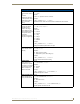
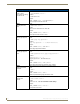
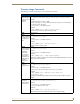
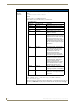

Table Of Contents
- MVP-8400iModero® ViewPoint® Wireless Touch Panel with Intercom
- MVP-8400i Modero Viewpoint Wireless Touch Panel With Intercom
- MVP-BP Power Pack
- NXA-CFSP Compact Flash
- Wireless Interface Cards
- Configuring Communications
- Modero Setup and System Settings
- Wireless Settings Page - Wireless Access Overview
- Configuring a Wireless Network Access
- Step 1: Configure the Panel’s Wireless IP Settings
- Step 2: Configure the Card’s Wireless Security Settings
- Step 3: Choose a Master Connection Mode
- Using G4 Web Control to Interact with a G4 Panel
- Using your NetLinx Master to control the G4 panel
- Upgrading MVP Firmware
- Setup Pages
- Navigation Buttons
- Setup Pages
- Information
- Protected Setup Pages
- Protected Setup Navigation Buttons
- G4 Web Control Page
- Calibration Page
- Wireless Settings Page
- Wireless Security Page
- Open (Clear Text) Settings
- Static WEP Settings
- WPA-PSK Settings
- EAP-LEAP Settings
- EAP-FAST Settings
- EAP-PEAP Settings
- EAP-TTLS Settings
- EAP-TLS Settings
- Client certificate configuration
- System Settings Page
- Other Settings
- Tools
- Programming
- Panel Calibration
- Appendix A: Text Formatting
- Appendix B - Wireless Technology
- Appendix C: Troubleshooting
- Checking AMX USBLAN device connections via Windows Device Manager
- Checking AMX USBLAN device connections via NetLinx Studio
- USB Driver
- Panel Not in Listed As a Connected Device
- Connection Status
- Panel Doesn’t Respond To Touches
- Batteries Will Not Hold Or Take A Charge
- Modero Panel Isn’t Appearing In The Online Tree Tab
- MVP Can’t Obtain a DHCP Address
- My WEP Doesn’t Seem To Be Working
- NetLinx Studio Only Detects One Of My Connected Masters
- Can’t Connect To a NetLinx Master
- Only One Modero Panel In My System Shows Up
- Panel Behaves Strangely After Downloading A Panel File Or Firmware
- Panel Fails to Charge in MVP-WDS

Programming
154
MVP-8400i Modero Viewpoint Wireless Touch Panels
Dynamic Image Commands (Cont.)
^RAF
Add new
resources.
Adds any and all resource parameters by sending embedded codes and data.
Syntax:
"'^RAF-<resource name>,<data>'"
Variable:
resource name = 1 - 50 ASCII characters.
data = Refers to the embedded codes, see table below.
Example:
SEND_COMMAND Panel,"'^RAF-New Image,%P0%HAMX.COM%ALab/
Test_file%Ftest.jpg'"
Adds a new resource. The resource name is ’New Image’, %P (protocol) is an HTTP, %H
(host name) is AMX.COM, %A (file path) is Lab/Test file, and %F (file name) is test.jpg.
Embedded Codes:
protocol
Parameter
’%P<0-1>’
Embedded Code
Set protocol. HTTP (0) or FTP (1).
Description
user
’%U<user>’
Set Username for authentication.
password
’%S<password>’
refresh
file
’%R<refresh 1-65535>’
’%F<file>’
The number of seconds between
refreshes in which the resource is
downloaded again. Refreshing a
resource causes the button
displaying that resource to refresh
also. The default value is 0 (only
download the resource once).
Full path to the location of the file or
program that will return the resource.
The path must be a valid HTTP URL
minus the protocol and host. The
only exception to this is the inclusion
of special escape sequences and in
the case of the FTP protocol, regular
expressions.
newest
’%N<0-1>’
Set the newest file. A value of 1
means that only the most recent file
matching the pattern is downloaded.
host
’%H<host>’
Set Password for authentication.
Set Host Name (fully qualified
DNS or IP Address).
path
’%A<path>’
Set Directory path. The path must
be a valid HTTP URL minus the
protocol, host, and filename. The
only exception to this is the
inclusion of special escape
sequences and in the case of the
FTP protocol, regular expressions.
preserve
’%V<0-1>’
Set the value of the preserve flag.
Default is 0. Currently preserve has
no function.