
Datasheet


3M Thermally Conductive Adhesive TC-2810 (Part A)
__________________________________________________________________________________________
Page: 6 of 17
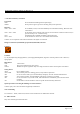
7.2. Conditions for safe storage including any incompatibilities
Store away from acids. Store away from oxidising agents.
7.3. Specific end use(s)
See information in Section 7.1 and 7.2 for handling and storage recommendations. See Section 8 for exposure controls and
personal protection recommendations.
SECTION 8: Exposure controls/personal protection
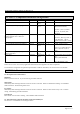
8.1 Control parameters
Occupational exposure limits
Ingredient CAS Nbr Agency Limit type Additional comments
Boron oxide 1303-86-2 Health and
Safety Comm.
(UK)
TWA:10 mg/m3;STEL:20
mg/m3
Health and Safety Comm. (UK) : UK Health and Safety Commission
TWA: Time-Weighted-Average
STEL: Short Term Exposure Limit
CEIL: Ceiling
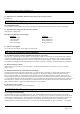
Biological limit values
No biological limit values exist for any of the components listed in Section 3 of this safety data sheet.
8.2. Exposure controls
8.2.1. Engineering controls
Curing enclosures must be exhausted to outdoors or to a suitable emission control device. Use general dilution ventilation
and/or local exhaust ventilation to control airborne exposures to below relevant Exposure Limits and/or control
dust/fume/gas/mist/vapours/spray. If ventilation is not adequate, use respiratory protection equipment. Provide ventilated
enclosure for heat curing.
8.2.2. Personal protective equipment (PPE)
Eye/face protection
Select and use eye/face protection to prevent contact based on the results of an exposure assessment. The following eye/face
protection(s) are recommended:
Full face shield.
Indirect vented goggles.
Skin/hand protection
Select and use gloves and/or protective clothing approved to relevant local standards to prevent skin contact based on the
results of an exposure assessment. Selection should be based on use factors such as exposure levels, concentration of the
substance or mixture, frequency and duration, physical challenges such as temperature extremes, and other use conditions.
Consult with your glove and/or protective clothing manufacturer for selection of appropriate compatible gloves/protective
clothing.
Gloves made from the following material(s) are recommended: Nitrile rubber.
If this product is used in a manner that presents a higher potential for exposure (eg. spraying, high splash potential etc.), then
use of protective coveralls may be necessary. Select and use body protection to prevent contact based on the results of an
exposure assessment. The following protective clothing material(s) are recommended: Apron – Nitrile
Respiratory protection