
User Guide


Step1: Level the Weld
Begin with 3M
™
Fibre Disc 988C on a right angle grinder to level the weld. Choosing grade 50 for this step
should allow you to proceed directly to blending the scratches in step 2. If heavier stock removal is required
a coarser grade should be used first, followed by grade 50 before proceeding to step 2.
Select a backup pad with the appropriate flexibility for the job and note the speed rating for each backup pad. The
maximum operating speed for a standard 7" disc is 6000 rpm. Always inspect discs and backup pads for damage.
Replace if damaged or worn. Never run the disc without a backup pad. Do not exceed the maximum operating
speed (MOS) rating of the backup pad. Always match the recommended backup pad to the disc diameter.
Bring the fibre disc in contact with the workpiece at a 7-10 degree angle. Always try to use as much surface
of the disc as possible. On your final pass over the workpiece, lighten up on the pressure to minimize the
scratch marks.
Step 2: Blend the Scratches
In the second step, use a rotary tool to blend the scratches. Selecting a Scotch-Brite
™
Surface Conditioning
Disc in grade A CRS offers long-life and is a user friendly and “forgiving” option for blending. The 3M
™
Backup
Pad 917FD is well suited for more aggressive applications and products. For better security, press the disc onto
the benchtop and run the tool to help lock the disc in place. The Scotch-Brite disc will not gouge the metal
so operators can get good results regardless of their level of experience. This finish may be an acceptable
stopping point.
Tech Tip: To extend the life of the product, sweep the edges of the workpiece with the disc.
An economic alternative to the Scotch-Brite disc is the use of an 8" 3M
™
Stikit
™
Disc 751I, also used on a rotary
tool. For maximum adhesion, make sure the backup pad is clean and free from dust. Use a disc in grade 80 to
follow the grade 50 fibre disc. This finish may be an acceptable stopping point, depending on the location
of the weld or paint thickness.
Tech Tip: A rule of thumb when sequencing coated abrasives on rotary tools is that you may skip every
other grade in the sequence, as we are skipping grade 60 here.
A rotary tool is a quick way to blend scratches from the previous step. It leaves a coarse finish with rotary
patterns which may require a thicker coating of paint to cover.
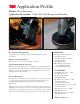
Market: Metal Fabrication
Application Description: Carbon Steel Weld Removal and Blending
page 2
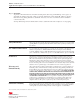
Step 1
3M Fibre Disc 988C
Level the weld
Right Angle Grinder
Step 3
3M Stikit Disc 751I
Refine the finish
Random Orbital Sander
Step 2
Scotch-Brite Surface Conditioning Disc ACRS
Blend the weld
Rotary Tool
Step 2
3M Stikit Disc 751I
Blend the weld
Rotary Tool